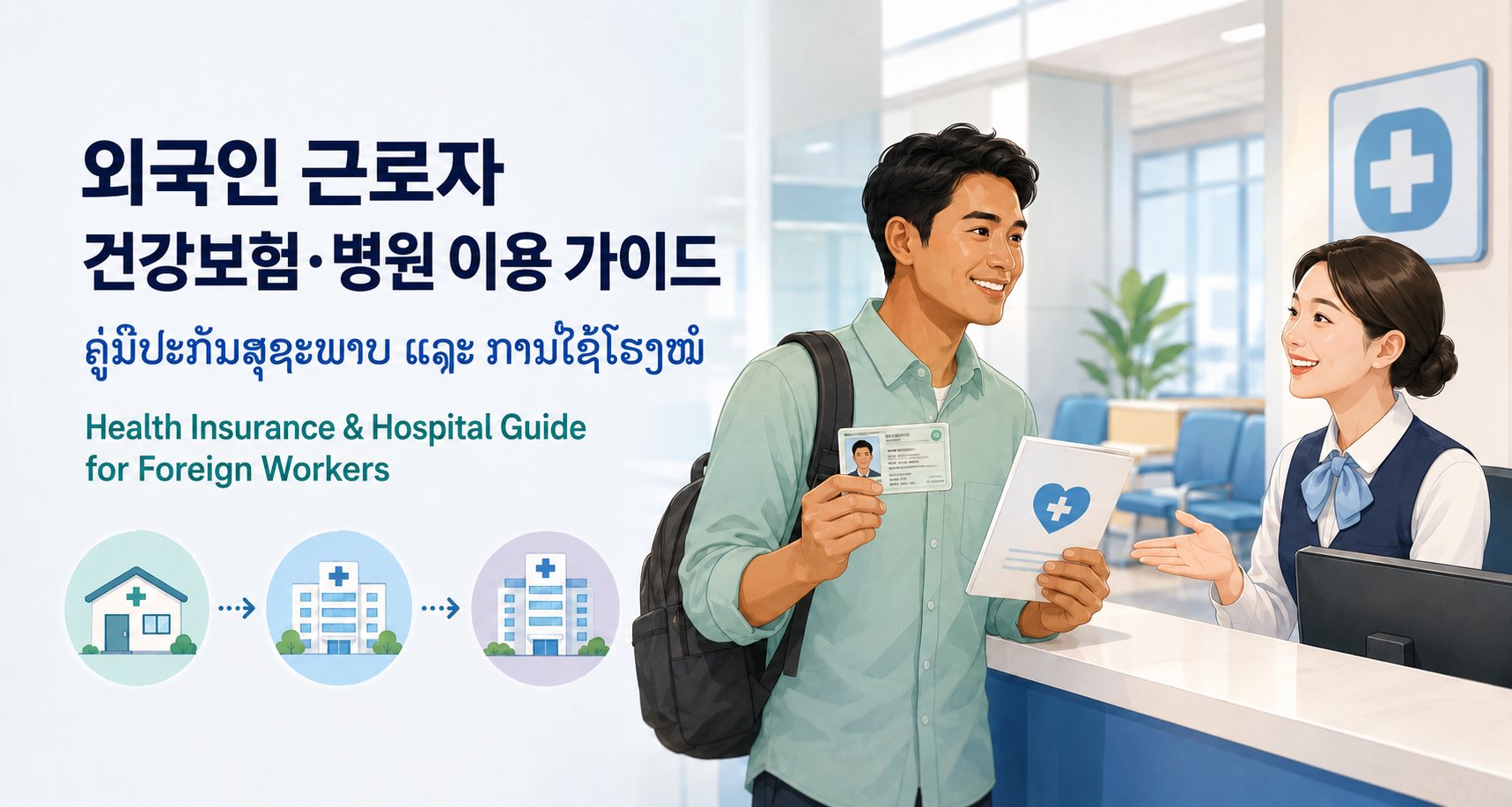

We provide information on national health insurance benefits that foreign workers can receive and the order of use at primary clinics, secondary hospitals, and tertiary general hospitals. Also check out how to apply to the hospital, medical referral form, prescription, and how to use the emergency room.
Can foreign workers also receive national health insurance benefits?
When foreign workers working in Korea become sick or injured, the first thing they should check is National Health Insurance.
If you are properly enrolled in health insurance, foreign workers can receive health insurance benefits on the same basis as Korean subscribers.
However, just because you have health insurance does not mean that all hospital expenses are free. There are amounts that patients must pay depending on the type of hospital and the content of treatment, and patients must pay the full amount for non-covered items not covered by health insurance.
Additionally, the roles of medical institutions in Korea are divided into nearby clinics, hospitals/general hospitals, and tertiary general hospitals. Even though the symptoms are mild, if you go to a large university hospital from the beginning, the waiting time may be long and the medical expenses may be higher.
In this article, we will guide you through what foreign workers need to know when using hospitals in Korea, in the order of actual use.
━━━━━━━━━━━━━━━━━━
Confirmation of foreign worker’s health insurance subscription
Foreign workers who are employed by a company and subscribe to health insurance are generally registered as employee subscribers.
Health insurance premiums for employee subscribers are calculated based on monthly salary and are shared between the employee and the employer. Health insurance premiums are usually automatically deducted from your paycheck.
The hospital uses your alien registration number to check whether you have health insurance.
If you don't know if you have health insurance, you can check this:
- Contact the company representative or business owner
- Check health insurance premium deduction details on your pay stub.
- Call the National Health Insurance Corporation
- Check on the National Health Insurance Corporation website or mobile app
If your health insurance eligibility is not confirmed, you may be required to pay the full cost of treatment at the hospital first. It is recommended that you check your subscription status before visiting the hospital.
━━━━━━━━━━━━━━━━━━
Main benefits you can receive from health insurance
National health insurance can cover consultations, tests, treatments, surgeries, hospitalizations and prescription drugs needed to treat illness or injury.
Typically, health insurance may apply to the following treatments:
- Treatment of common diseases such as colds, flu, enteritis, etc.
- Examination for symptoms such as cough, fever, headache, abdominal pain, etc.
- Blood tests and imaging tests deemed necessary by your doctor
- Treatment of chronic diseases such as high blood pressure and diabetes
- Hospitalization and surgery due to accidents or illness
- Prescription drugs purchased from a pharmacy as prescribed by a doctor
- Rehabilitation treatment that meets health insurance standards
- National health check-up provided to eligible subjects
Even if health insurance applies, a portion of the hospital costs are borne by the patient. This is called a deductible.
The amount borne by the patient may vary depending on the type of medical institution, such as a clinic, hospital, general hospital, or tertiary general hospital, and the content of treatment.
━━━━━━━━━━━━━━━━━━
Items that may not be covered by health insurance
Not all tests and treatments received at hospitals are covered by health insurance.
The following items may be treated as non-coverage and not covered by health insurance.
- Cosmetic surgery for non-therapeutic purposes
- Skin care procedures
- Some nutritional shots and vaccinations
- Tests not included in health insurance standards
- Difference in hospital room fee depending on use of advanced hospital room
- Some dental prosthetics and non-reimbursement materials
- Medical certificate and various certificates requested by the individual
- Some treatments and medical materials selected by the patient
Costs for non-covered items may vary from hospital to hospital.
Before undergoing testing or treatment, it is a good idea to ask:
“Is this test covered by health insurance?”
“How much do I have to pay?”
“Are non-coverage items included?”
If you find it difficult to ask a question in Korean, you can save this sentence on your phone screen and show it to the hospital staff.
━━━━━━━━━━━━━━━━━━
Which hospital should I go to first in Korea?
Medical institutions in Korea generally provide primary It is divided into clinics, secondary hospitals/general hospitals, and tertiary general hospitals.
Not all patients necessarily need to visit sequentially from 1st to 3rd.
However, if you have a cold, stomach upset, headache, skin disease, or mild pain, it is best to seek treatment at a nearby clinic first.
Diseases that are difficult to treat at a nearby clinic may be transferred to a larger hospital depending on the doctor's judgment.
━━━━━━━━━━━━━━━━━━
Primary medical institution: Nearby neighborhood clinic
A primary medical institution is a nearby clinic that provides outpatient treatment.
For relatively simple symptoms such as a cold or mild pain, it is best to first seek treatment at a nearby clinic.
Representative lawmakers are as follows:
- Internal medicine clinic
- Family Medicine Clinic
- Orthopedic Clinic
- Dermatology Clinic
- Otolaryngology Clinic
- Ophthalmology Clinic
- Obstetrics and Gynecology Clinic
- Dental Clinic
Mild symptoms can be fully treated at a clinic, and waiting times and out-of-pocket costs may be lower than at large hospitals.
If your doctor determines that a detailed examination or specialized treatment is necessary, he or she may write a medical treatment request form so that you can receive treatment at a hospital or general hospital.
━━━━━━━━━━━━━━━━━━
Secondary medical institutions: hospitals and general hospitals
Secondary medical institutions mainly treat patients who require hospitalization, surgery, or specialized tests.
Hospitals and general hospitals with multiple medical departments operating together may fall into this category.
Secondary hospital care may be necessary in the following cases:
- If symptoms persist despite treatment at a clinic
- When a detailed examination such as CT or MRI is required
- Cases requiring hospitalization or surgery
- When fractures or severe trauma need to be treated.
- Cases where collaboration between multiple medical departments is necessary
- When continuous management by a specialist is required
Each hospital operates different departments and has different reservation methods. Before visiting, it is recommended to check availability by phone or through the hospital website.
━━━━━━━━━━━━━━━━━━
Tertiary medical institution: Tertiary general hospital
Tertiary general hospitals, referred to as tertiary medical institutions, take care of patients who require specialized treatment such as serious diseases, rare diseases, cancer, and difficult surgeries.
Although they are often called university hospitals or large hospitals, not all university hospitals are designated as tertiary general hospitals.
To receive outpatient treatment at a tertiary general hospital under health insurance, you generally need a medical treatment request issued by a clinic or hospital.
If you visit a tertiary general hospital without a medical treatment request, you may be able to receive treatment, but you may not receive benefits according to health insurance procedures and may have to pay the full related medical expenses.
Even if you have a medical treatment request, the out-of-pocket costs at a tertiary general hospital may be higher than at a clinic or general hospital.
There are some exceptions, such as in emergencies or childbirth, but you should check in advance with the hospital you plan to visit for exact coverage.
━━━━━━━━━━━━━━━━━━
How do I receive a medical treatment request?
A medical treatment request is a document written by the doctor in charge explaining the patient's condition and the reason why treatment at a large hospital is necessary.
It can be issued in the following order:
- Get treatment first at a nearby clinic or hospital.
- Explain your symptoms and treatment progress to your doctor in detail.
- Consult whether testing or treatment at a large hospital is necessary.
- If the doctor determines it is necessary, a medical treatment request will be issued.
- Make an appointment at a general hospital where you will receive treatment.
- Submit the medical treatment request form and test data on the scheduled date.
The medical treatment request form lists the department requiring treatment and the patient's condition.
If you wish to use a department other than the one listed on the referral form, you may need a new medical referral form.
The recognition period and submission method for medical treatment requests may vary depending on the hospital, so be sure to check when making an appointment.
━━━━━━━━━━━━━━━━━━
What to prepare when going to the hospital
To expedite your hospital registration, we recommend that you prepare the following items:
- Alien registration card or mobile alien registration card
- Mobile phone number in your name
- Any medication or medication bag you are taking;
- Received from another hospital Medical treatment request
- Test results and video CD
- Information about allergies or past medical conditions
- Card or cash to use for payment
There are hospitals that allow you to receive treatment after verifying your identity even without an alien registration card, but the verification method may vary depending on the hospital.
If possible, it is safest to visit with your alien registration card.
━━━━━━━━━━━━━━━━━━
How to apply for a hospital visit for the first time
When you arrive at the hospital, go to the window marked ‘Reception’ or ‘Administrative Affairs.’
If you find it difficult to use the unmanned registration machine, you can ask a staff member to register directly.
The order of hospital use is generally as follows:
- Show your alien registration card at the reception desk.
- Say it is your first time visiting.
- Describe your current illness.
- Select the department you would like to receive treatment.
- Check whether health insurance applies.
- Check the registration number and clinic location.
- Wait your turn and see a doctor.
- After treatment, pay the hospital fee at the payment counter.
- Get a prescription and go to the nearest pharmacy.
- Submit your prescription to the pharmacy and pay for the medication.
In Korea, hospitals and pharmacies are often operated separately. Even if you have paid the medical expenses at the hospital, you must pay the drug costs separately at the pharmacy.
━━━━━━━━━━━━━━━━━━
Korean available for hospital registration
These are simple Korean expressions that foreign workers can use in hospitals.
“It was my first time visiting.”
“I am enrolled in health insurance.”
“I have had a fever and cough since yesterday.”
“I have a stomachache and diarrhea.”
“I have back pain and would like to receive orthopedic treatment.”
“Is foreign language interpretation available?”
“I brought you a medical treatment request.”
“Is health insurance applicable?”
“I want to know first how much the medical expenses will be.”
“Are there any non-coverage items?”
If you find it difficult to explain your symptoms in Korean, you can use a translation application.
It will be helpful for treatment if you write in advance the date you started feeling sick, the area where it hurts, the medications you are taking, and whether you have any allergies.
━━━━━━━━━━━━━━━━━━
Clinics to visit according to symptoms
If you don't know which clinic to go to, you can refer to the following information.
- Cold, fever, cough, abdominal pain, indigestion: Internal medicine or family medicine
- Nasal congestion, pain in the throat or ears: Otolaryngology
- Back, knee, shoulder, and wrist pain: Orthopedics.
- Skin rash, itching, dermatitis: Dermatology
- Eye pain, redness, vision problems: Ophthalmology
- Toothache or gum pain: Dental
- Pregnancy, menstruation or female diseases: Obstetrics and Gynecology
- Severe anxiety, depression, sleep problems: Psychiatry
If you are not sure which clinic to go to, it is best to first consult with a nearby internal medicine or family medicine clinic.
━━━━━━━━━━━━━━━━━━
In an emergency, immediately call 119.
If you are unconscious, have difficulty breathing, have severe bleeding, or are paralyzed, you should call 911 immediately rather than waiting for regular outpatient treatment.
The following symptoms may be an emergency:
- If you suddenly find it difficult to breathe.
- If you lose consciousness or have convulsions
- If you have very severe pain in your chest.
- Sudden loss of strength in one side of the face or limbs
- If severe bleeding or fracture is suspected due to a major accident
- Swelling of the face or neck due to severe allergies
When calling 119, you must report your current location, the patient's symptoms, and whether he or she is conscious and breathing.
Emergency rooms can cost more than regular outpatient care. If you have a minor illness that is not an emergency, it is best to first visit a nearby clinic or night/holiday clinic.
━━━━━━━━━━━━━━━━━━
Check if the hospital bill is higher than expected
If the medical expenses are higher than expected, the hospital must submit the following documents: You can request it.
- Medical bill/receipt
- Detailed statement of medical expenses
On the receipt, you can distinguish between salary items covered by health insurance and non-benefit items for which the patient fully pays.
Please also check the following:
- Whether health insurance eligibility has been applied properly
- Does it include non-covered tests or treatments?
- Did you use a senior ward?
- Did you visit a tertiary general hospital without a medical treatment request?
- Is the cost of issuing separate documents such as a medical certificate included?
If you do not understand the medical expenses, please contact the hospital administration department first.
If additional confirmation is needed, you can request consultation from the National Health Insurance Service or the Health Insurance Review and Assessment Service.
━━━━━━━━━━━━━━━━━━
Good phone numbers for foreign workers to know
- Emergency patient and ambulance requests: 119
- Crime and emergency reporting: 112
- Foreigner Information Center: 1345
- National Health Insurance Corporation: 1577-1000
- National Health Insurance Corporation foreign language consultation: 033-811-2000
- Health and Welfare Counseling Center: 129
Consultation hours and support languages may change, so it is recommended that you check the official information from the relevant institution before using it.
━━━━━━━━━━━━━━━━━━
Things to remember when using an actual hospital
If you get sick in Korea, you don't necessarily have to go to the biggest hospital.
If you have a cold, upset stomach, skin disease, or mild muscle pain, getting treatment at a nearby clinic first will help save time and money.
In cases where treatment at a clinic is difficult, the doctor in charge will guide you to a larger hospital or issue a medical referral.
Before visiting the hospital, it is recommended that you prepare your alien registration card and any medications you are taking, and check whether health insurance is applicable and the estimated cost before undergoing examination or treatment.
Foreign workers who are properly enrolled in health insurance can receive health insurance benefits on the same basis as Korean subscribers.
However, not all treatments are covered by health insurance, and the actual cost you pay may vary depending on your subscription status, treatment details, and medical institution.
This article provides general living information to help foreign workers live in Korea. Please check with the National Health Insurance Service or the medical institution you plan to use for accurate information on your individual health insurance eligibility and treatment details.
hashtag
#Foreign workers #National health insurance #Foreigners' health insurance #How to use Korean hospitals #Registration at Korean hospitals #Foreigners use hospitals #Request for medical treatment #High-level general hospital #Information on life for foreigners #Information on life in Korea #Seasonal worker #Alien registration card #Use of emergency room #Hospital treatment #LKcommunity
Related articles
- How to find a hospital/pharmacy when you are sick in Korea|Emergency/119/Ask for your employer
- How to apply for industrial accident insurance for foreign workers | Response and scope of compensation when injured at agricultural or fishing sites
- 10 things to check on the first day of entry for seasonal workers in Korea | Documents, accommodation, bankbook, insurance, emergency contact information
Official sources and review date
The official sources below were checked on 26 September 2026. Confirm individual eligibility and current application requirements with the relevant authority.