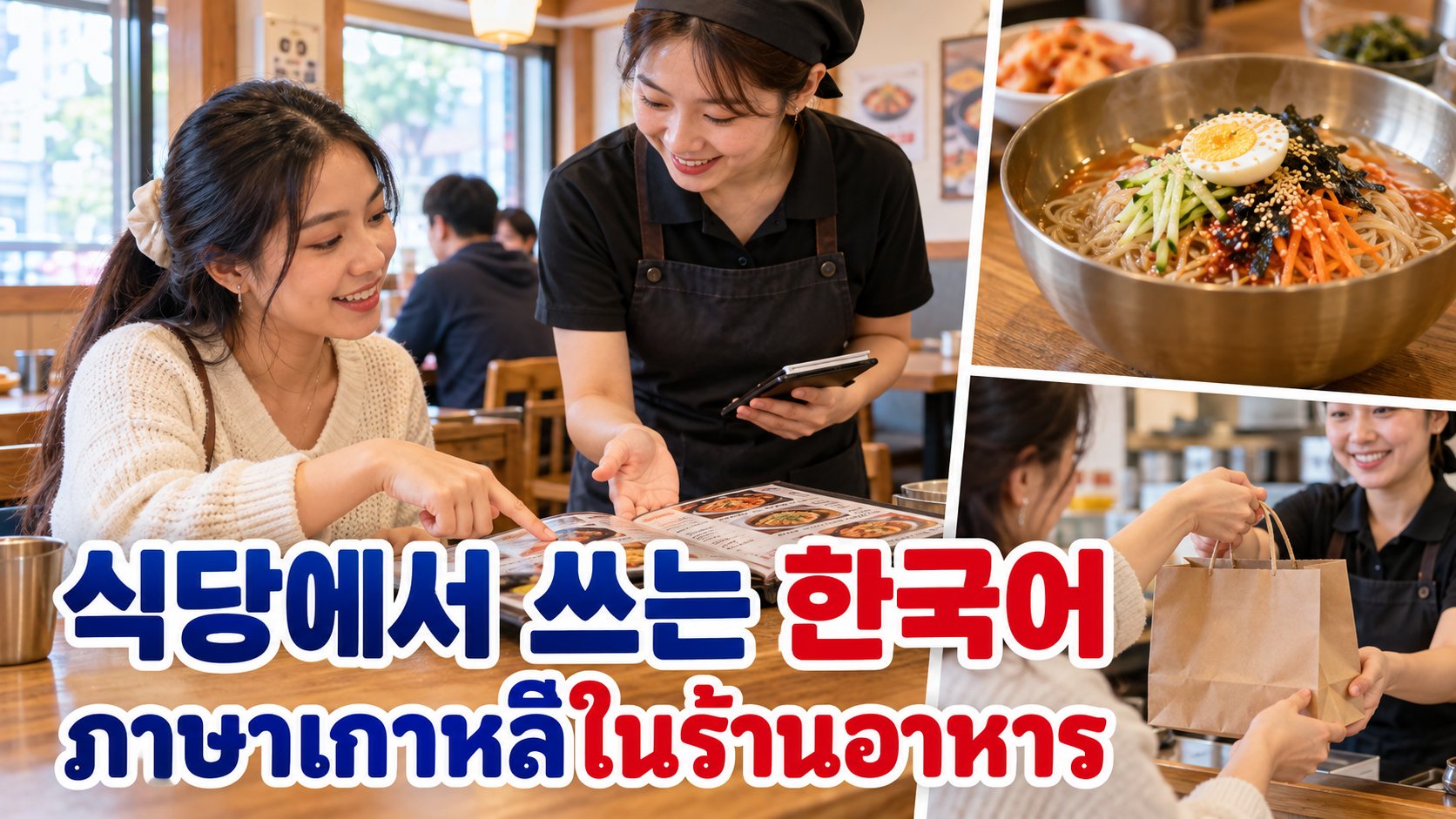
There is no need to memorize every long sentence at a Korean restaurant. Learn how to look at the menu, say what you want and the quantity, and check whether it's a restaurant meal or takeout. This article will practice 6 Korean expressions to actually confirm your choice when ordering.
The Korean sentences below and their Thai meanings are paired together. The Thai pronunciation notation is a rough guide for first reading and does not fully represent the Korean pronunciation. Choose the ending of an honorific in Thai that suits the person speaking. Read each sentence slowly, check the meaning, and practice according to the situation.
1. When you want to see the menu first
메뉴 좀 보여 주세요.
Thai meaning: ขอดูเมนูหน่อยค่ะ/ครับ
Pronunciation help: เม-นยู จม โพ-ยอ จู-เซ-โย
Use situation: ใช้เมื่ออยากดูเมนูก่อนตัดสินใจสั่งอาหาร
If you enter a restaurant and don't see the menu, ask the staff. After receiving the menu, check the food names, photos, and prices. If you choose just by looking at the photo, it is difficult to tell if the size and composition are the same. If the name is difficult to read, you can point your finger to the menu.
short conversation
Guest: 메뉴 좀 보여 주세요.
ขอดูเมนูหน่อยค่ะ/ครับ
Staff: 네, 여기 있습니다.
ได้ค่ะ/ครับ นี่เมนูค่ะ/ครับ
Note: If an employee is busy, make eye contact with them and wait a moment after speaking. Asking to see the menu does not mean you have completed your order.
2. When talking about the food you choose and its quantity
이거 하나 주세요.
Thai meaning: ขออันนี้หนึ่งที่ค่ะ/ครับ
Pronunciation help: อี-กอ ฮา-นา จู-เซ-โย
Use situation: ใช้ชี้เมนูที่เลือกและบอกว่าต้องการหนึ่งที่
Even if you don't know the name of the food yet, just point to the menu and say the quantity. When multiple people eat together, distinguish between the number of people and the number of foods. If you are curious about whether a menu is for one person or for multiple people, check before ordering.
short conversation
Guest: 이거 하나 주세요.
ขออันนี้หนึ่งที่ค่ะ/ครับ
Staff: 이 메뉴 하나 맞으세요?
รับเมนูนี้หนึ่งที่ใช่ไหมคะ/ครับ
Note: When the staff repeats the menu and quantities, listen and check. If you point your finger at different foods, the staff may misunderstand your order. Please show us a photo and name of the food you want.
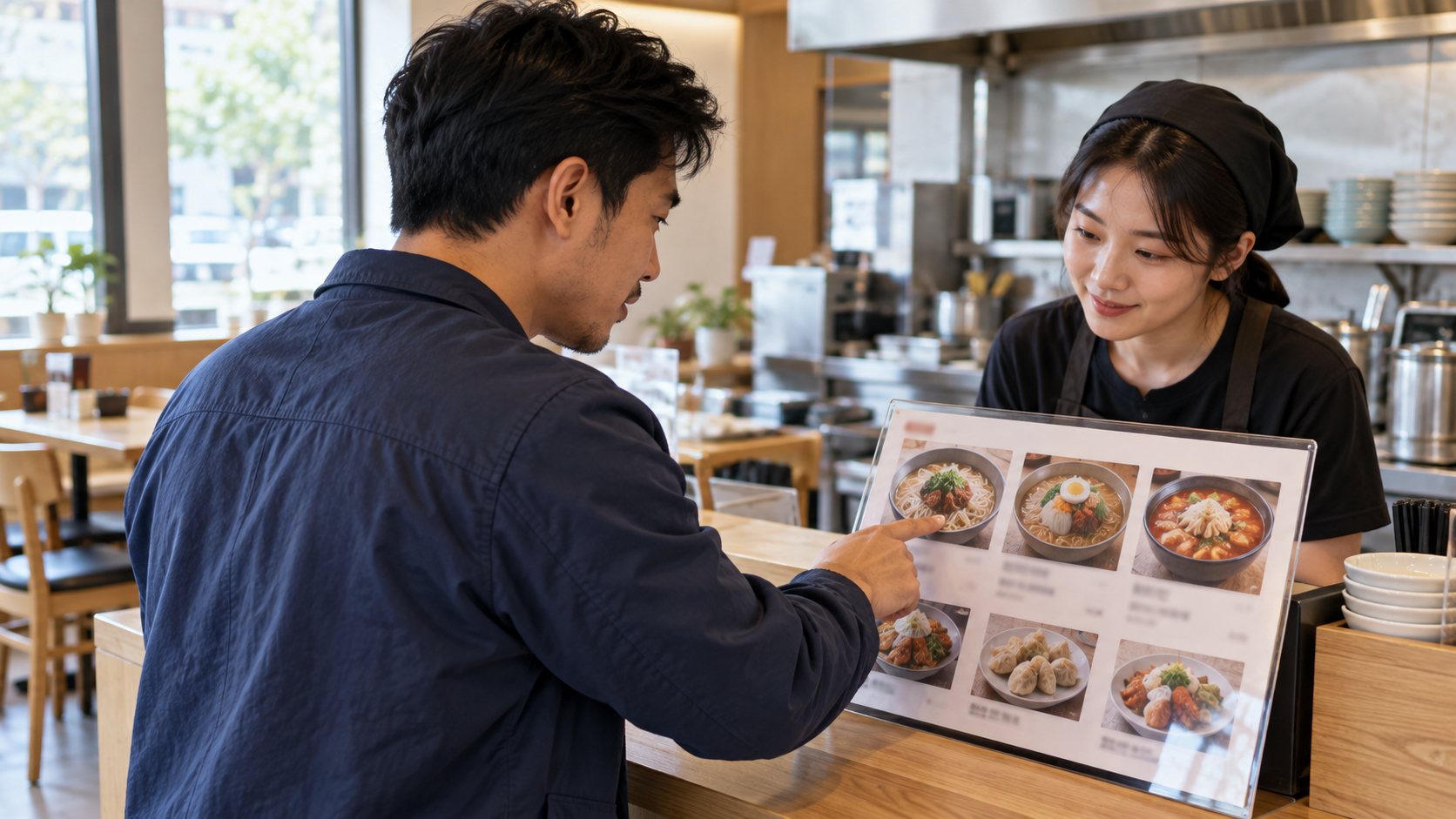
3. When you want to take it out and eat it
포장해 주세요.
Thai meaning: ขอห่อกลับบ้านค่ะ/ครับ
Pronunciation help: โพ-จัง-แฮ จู-เซ-โย
Use situation: ใช้เมื่อต้องการนำอาหารออกไปกินนอกร้าน
If you tell them in advance when ordering, it will be easier to distinguish between what you eat at the store and what you take home. If you change your mind after ordering, check with a member of staff to see if changes can be made. If guests want to take home leftovers after a meal, ask the server if they can put the leftovers in a container. Confusion can be reduced if guests explain their requests specifically.
short conversation
Guest: 포장해 주세요.
ขอห่อกลับบ้านค่ะ/ครับ
Staff: 네, 포장해 드릴게요.
ได้ค่ะ/ครับ จะห่อให้ค่ะ/ครับ
Note: Packaging and delivery are different. Take-out is usually used in situations where the person who ordered the food takes it away. Please check store information for takeout availability and additional costs.
4. When first asked how spicy it is
이 음식은 많이 매워요?
Thai meaning: อาหารจานนี้เผ็ดมากไหมคะ/ครับ
Pronunciation help: อี อึม-ชี-กึน มา-นี แม-วอ-โย
Use situation: ใช้ถามระดับความเผ็ดก่อนสั่งอาหาร
If you're seeing food for the first time, ask if it's spicy before ordering. It can be spicy even if the color is not dark, and the level of spicyness varies from person to person. Even if the employee says it's okay, it's a good idea to follow up and check to see if adjustments can be made, rather than assuming that it suits your taste.
short conversation
Guest: 이 음식은 많이 매워요?
อาหารจานนี้เผ็ดมากไหมคะ/ครับ
Staff: 조금 매워요.
เผ็ดนิดหน่อยค่ะ/ครับ
Note: Spicy is different from hot. The description “spicy” refers to a taste like pepper and seasoning, and does not mean that it can be resolved by eating it cool.
5. When asking for less spiciness
덜 맵게 해 주실 수 있어요?
Thai meaning: ทำให้เผ็ดน้อยลงได้ไหมคะ/ครับ
Pronunciation help: ทอล แมบ-เก แฮ จู-ชิล ซู อี-ซอ-โย
Use situation: ใช้ถามว่าสามารถลดความเผ็ดของอาหารได้หรือไม่
A customer asks a staff member if the spiciness of the food can be reduced before cooking. Less spicy means reducing the spiciness compared to the original, so it is not a promise to make it not spicy at all. You can also check if you can get condiments separately or choose another menu.
short conversation
Guest: 덜 맵게 해 주실 수 있어요?
ทำให้เผ็ดน้อยลงได้ไหมคะ/ครับ
Staff: 양념은 따로 드릴게요.
จะแยกซอสให้ค่ะ/ครับ
Note: Pre-mixed seasonings or pre-made broths can be difficult to control. Requests for adjusting spiciness and removing ingredients that cause allergies are different, so please check separately.
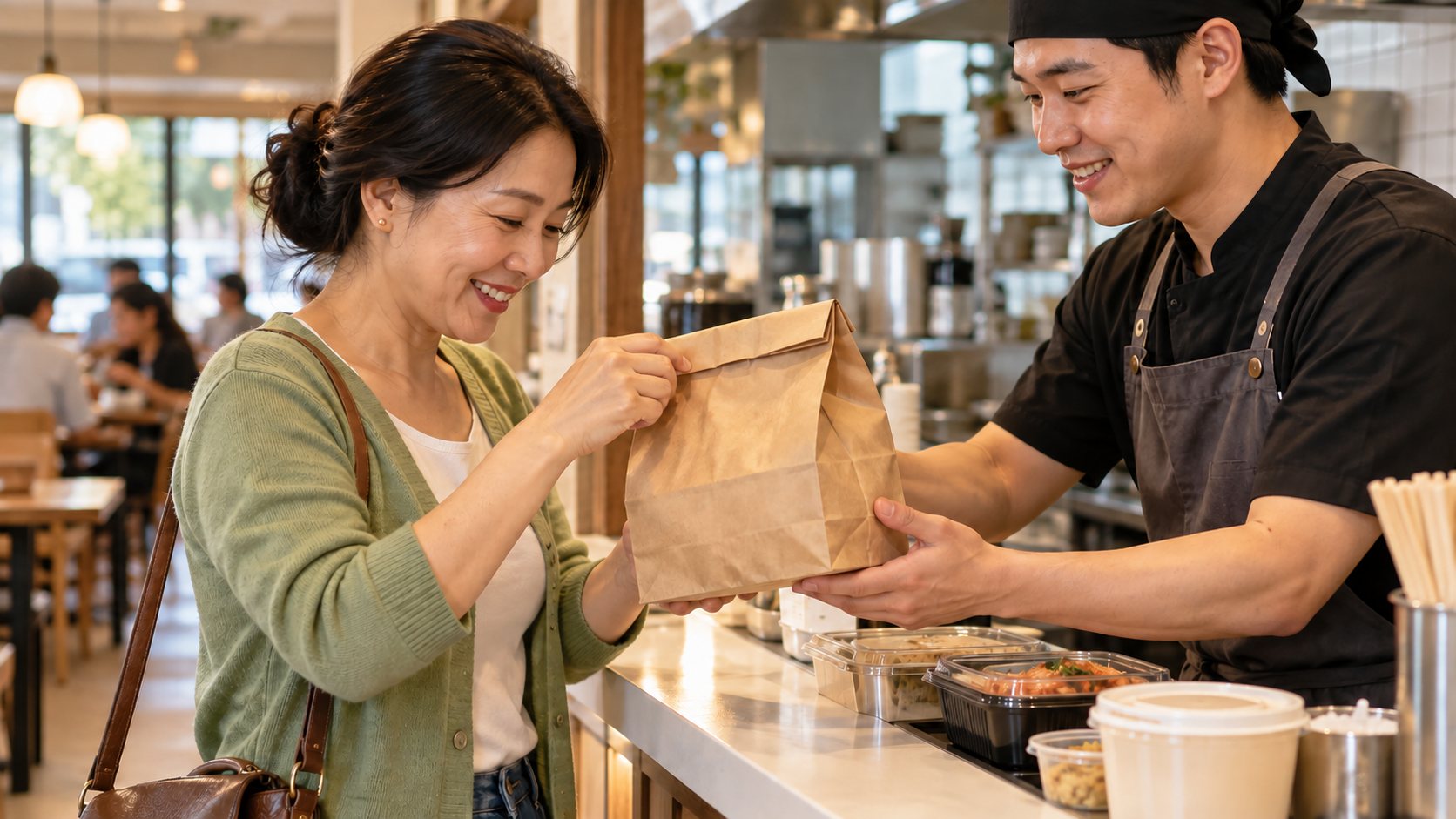
6. When checking whether the food received was my order
제가 주문한 음식이 맞아요?
Thai meaning: นี่ใช่อาหารที่ฉันสั่งไหมคะ/ครับ
Pronunciation help: เช-กา จู-มุน-ฮัน อึม-ชี-กี มา-จา-โย
Use situation: ใช้ตรวจสอบอาหารที่ได้รับว่าเป็นรายการที่สั่งไว้หรือไม่
This question is asked when there is confusion because the shape is different from the photo or there are multiple packaging bags. Before touching your food, check with the staff what you ordered, the quantity, and whether it was packaged or not. If you have a receipt or order number, it is easy to check if you show it along with it.
short conversation
Guest: 제가 주문한 음식이 맞아요?
นี่ใช่อาหารที่ฉันสั่งไหมคะ/ครับ
Staff: 네, 비빔밥 하나예요.
ใช่ค่ะ/ครับ บิบิมบับหนึ่งที่ค่ะ/ครับ
Note: If you don't understand the employee's answer, don't just nod your head as if you know. You can show them menu photos or order details again and check them one by one.
Common confusion when ordering
First, looking at the menu and finishing your order are different. When the staff confirms your order, please mention your desired menu and quantity again. Second, one person can order two dishes, or several people can share one dish. It may not be clear how many dishes to order based on the number of people, so please tell the staff how many dishes you want.
Third, even if you request takeout, check the menu and quantity in the bag before taking it. If you check on the spot whether chopsticks or other necessary items are available, you can reduce the need to visit again. Fourth, if you want to change your order, rather than just mentioning the new menu, clearly explain to the staff whether it is a change or addition to your order.
Look at the situation and say it yourself
- The menu board is not visible. What can I ask you for?
- I plan to take the food back to my accommodation and eat it. What should I say?
- It hasn't been cooked yet and I want to reduce the spiciness. How to ask?
Example answer:
메뉴 좀 보여 주세요.
ขอดูเมนูหน่อยค่ะ/ครับ
포장해 주세요.
ขอห่อกลับบ้านค่ะ/ครับ
덜 맵게 해 주실 수 있어요?
ทำให้เผ็ดน้อยลงได้ไหมคะ/ครับ
When practicing, switch between employee and customer roles. The person in the role of customer selects the menu and then tells the person in the role of employee how much food to eat, whether to eat it at the store or take it home, and how spicy they want it to be. The person in the employee role repeats the order. The person in the guest role listens and checks to see if the food and quantity they chose are correct. Rather than memorizing the answers, it is more important to practice to make sure you understand the same thing.
Good article to practice together
- Language for daily life in Korea Part 3 — Korean for checking prices, quantities, and units
- Language for daily life in Korea Part 7 — Korean for checking parcel and delivery information at the post office
Confirmation materials and image guidance
For the meaning and use of basic vocabulary, I referred to the National Institute of the Korean Language's Basic Korean Dictionary. Restaurant situations, conversations, and practice problems have been newly created to fit the learning purpose of this article. Data confirmation date: 2026-10-29.
- National Institute of the Korean Language Basic Korean Dictionary — Ordering Food
- National Institute of the Korean Language Basic Korean Dictionary — Spicy
The main photo and main photo are explanatory images created with AI to help you understand the situation, and do not actually represent specific restaurants or reviews of visits.