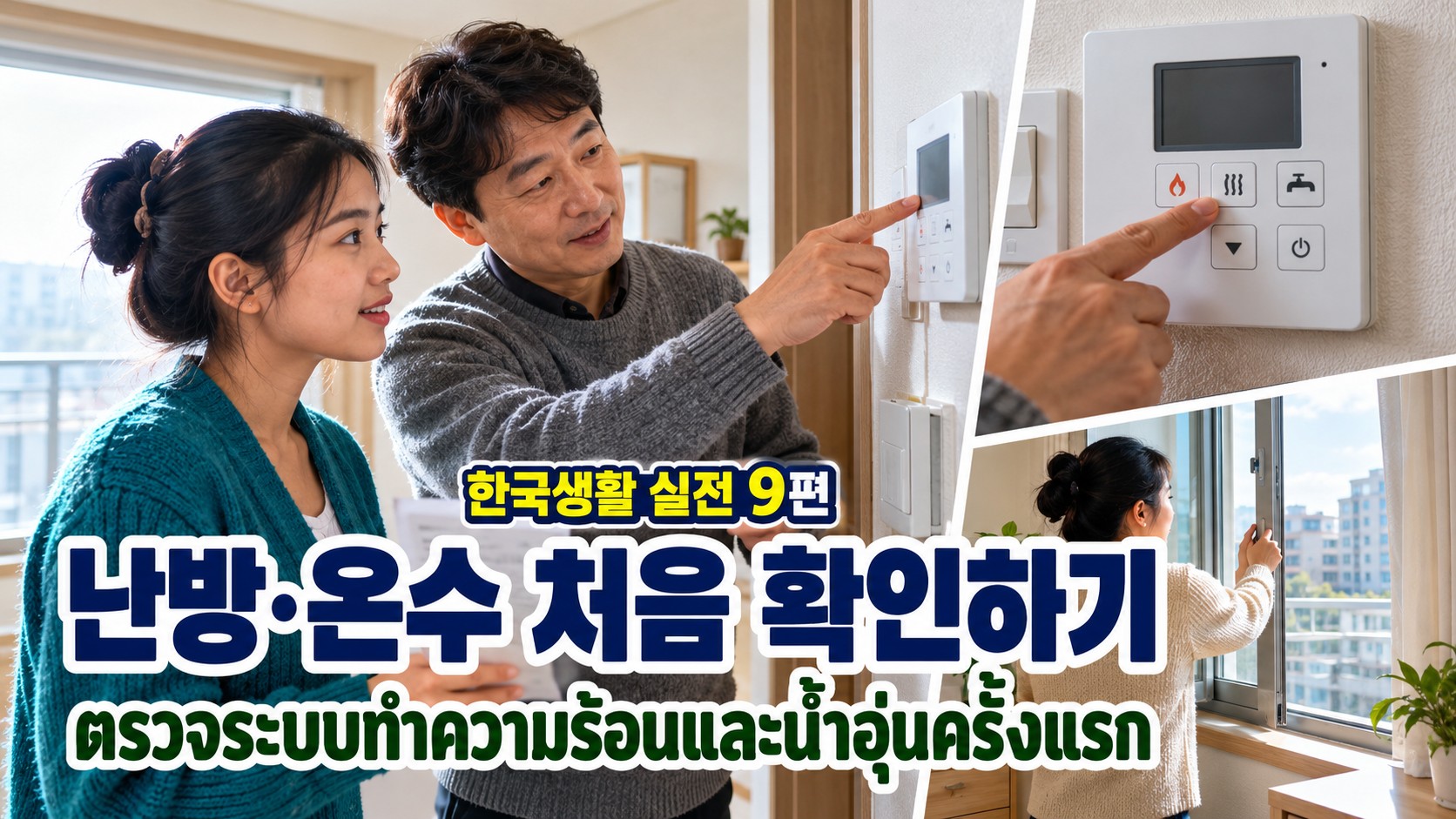
People spending winter in Korea for the first time may be unfamiliar with the controls on the walls of their rooms. There are situations where you press the button but the floor doesn't get warm, or the heating works but hot water doesn't come out when showering. This article Procedure for first checking heating and hot water in studio apartments, multi-family homes, and shared accommodations in Koreaexplains. It does not replace a specific manufacturer's instruction manual, and heating methods and regulator shapes vary from building to building.
1. Check the accommodation equipment before turning on the heating.
First, check whether your accommodation has individual gas boiler, district heating or electric heating. Just because there is a boiler body in the house does not mean that all rooms are heated the same way. It's safer to check with your property manager or landlord to see if they have instructions on how to heat the property and how to use the controls. In shared accommodation, if you change the settings arbitrarily, it may affect other rooms, so check first whether it is a shared controller.
It's not complicated to prepare. All you need is a full photo of the wall controller, the letters and numbers currently displayed on the screen, the property's address, contact information for management, and any previously provided usage rules. Do not show your personal password or door lock number in the photo. Do not arbitrarily disassemble or modify the boiler body’s lid, pipes, or gas valve.
2. 'Heating' and 'Hot Water' may be different functions
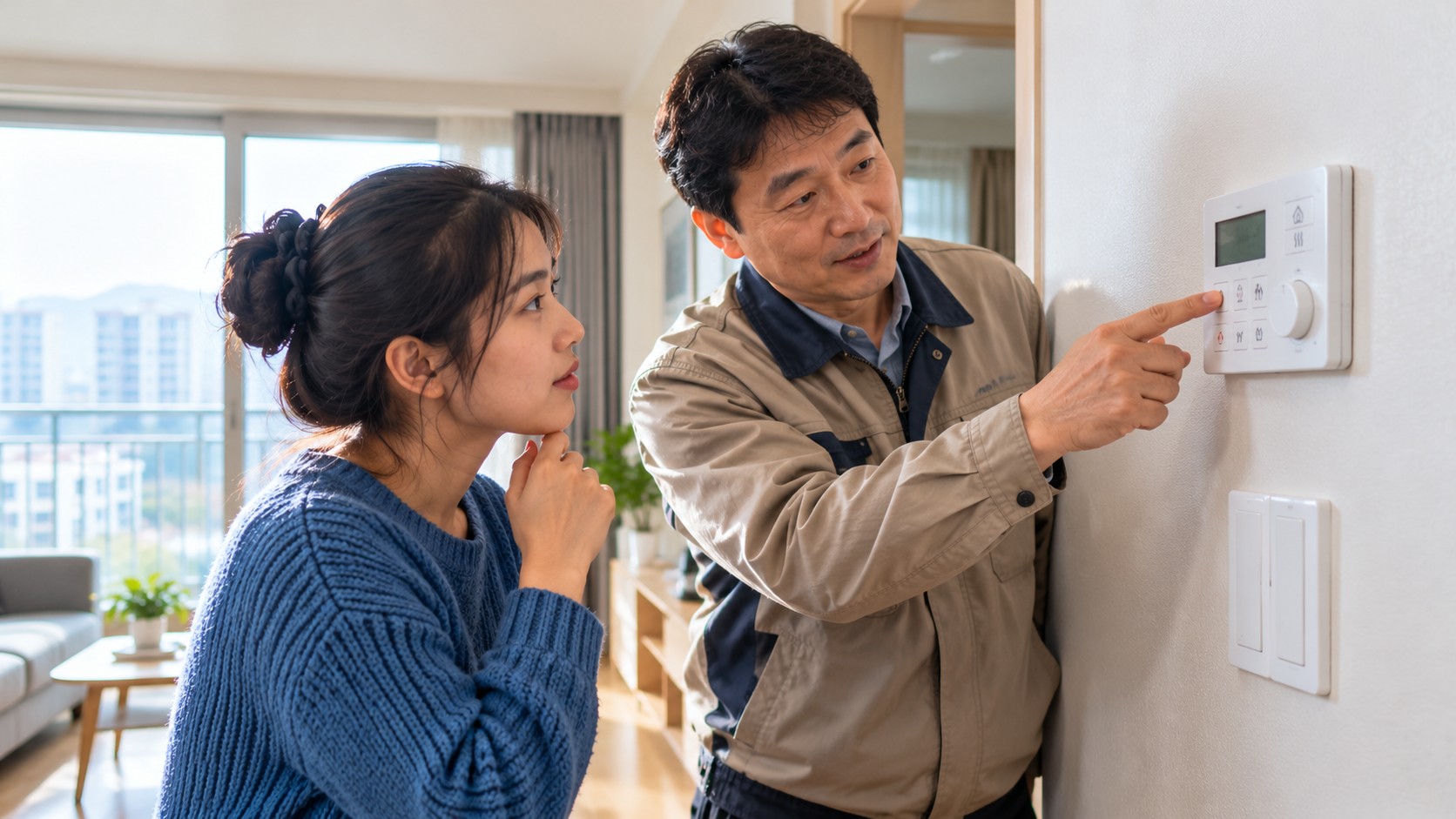
displayed on the regulator heatingis a function that warms the room floor or indoor space, hot wateris a function related to the warm water used in the sink or shower. Some devices control both functions on one screen, while others use separate menus. ‘Indoor’ may be a method based on the temperature of indoor air, and ‘Ondol’ may be a method based on the temperature of floor heating water. Therefore, even the same numbers displayed on the screen should not be compared unless you know which item the number refers to.
The ‘schedule’ feature on your thermostat may be a feature that sets the heating to run on a set cycle. 'Going Out' may also have different actions depending on the manufacturer, so don't assume that the boiler is completely turned off just by looking at the button name. Even when the controller screen is off, other devices may operate or maintain safety functions. It is best to check the usage instructions for each boiler first.
3. When using for the first time, check one thing at a time
- First, check the controller screen for any error messages or warnings. If the screen is broken or makes strange noises, do not continue to press and notify a representative.
- Separate heating mode and room temperature setting screens. Also check whether the indoor temperature display and the set temperature are different values. For example, if the current display is 17℃ and the setting is 20℃, the two numbers may have different meanings. This is a hypothetical example for illustrative purposes only and may not be the recommended setting for all properties.
- Adjust the settings only once, within the range permitted by your property, and observe the operation briefly. Underfloor heating is not an appliance that heats up the floor as soon as you press the switch, so you don't have to press multiple buttons repeatedly in a short period of time.
- Briefly note whether it works or not, any errors noted, and any changes. If you are in a building where other people use a shared controller, record the settings before changes and share them with the person in charge.
4. If hot water does not come out well when showering
First, check the instructions on the regulator to make sure the hot water function is not turned off separately. If hot water does not come out when you turn the faucet toward warm water, check the warning sign on the device and the condition of other faucets, but do not touch hot pipes or the inside of the boiler. Knowing whether the problem is just with one faucet or the same problem throughout the house will help the repairman narrow down the cause.
If the hot and cold water suddenly changes or the temperature is too high and you feel a risk of burns, stop using the product and contact the administrator. If a burning odor, smoke, water leakage, or unfamiliar warnings appear from the boiler body, retreat to a safe location and discontinue use. You should avoid opening pipes or arbitrarily repairing them.
5. Heating costs and ventilation must be considered together.
Heating costs vary depending on many factors, including heating method, size of house, insulation, hours of use, and contractual settlement method. The Korea Energy Agency guides you through cost-saving practices such as managing heating temperature in winter, insulating window gaps, and short, regular ventilation. However, the Corporation's guidance is general energy efficiency information and does not guarantee the same rates or savings rates for individual accommodations.
If a lot of cold wind blows in around the windows, check the gaps and consider using insulating curtains or weather strips within a safe and permitted range. Condensation may form in wet bathrooms or near windows, so check the indoor conditions and ventilate. Ventilation is the act of changing the air, and does not mean turning off the heater or leaving the windows open for long periods of time. If you leave the window open for a long time in cold weather, the room can quickly become cold.
If you are leaving your accommodation for a long time or a cold wave is forecast, you should consider the possibility of freezing and rupturing water pipes and boiler pipes. We do not assume that freezing will be prevented in all situations just because you press the ‘Go Out’ button. Maintain proper condition according to the actual boiler manufacturer's instructions and accommodation management guidelines, and contact the manager or a professional company if you suspect freezing.
6. If you smell gas, stop checking the regulator normally.
If you smell gas or suspect a leak, do not turn on the electric switch or exhaust fan to check the heating settings. Korea Gas Safety Corporation advises that in the event of a gas leak in a home, stop using the gas when it is safe to do so, close the valve, open windows and doors for natural ventilation, and do not operate electrical appliances. Keep away from open flames and cigarettes. If it is judged to be dangerous, first evacuate people to a safe place and contact the gas supplier or emergency agency outside.
Just because you don't smell gas doesn't mean there are no risks. Since carbon monoxide cannot be detected by smell, you should not arbitrarily cover or dismantle exhaust equipment or safety devices. If you experience any abnormal symptoms such as severe headache or dizziness while using the boiler, or any suspicious situation occurs, move to a safe place and seek emergency help. In case of fire or emergency situations where people are in danger, Korea's emergency number 119Report to.
7. What to communicate if the regulator does not work?
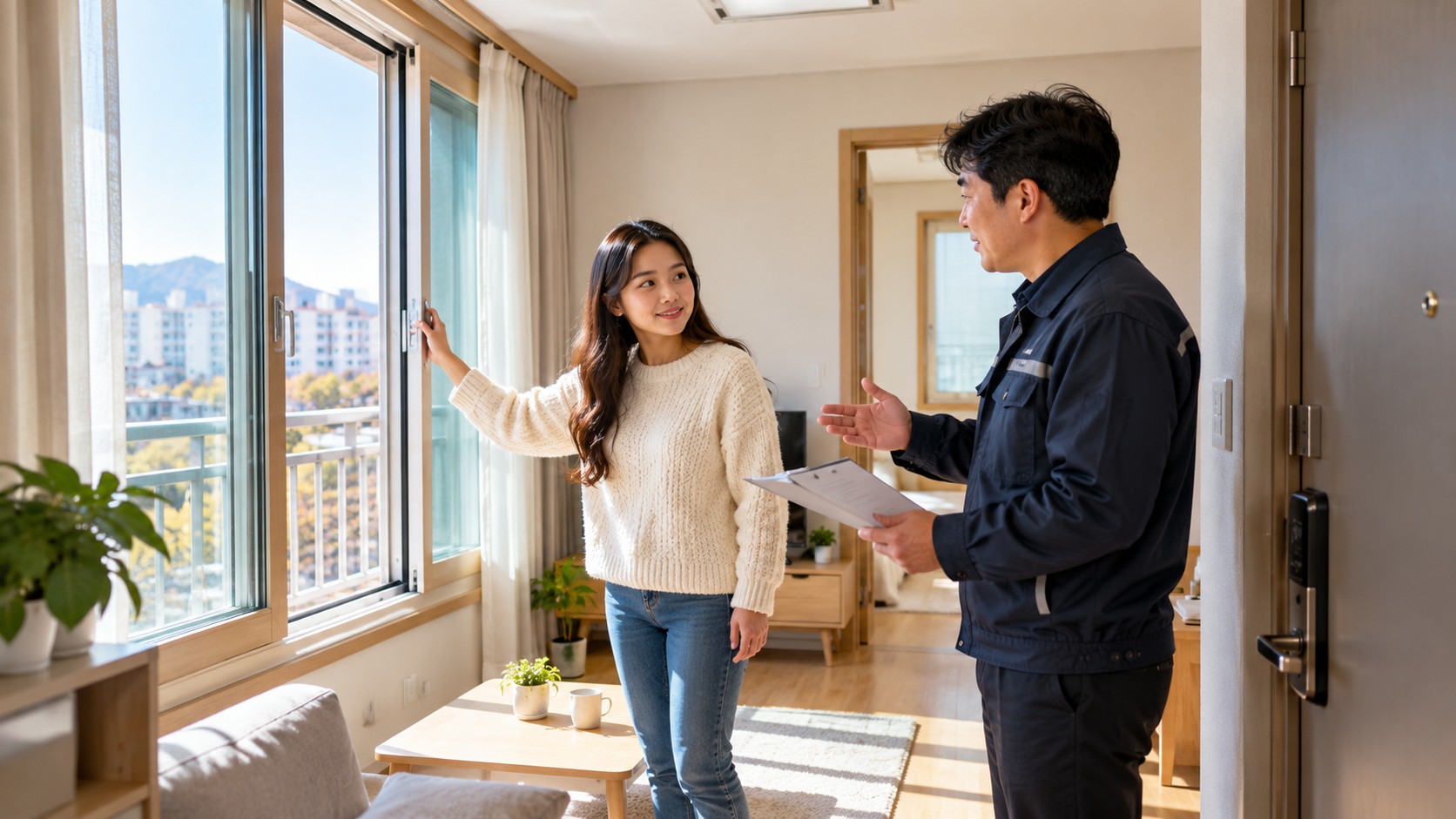
When a device is not working, organize your observations rather than guessing where the problem is and disassembling it. For example, isolate the problem as follows: 'The control screen does not turn on', 'The hot water comes on but the underfloor heating does not work', 'A specific error indication appears', and 'I don't know if other rooms in the same building are also having problems'. It is helpful to include photos, the time the problem first occurred, the room number, and the time you can be reached. Sensitive account information or door passwords are not transmitted.
Contact the manager, employer, landlord, or management office specified in the accommodation rules, and check the visit schedule before the repair person comes. Responsibility and cost burden for repairs may vary depending on the contract and facility operation method, so we cannot determine who will bear the cost. If there are repair costs, check the details of the work and the receipt. If an imminent gas leak, fire, or health hazard is suspected, evacuation and reporting will not be delayed due to discussions about costs or contact information.
last inspection
- Have you checked the heating method of the accommodation and whether there is a shared or individual regulator?
- Did you understand that heating, hot water, indoor temperature, ondol, and going out mode can have different meanings?
- Did you go through the settings one at a time and record any errors or failures?
- Have you checked the accommodation guidelines regarding ventilation, insulation, and freeze management?
- Do you know that when you smell gas, you should not turn on electric appliances and should evacuate and contact others safely?
- Have you saved the address of your accommodation and the person to contact when you need boiler repair?
Related posts: Rules for living in shared accommodation for seasonal workers in Korea - electricity, heating, cooling, cleaning, fire prevention. How to tell the staff in Korean that the accommodation equipment is broken? Language for daily life in Korea, Part 6You can practice separately.
Official data confirmation date: 2026-11-01. Korea Gas Safety Corporation — Guidelines for safe use of gas · Korea Gas Safety Corporation — Emergency measures in case of leak · Korea Energy Agency — Tips for saving heating costs. This text is general daily life information and does not replace the user manual for a specific device, on-site safety inspection, or medical diagnosis. All photos are for AI explanation purposes only, not records of specific customers or buildings.