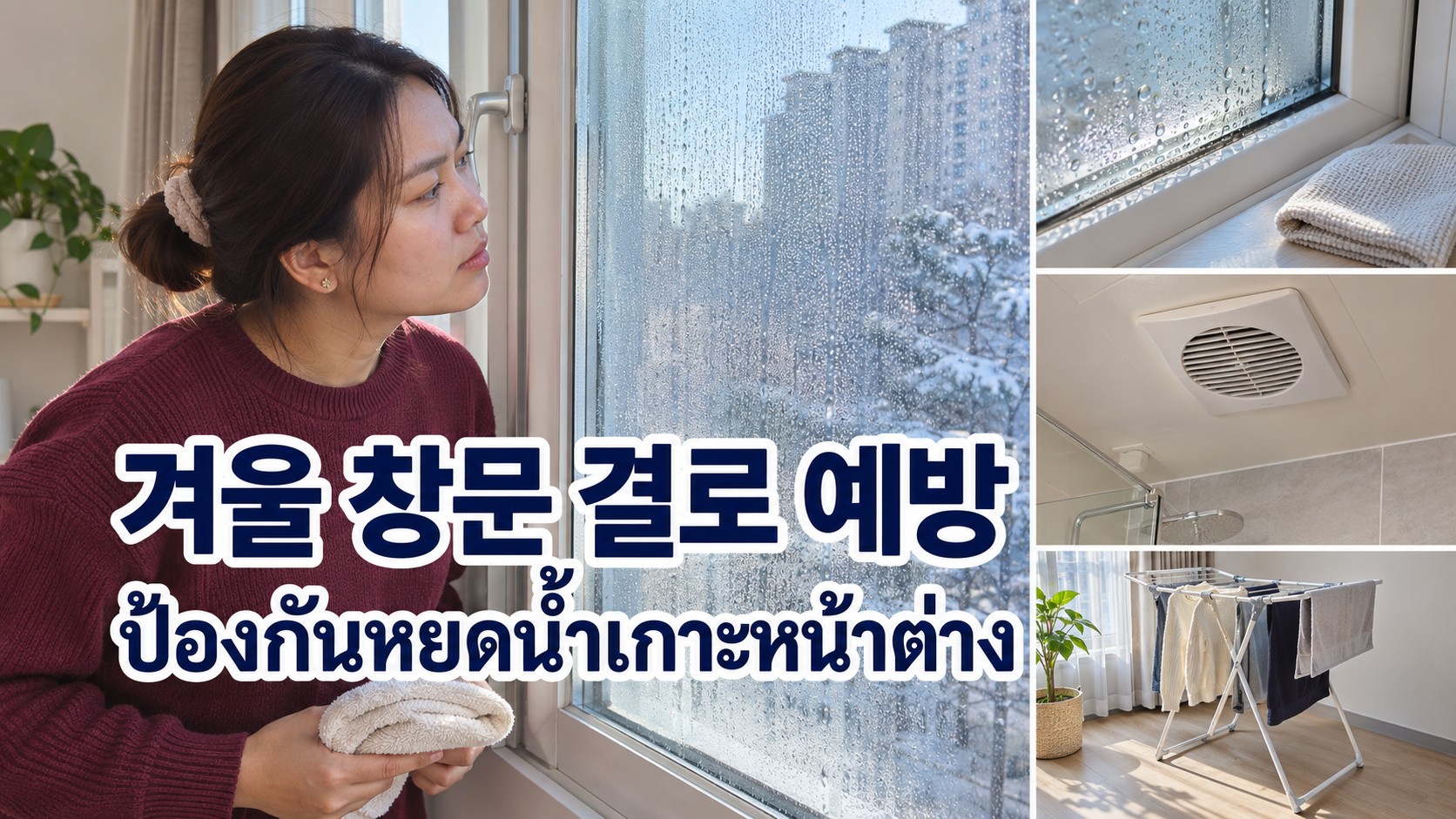
During your first winter in Korea, water on the windows in the morning may make you think the window is broken. Condensation occurs when humid indoor air meets cold glass and turns into droplets. If the frame stays wet, nearby wallpaper and curtains can become damp too, so look for moisture sources rather than just wiping away the water.
This guide covers prevention and observations that residents can make in an ordinary studio. It is not a standard for determining building defects or liability for repair costs. If mold has already spread widely or water is dripping from the ceiling, request an inspection from the manager or landlord instead of relying only on changes in daily habits.
First, check where and when water appears
Prepare a dry cloth, a thermometer-hygrometer, a phone camera, and a simple notebook. Check whether droplets cover the inside of the glass, water runs from one side of the frame, or stains appear on the wall or ceiling. If a particular spot gets wet after rain or a water stain grows, a leak is also possible. Do not determine the cause from a photo alone; report when it occurs as well.
Place the thermometer-hygrometer in the living area, away from heaters and wet window frames, and compare readings at the same location. The U.S. Environmental Protection Agency recommends keeping indoor relative humidity below 60% if possible, ideally at 30–50%. This is a reference range for moisture management, not a legal assessment standard for Korean rental homes. Even within the range, persistent wetness around a cold window needs further investigation.
Start mornings by drying surfaces, and reduce moisture during daily activities
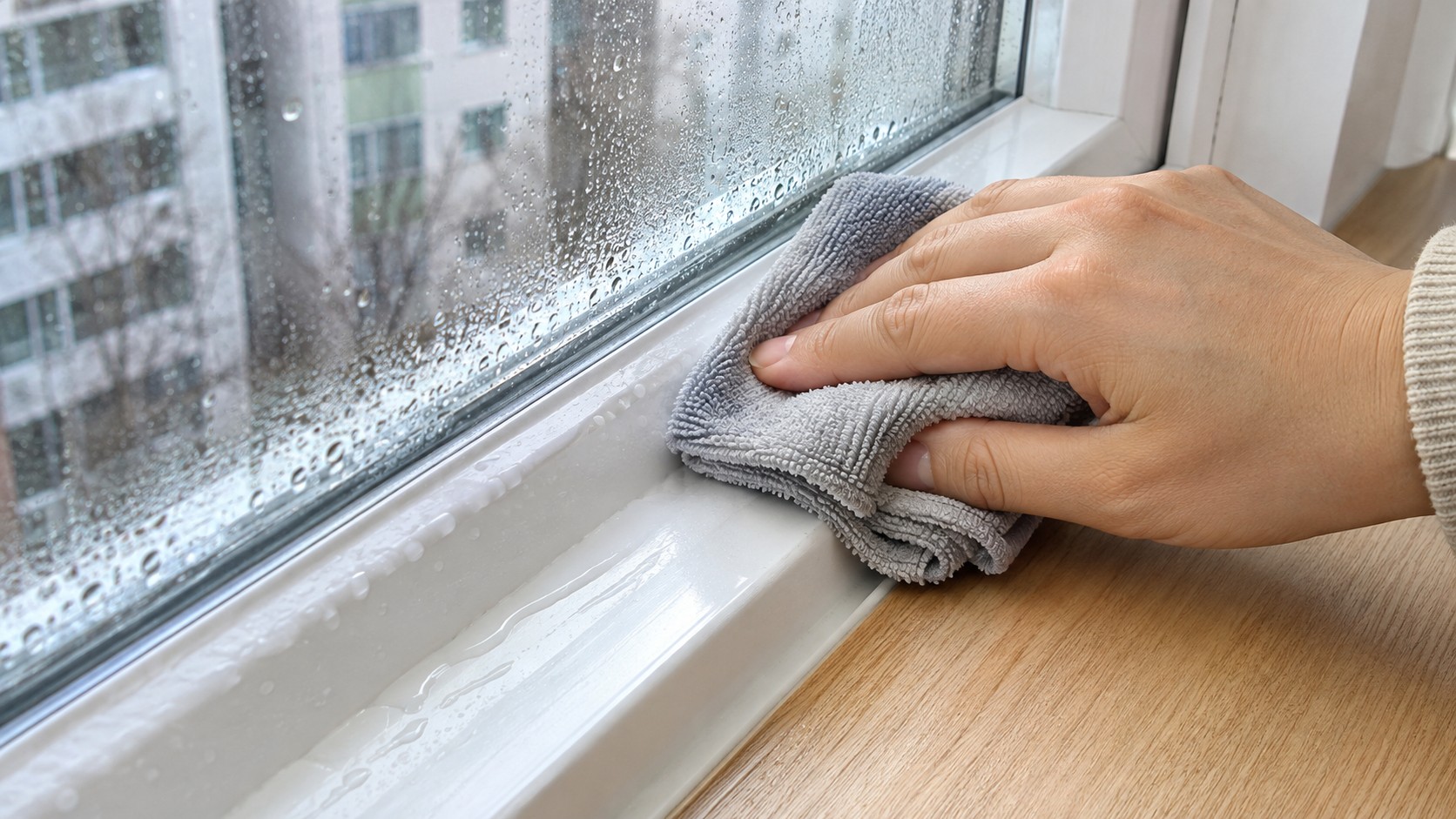
Wipe water from mold-free glass and frames with an absorbent cloth, and dry the cloth too. Move nearby items so pooled water cannot touch curtains or bedding. Do not lean out of the window or climb onto a high chair to clean the outer glass. If you do not understand the drainage holes or window structure, ask the manager rather than inserting tools or drilling holes yourself.
Showering and cooking add water vapor indoors. Check that the bathroom fan and kitchen exhaust work properly, and use them during those activities. Fan noise alone does not prove that air is being exhausted effectively. If odors and moisture linger, ask the manager to check the system. Avoid taping over ventilation openings to keep out the cold.
Ventilate through windows in short sessions after checking outdoor air conditions and safety, and compare moisture and humidity afterward. No single ventilation duration or frequency is right for every home. Instead of leaving a window open while out, check conditions and close it while you are home. If the home has a ventilation system, operate it according to its manual and the building's guidance.
Review laundry, furniture placement, and dehumidifier use separately
For a hypothetical example, imagine someone hanging laundry indoors after work and sleeping with a humidifier on, then finding water on the frame the next morning. They can first reduce or stop humidifier use and record how humidity changes while the laundry dries. This helps identify actual moisture sources rather than simply turning up the heat because condensation has appeared.
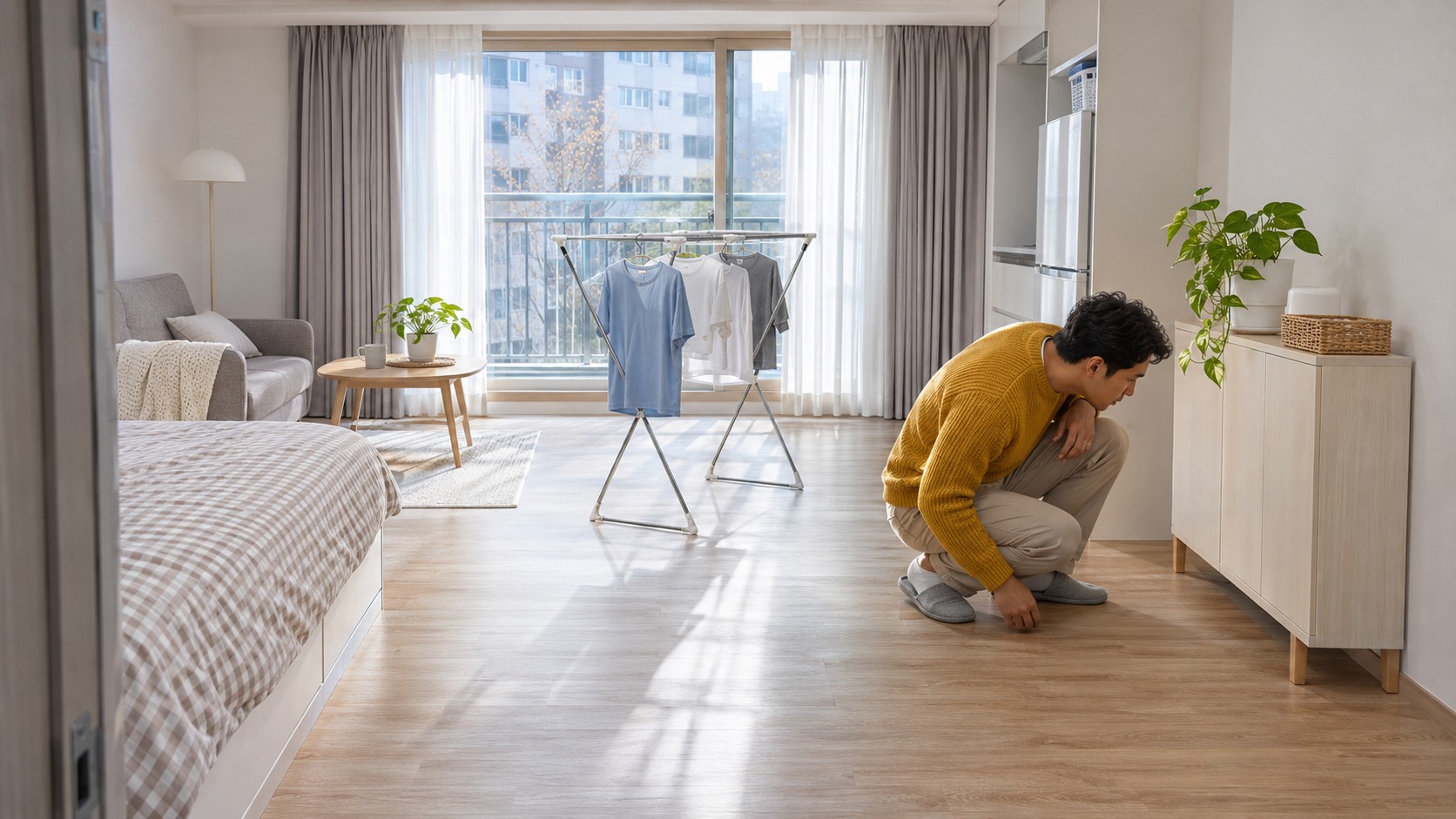
Keep wet laundry away from cold walls and curtains, leaving room for drying. Visually check behind furniture and inside cabinets for stains and musty odors. Do not strain to move heavy furniture alone; consider a layout that allows air to circulate between the wall and furniture. Do not peel off wallpaper yourself to inspect behind suspected mold.
If using a dehumidifier, check that it suits the room size and that its inlet and outlet are not blocked. Follow the manual for tank and filter care and permitted operating temperatures. A dehumidifier reduces airborne moisture; it does not repair leaking pipes or damaged walls. A full tank alone does not mean the problem is solved, so check the same location again the next day.
If you see mold, assess the cleanup situation first
Do not merely spray air freshener on mold or cover it with new wallpaper or paint. For small areas on hard surfaces, appropriate protective equipment and complete drying after cleaning matter, but wiping the surface may not solve mold in absorbent materials such as wallpaper or drywall. If you are unsure how to clean it or it returns, ask the manager and a qualified contractor to investigate the cause.
The U.S. Centers for Disease Control and Prevention advises protecting the respiratory tract, hands, and eyes during mold cleanup and warns never to mix bleach with ammonia or any other cleanser. People with allergies, respiratory conditions such as asthma, or immune suppression should not clean mold themselves. With strong odors, widespread contamination, or recurring water stains, get help rather than tearing into walls or using large amounts of chemicals alone.
Include photos and observations when requesting repairs
Send the landlord or manager both a wider photo showing the location in the room and a close-up. Note when you first noticed it, any connection with rain, differences between morning and evening, whether water returns after wiping, and the ventilation and dehumidification measures you tried. Describe observed facts rather than deciding who is at fault first; this helps organize the inspection.
Agree on an inspection time and the areas to check, and keep the messages and replies. Responsibility for costs and the extent of wallpaper replacement may be disputed depending on the cause and contract, so do not decide based on this article alone. Before paying for nonurgent replacement work, confirm its scope and who will bear the cost. If water flows toward electrical appliances or outlets, do not touch the wet area; immediately notify the manager from a safe place.
Final checks and related reading
Today, check whether you removed the water, reduced moisture-producing activities, and chose the spots to inspect next. If the same spot is wet again tomorrow, add photos and continue addressing it. The key is not to assume that a briefly dry window frame means every leak or mold problem has ended.
Guide to studio heating and hot-water controls and gas safety checks
Official references and date checked
Sources checked: 2026-11-12. The foreign public-agency sources below were used to verify general principles for managing condensation, moisture, and mold. They cannot replace an assessment of rental liability in Korea or defects in an individual building.
U.S. Environmental Protection Agency: Mold and moisture in the home
Health Canada: Addressing moisture and mold indoors
U.S. Centers for Disease Control and Prevention: Mold cleanup safety