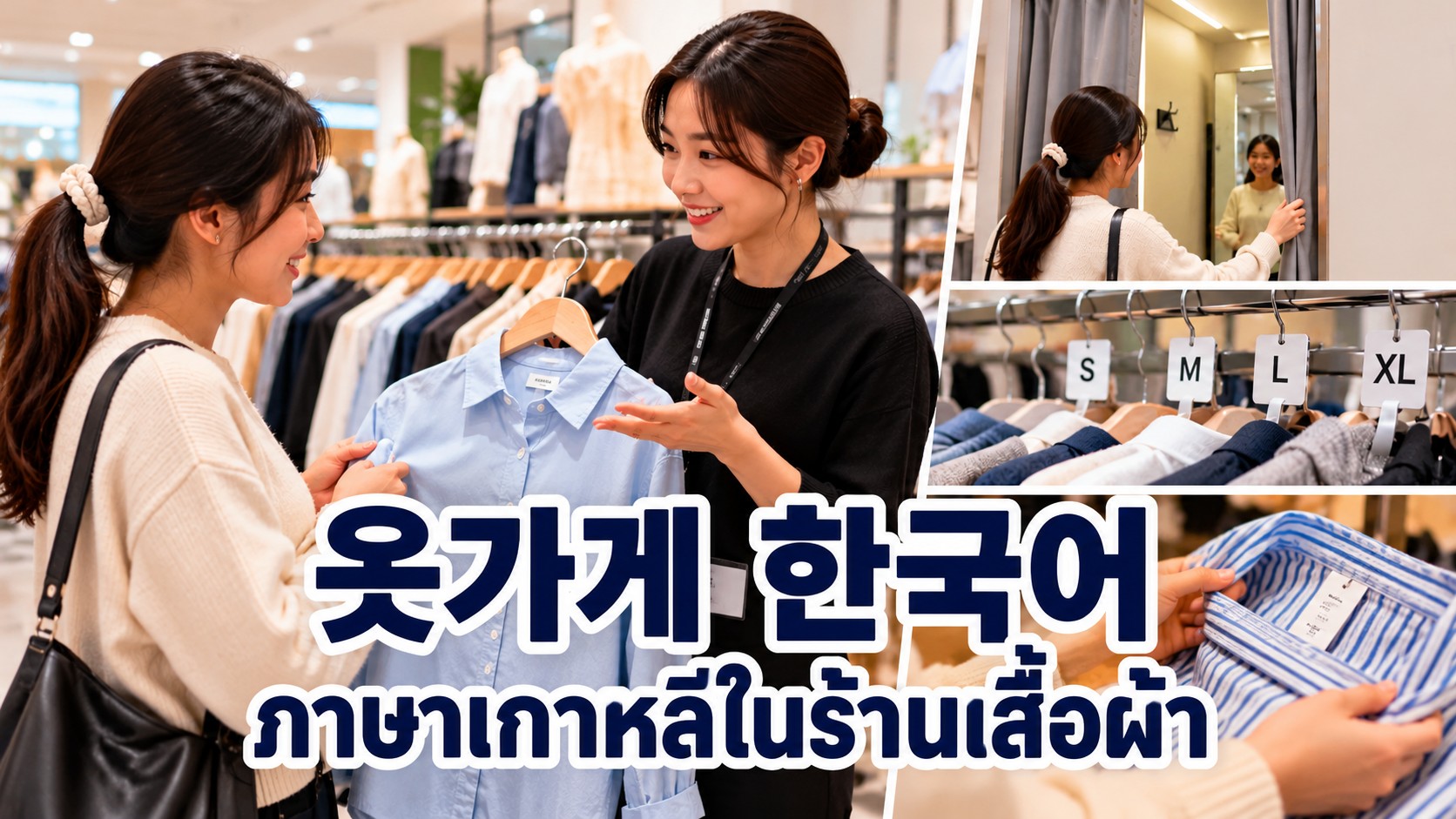
Before entering the clothing store
If you find clothes you like in a Korean clothing store but don't know your size or can't find a space to try them on, you can ask the staff in simple Korean. In this episode Check size → Permission to try on → Find 피팅룸 → Description of fit → Check conditions for 교환 → Receive receipt Practice in order. The actual rules for purchasing and 교환 may vary depending on the store, product, or situation, and the employee's answers below are a virtual conversation for learning purposes.
Even if you don't know Korean well, say a short sentence first, and show the product tag and instructions if necessary. In the example conversation, characters from previous episodes, such as passengers and drivers, do not appear. this time A situation where a customer asks a question and a store employee answers itare clearly distinguished. Thai meaning and pronunciation help are examples of Korean learning, so they are displayed so that the original text remains the same even if you change the screen language. Thai ending Yes/Yes Please choose the form that suits you. Phonetic transcriptions are for reference only and do not perfectly reproduce actual sounds.
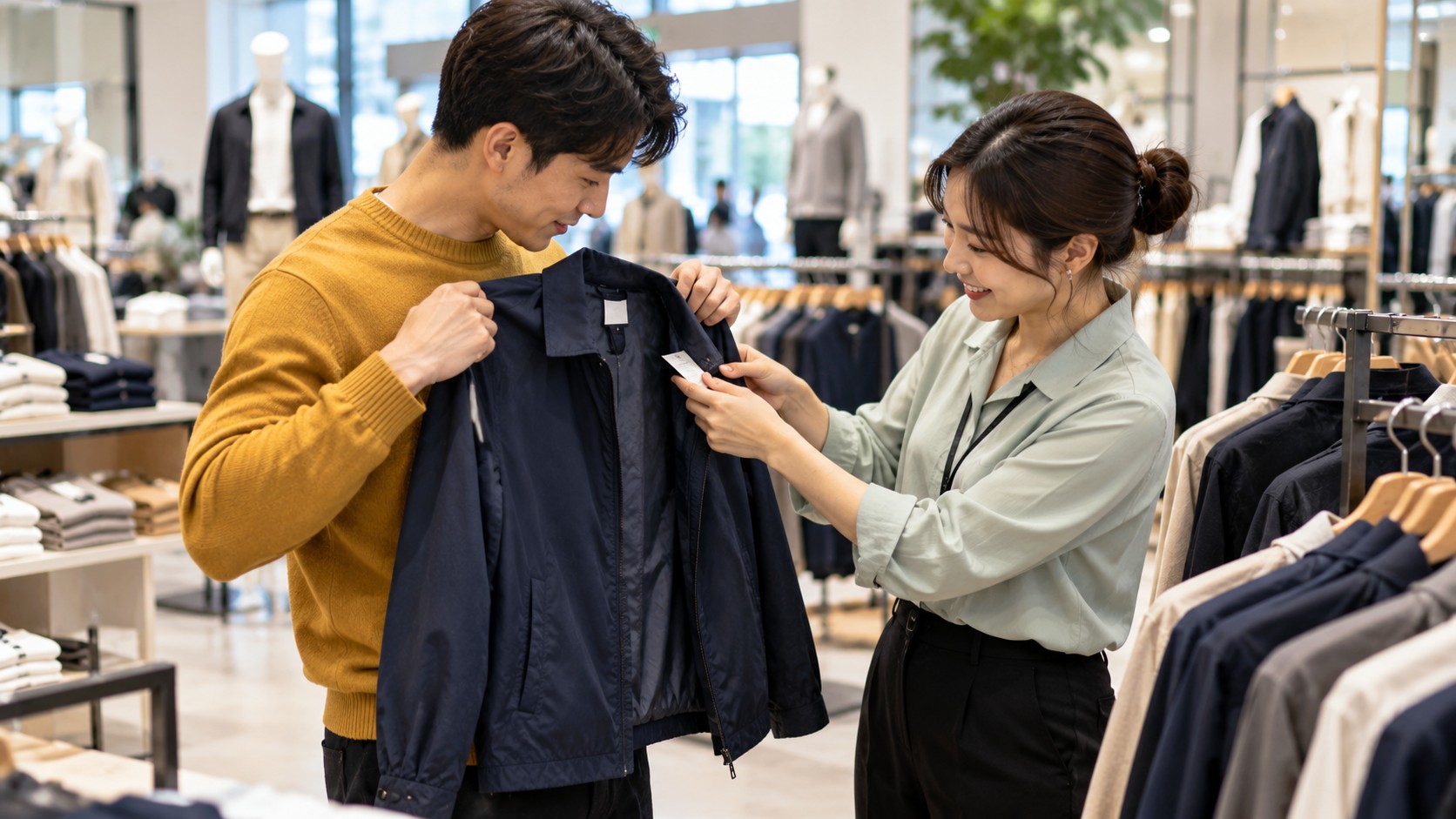
1. When asking if 다른 사이즈 exists
Korean: 이거 다른 사이즈 있어요?
Thai meaning: มีไซซ์อื่นของตัวนี้ไหมคะ/ครับ
Pronunciation help: อี-กอ ทา-รึน ซา-อี-จือ อี-ซอ-โย
When to use it: You like the clothes, but the size on display doesn't fit.
It's easy for employees to understand what size you're looking for by pointing to the clothes and asking. The actual dimensions of marks such as S, M, and L may differ depending on the store and brand, so do not make a decision based solely on the same letters. Check the measurements that are important to you, such as shoulder, waist, and length, and also consider that you may not have 다른 사이즈.
short conversation
Customer: 이거 다른 사이즈 있어요?
Thai: มีไซซ์อื่นของตัวนี้ไหมคะ/ครับ
Staff: 네, 다른 사이즈를 확인해 드릴게요.
Thai: ได้ค่ะ/ครับ จะเช็กไซซ์อื่นให้
Things that can be confusing: ‘다른 사이즈’ refers to size, not color. If you need a different color, you will need to ask a separate color question.
To repeat: 이거 다른 사이즈 있어요? Say the sentence slowly once, then say it again naturally while actually pointing to the clothes.
2. Ask if you can try on the clothes
Korean: 입어 봐도 돼요?
Thai meaning: ขอลองใส่ได้ไหมคะ/ครับ
Pronunciation help: อี-บอ บวา-โด ทเว-โย
When to use it: When asking permission to try on clothes before buying.
With your clothes in hand, talk to the staff and listen to their answer. Depending on the store, the items you can try on, hygiene protection conditions, and the order of using 피팅룸 may vary. In particular, there may be restrictions on trying on underwear and accessories, so do not assume that you can try them on.
short conversation
Customer: 입어 봐도 돼요?
Thai: ขอลองใส่ได้ไหมคะ/ครับ
Staff: 네, 피팅룸에서 입어 보세요.
Thai: ได้ค่ะ/ครับ ลองในห้องลองเสื้อได้เลย
Things that can be confusing: ‘입어 보다’ means wear it to check before purchasing. Your purchase is not automatically confirmed after trying it on, but you must be careful not to damage the product.
To repeat: 입어 봐도 돼요? Say the sentence slowly once, then say it again naturally while actually pointing to the clothes.
3. 피팅룸 Ask for location
Korean: 피팅룸이 어디예요?
Thai meaning: ห้องลองเสื้ออยู่ที่ไหนคะ/ครับ
Pronunciation help: พี-ทิง-รู-มี ออ-ดี-เย-โย
Usage Situation: You've been told you can try on clothes, but you don't know where.
‘피팅룸’ is a store expression that refers to a space where you can try on clothes. When the staff gives you directions by hand, check your location and then move. It is best not to leave your bags or personal items in the store, and follow store instructions regarding the number of clothes you can carry at one time.
short conversation
Customer: 피팅룸이 어디예요?
Thai: ห้องลองเสื้ออยู่ที่ไหนคะ/ครับ
Staff: 저쪽 오른편에 있어요.
Thai: อยู่ด้านขวาทางโน้นค่ะ/ครับ
Things that can be confusing: If you don't understand the direction given by the staff, don't just open another door, but ask briefly again.
To repeat: 피팅룸이 어디예요? Say the sentence slowly once, then say it again naturally while actually pointing to the clothes.
4. Talk about feeling like clothes are too small or too big
Korean: 이건 좀 작아요.
Thai meaning: ตัวนี้เล็กไปนิดหน่อยค่ะ/ครับ
Pronunciation help: อี-กอน จม จา-กา-โย
When to use it: After trying on clothes, you explain that your current size is a little small.
Try on the clothes yourself and check for discomfort in areas such as shoulders, sleeves, and waist before speaking. ‘이건 좀 작아요’ is not an accusation that the other person did something wrong, but an opinion about the size of the clothes. If it’s too big, you can say ‘이건 좀 커요’, but this time, try learning one basic sentence to change the size first.
short conversation
Customer: 이건 좀 작아요.
Thai: ตัวนี้เล็กไปนิดหน่อยค่ะ/ครับ
Staff: 더 큰 사이즈를 보여 드릴까요?
Thai: ให้หยิบไซซ์ที่ใหญ่กว่ามาให้ดูไหมคะ/ครับ
Things that can be confusing: Don't judge whether a product is small or large just by looking at the size label, but check the actual fit and the store's measurement information.
To repeat: 이건 좀 작아요. Say the sentence slowly once, then say it again naturally while actually pointing to the clothes.
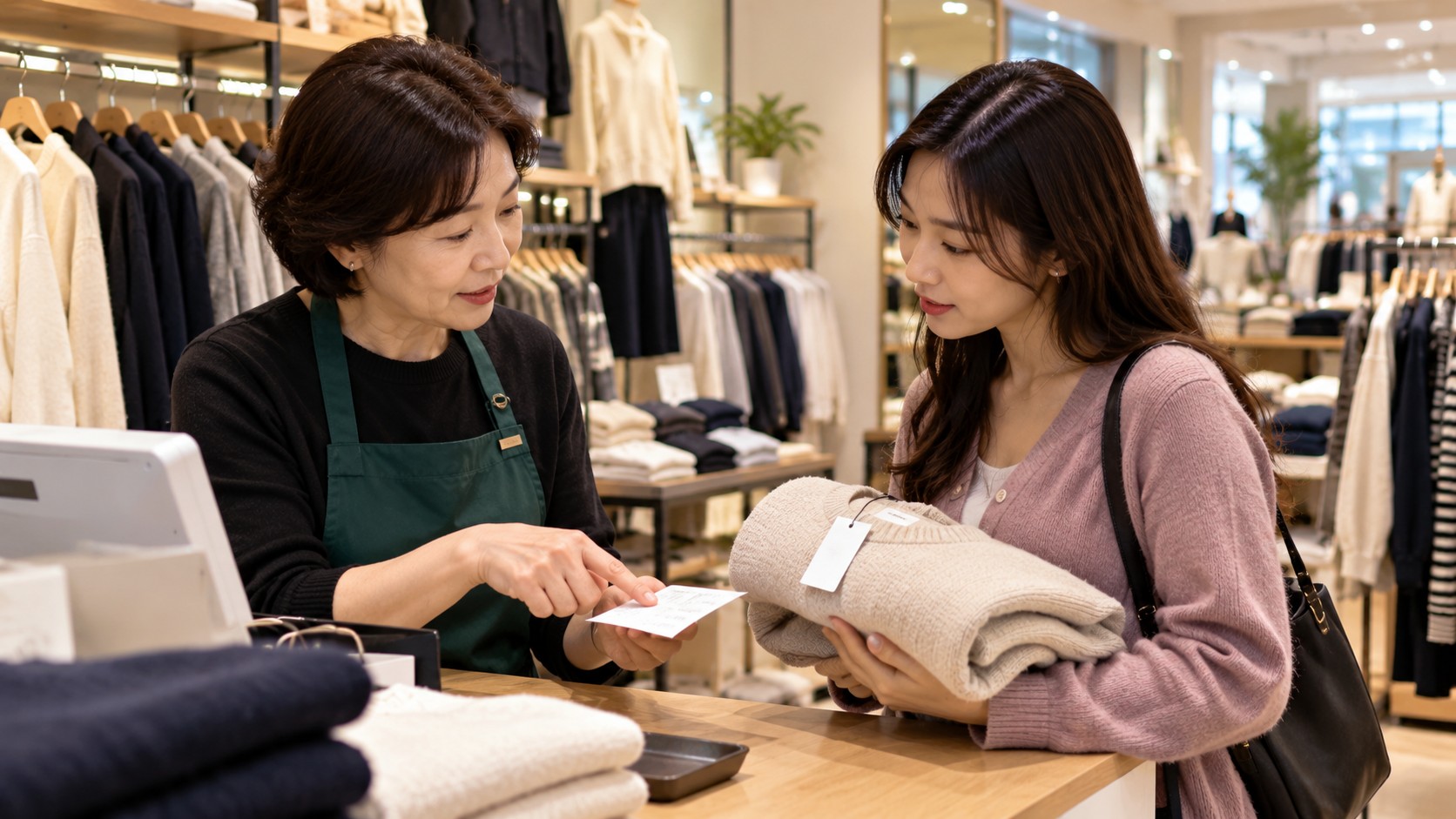
5. Ask 교환 availability before purchasing
Korean: 교환할 수 있어요?
Thai meaning: เปลี่ยนสินค้าได้ไหมคะ/ครับ
Pronunciation help: คโย-ฮวัน-ฮัล ซู อี-ซอ-โย
Usage situation: Before paying, if the size does not fit, it is time to check if you can exchange it for another product or size.
‘교환’ refers to changing an already purchased product to a different product or size. This is different from getting your money back like ‘환불’. The answer to whether you can 교환 may vary depending on the store's instructions, product condition, purchase method, payment history and reason. Promotional products or used products may have separate conditions, so it is best to check before purchasing.
short conversation
Customer: 교환할 수 있어요?
Thai: เปลี่ยนสินค้าได้ไหมคะ/ครับ
Staff: 매장 교환 조건을 확인해 드릴게요.
Thai: จะตรวจสอบเงื่อนไขการเปลี่ยนสินค้าของร้านให้ค่ะ/ครับ
Things that can be confusing: Even if the employee says “가능합니다”, it doesn’t mean there are no conditions at all. Also check the terms and conditions on receipts, purchase records, and product tags.
To repeat: 교환할 수 있어요? Say the sentence slowly once, then say it again naturally while actually pointing to the clothes.
6. Checking the 교환 condition accurately
Korean: 교환 조건을 알려 주세요.
Thai meaning: ช่วยบอกเงื่อนไขการเปลี่ยนสินค้าให้หน่อยค่ะ/ครับ
Pronunciation help: คโย-ฮวัน โจ-กอ-นึล อัล-รยอ จู-เซ-โย
Usage situation: It is time to hear the answer to the question of 교환 and request further information regarding the period, receipt, selection, and usage status.
This statement is not “무조건 교환해 달라”, it is a request to explain the conditions that apply. Check when the 교환 availability period is calculated, whether a purchase receipt or payment record is required, and what happens when the product is worn or the tag is removed. If there is a notice provided by the store, you should check whether it applies to the product you are actually purchasing.
short conversation
Customer: 교환 조건을 알려 주세요.
Thai: ช่วยบอกเงื่อนไขการเปลี่ยนสินค้าให้หน่อยค่ะ/ครับ
Staff: 구매하실 상품의 조건을 설명해 드릴게요.
Thai: จะอธิบายเงื่อนไขของสินค้าที่คุณจะซื้อให้ค่ะ/ครับ
Things that can be confusing: Please do not take the conditions outlined in the store as a universal rule for the entire country for a specific period of time. Disputes regarding defective products or products that are different from the label may have different judgment standards than simple change of mind 교환.
To repeat: 교환 조건을 알려 주세요. Say the sentence slowly once, then say it again naturally while actually pointing to the clothes.
7. Receive receipt after payment
Korean: 영수증 주세요.
Thai meaning: ขอใบเสร็จด้วยค่ะ/ครับ
Pronunciation help: ยอง-ซู-จึง จู-เซ-โย
Usage Situation: After payment has been made, you may request a record of the clothes you purchased and the amount for which they were purchased.
Some places issue text or electronic receipts rather than paper receipts. After confirming that payment has been completed, review information such as product name, amount, and time of purchase, and keep the receipt. This will help you explain your purchase later when you inquire about 교환. Do not post receipts containing personal information such as card numbers or phone numbers on public bulletin boards.
short conversation
Customer: 영수증 주세요.
Thai: ขอใบเสร็จด้วยค่ะ/ครับ
Staff: 네, 영수증 여기 있습니다.
Thai: ได้ค่ะ/ครับ นี่ใบเสร็จค่ะ/ครับ
Things that can be confusing: Even if you receive a receipt, not all products are necessarily 교환 or 환불 available. Remember the store conditions you checked before choosing an item.
To repeat: 영수증 주세요. Say the sentence slowly once, then say it again naturally while actually pointing to the clothes.
Let's talk from the scene of choosing clothes to payment.
Divide the roles of customer and employee with your friend. The customer's role is to ask about the size of the clothes, wait for the employee's response, and ask if it is possible to try them on. If the clothes are small in 피팅룸, describe your current size. Before deciding to purchase, ask additionally whether 교환 is possible and, if so, what conditions must be followed. Finally, you will receive a receipt after payment is completed. If you don't understand the answer, you can ask for it to be explained again slowly rather than rushing.
As a store employee, don't just answer “yes” to every question. If you need confirmation, practice explaining the store rules. It is important not to confuse inquiries about problems with the product itself with a simple change of mind prior to purchase. If you do not know the actual period and amount of the store, do not make up numbers to answer. Hypothetical conversations should not be presented as the results of actual legal or consumer consultations.
Checked data and related articles
Data confirmation date: 2026-10-31. Example expressions and dialogues have been newly created for learning Korean. The exact meaning and pronunciation of words can be found in the Basic Korean Dictionary of the National Institute of the Korean Language. For specific disputes related to 교환·환불, please refer to the Korea Consumer Agency's guidance and the actual conditions of the relevant store, but do not interpret the conversation in this article as a legal guarantee.