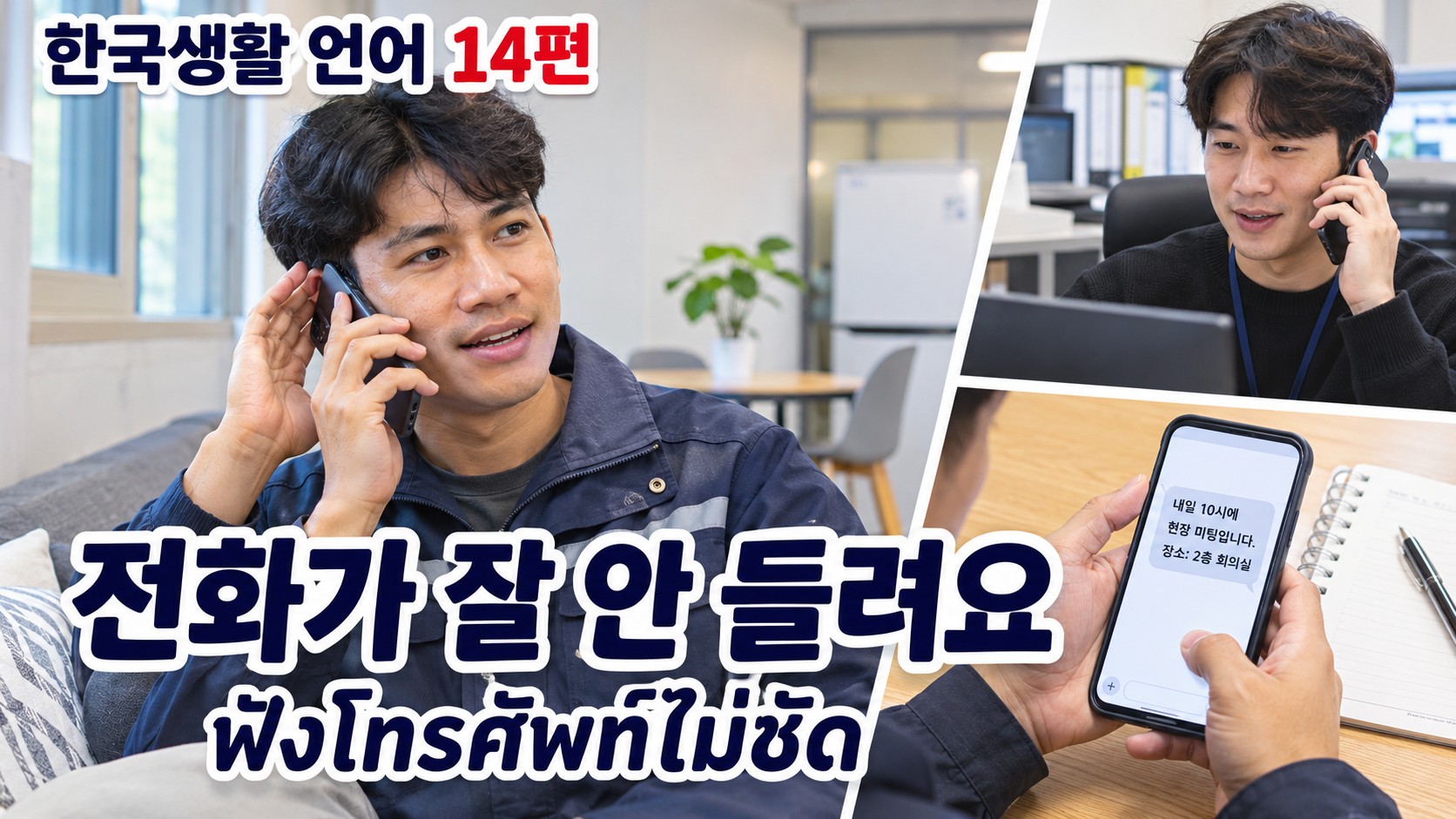
Why you may need to ask again on the phone
In this lesson, you will learn how to politely ask someone to repeat themselves when you answer a phone call in Korean and the other person speaks quickly or the sound cuts out. It is designed so that Lao users who are not yet familiar with Korean can read the Thai explanations of each Korean expression and practice using them.
For example, a coworker may tell you over the phone where to meet, but you might not hear the time clearly. Instead of pretending that you understood, asking again or requesting a text message can help reduce misunderstandings. The people, arrangements, and times below are all fictional examples for language practice.
When you hear an important date, time, or address, do not just repeat the numbers. Also confirm whether the time is in the morning or afternoon, the name of the place, and whether the message has actually arrived. The conversations below are for language practice; they do not mean that any shop or organization guarantees that it will send a text message.
8 key expressions you can use right away
1. 여보세요?
ฮัลโหล? (ใช้รับโทรศัพท์)
ยอ-โบ-เซ-โย?
Use this to begin a call while checking that the other person has answered. You can also use it to get the other person’s attention again during the call.
This is a greeting for starting a conversation by phone only. It is not an expression for asking what the other person just said.
2. 죄송한데 잘 안 들려요.
ขอโทษนะคะ/ครับ ได้ยินไม่ค่อยชัด
ชเว-ซง-ฮัน-เด ชัล อัน ทึล-ลยอ-โย
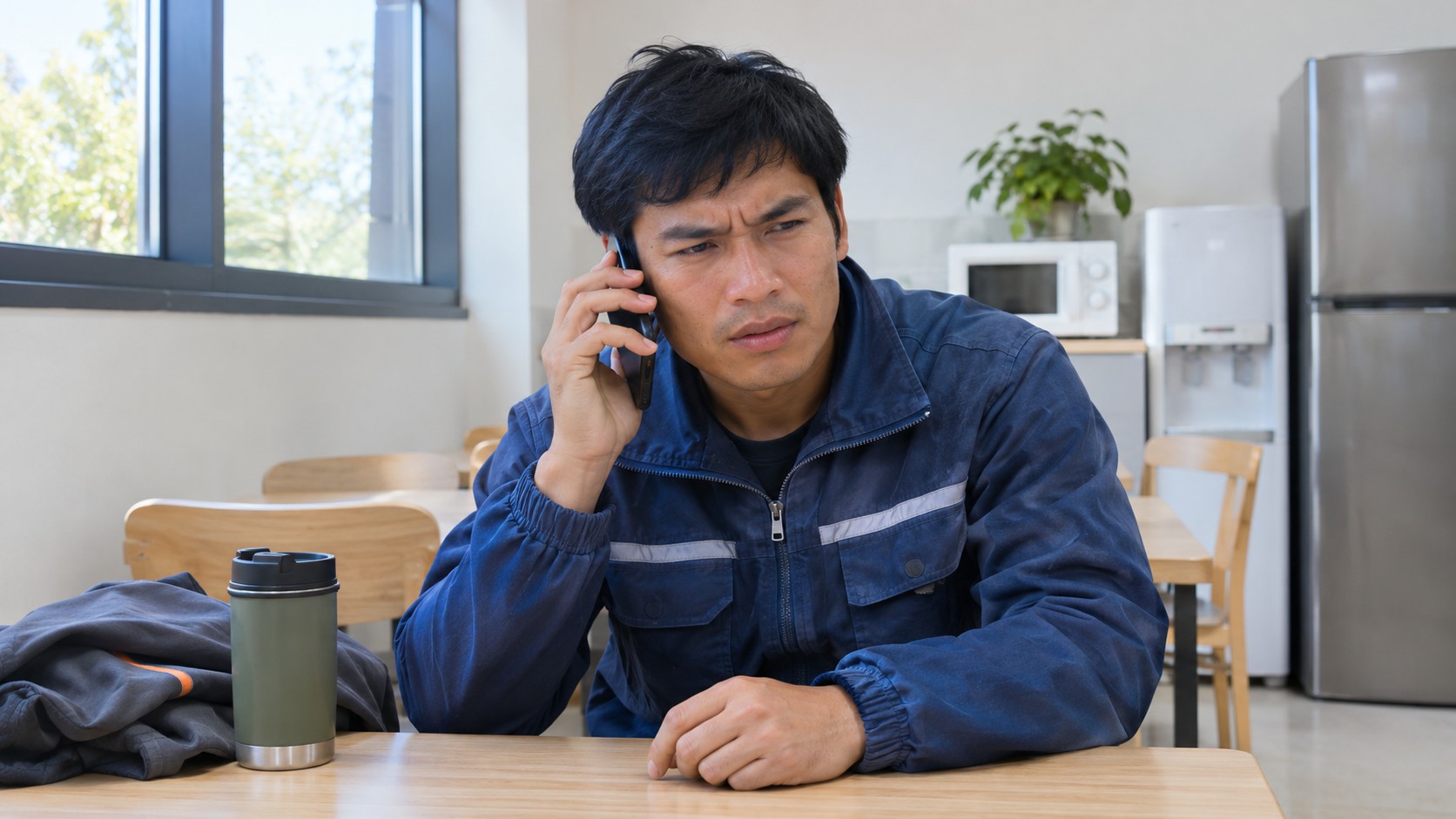
Use this when a poor phone signal or background noise makes it difficult to hear the other person’s voice clearly. It is a polite way to begin checking something you may have misheard.
It does not mean that the other person cannot speak. The person having trouble hearing is you, the listener on the phone, rather than the person speaking.
3. 다시 한 번 말씀해 주세요.
กรุณาพูดอีกครั้งได้ไหมคะ/ครับ
ทา-ชี ฮัน บอน มัล-ซึม-แฮ ชู-เซ-โย
Ask the other person to repeat their previous sentence when the sound cuts out or you miss what was said. This is also a polite expression to use with strangers or older people.
This expression does not demand that the other person repeat everything from the beginning. If you missed only a particular number, specify that number when you ask again.
4. 조금 천천히 말씀해 주세요.
กรุณาพูดช้าลงอีกนิดได้ไหมคะ/ครับ
โช-กึม ชอน-ชอน-ฮี มัล-ซึม-แฮ ชู-เซ-โย
Use this when you can hear the voice on the phone, but the Korean is spoken too quickly for you to understand. This is different from asking someone to speak louder.
The Korean word “천천히” means to slow down your speaking speed. If the connection is poor, speaking more slowly may still not solve the problem.
5. 문자로 보내 주실 수 있어요?
ช่วยส่งเป็นข้อความได้ไหมคะ/ครับ
มุน-จา-โร โพ-แน ชู-ชิล ซู อี-ซอ-โย?
Politely ask for a text message when you need written confirmation of a date, time, or address that you heard over the phone. Check with the other person whether receiving a text message will be possible.
This is only a request to send a text message. It does not mean that the other person has definitely agreed to send one. Check that the message has arrived.
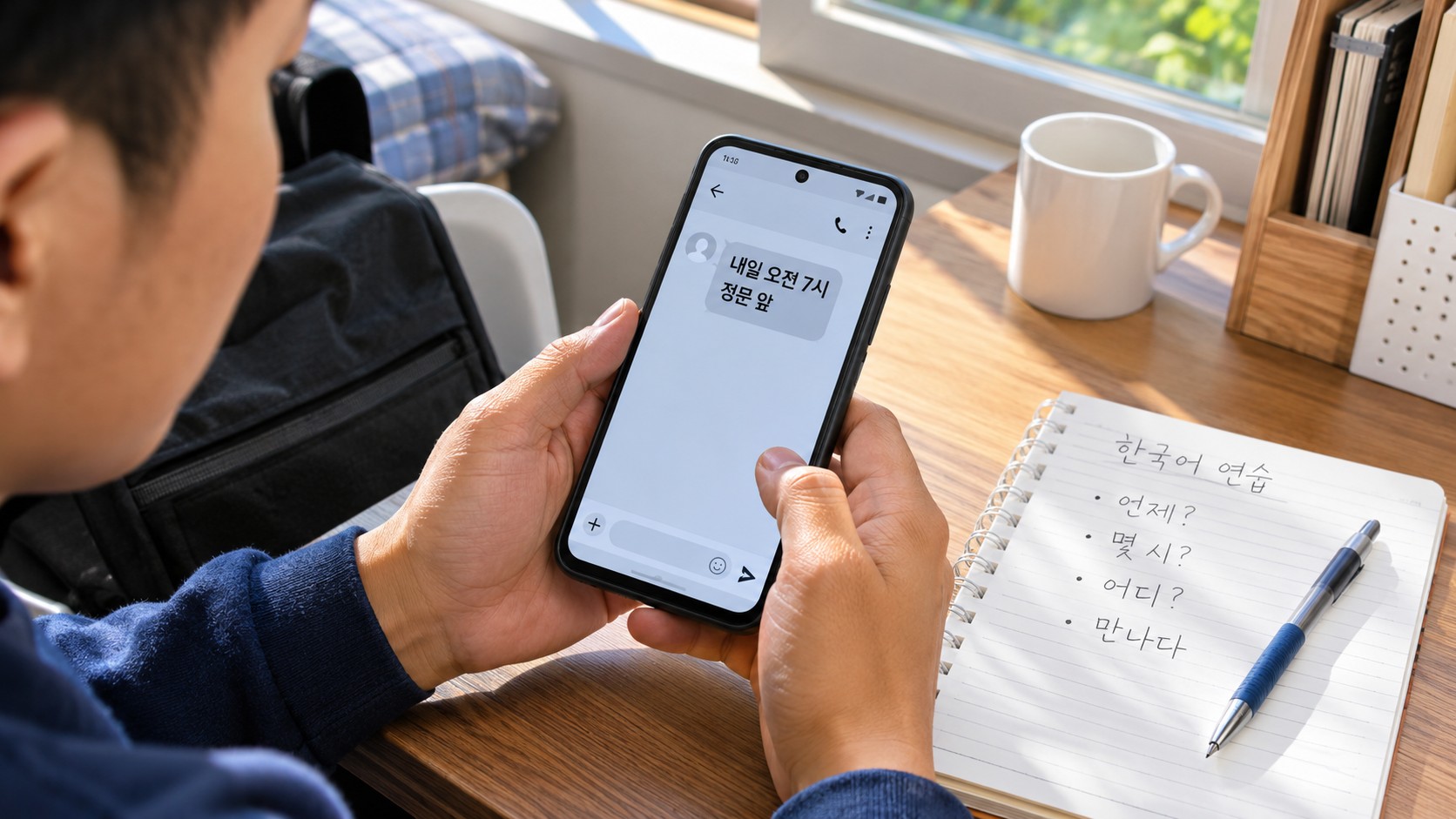
6. 내일 오전 일곱 시, 맞나요?
พรุ่งนี้เจ็ดโมงเช้า ถูกต้องไหมคะ/ครับ
แน-อิล โอ-จอน อิล-กบ ชี มัน-นา-โย?
Repeat the time you heard over the phone in your own words to confirm it. The arrangement for tomorrow at 7 a.m. in this example is fictional and is for practice; it is not an actual work starting time.
Confusing morning and afternoon makes a difference of 12 hours. Do not check only the numbers; confirm the date and whether the time is in the morning or afternoon as well.
7. 제가 이해한 내용이 맞는지 확인할게요.
ขอเช็กก่อนนะคะ/ครับ ว่าฉันเข้าใจถูกไหม
เช-กา อี-แฮ-ฮัน แน-ยง-อี มัน-นึน-จี ฮวัก-อิน-ฮัล-เก-โย
Use this when you want to restate what you heard in your own words and ask the other person to confirm it. Say what you understood, then wait for the other person’s answer.
This sentence means that you are going to check your understanding, not that the other person has already confirmed it. Make sure you hear their answer or receive it by text message.
8. 다시 전화드릴게요.
เดี๋ยวจะโทรกลับใหม่นะคะ/ครับ
ทา-ชี ชอน-ฮวา-ดือ-ริล-เก-โย
Tell the other person that you will call again when a poor connection or noisy surroundings make it difficult to continue the conversation now.
This means that you will make the next call. It is not a request for the other person to call you again, so do not reverse who will make the call.
Phone conversations in fictional situations
Situation 1: The sound cuts out during a call
A coworker has called, but you cannot hear part of the conversation because of background noise. The conversation below is a fictional example created for practice.
Coworker : 안녕하세요. 내일 아침에 어디서 만날까요? — สวัสดีครับ/ค่ะ พรุ่งนี้เช้าจะพบกันที่ไหนดี
Me : 죄송한데 잘 안 들려요. — ขอโทษนะคะ/ครับ ได้ยินไม่ค่อยชัด
Me : 다시 한 번 말씀해 주세요. — กรุณาพูดอีกครั้งได้ไหมคะ/ครับ
Coworker : 내일 아침에 정문 앞에서 만나요. — พรุ่งนี้เช้าพบกันหน้าประตูใหญ่
Me : 네, 감사합니다. — ค่ะ/ครับ ขอบคุณค่ะ/ครับ
Situation 2: Confirming the time and place by text message
A coworker tells you the time of a fictional arrangement. The time of 7 a.m. is only an example for pronunciation practice, not an actual work instruction or reservation.
Coworker : 내일 오전 일곱 시에 정문 앞에서 만나요. — พรุ่งนี้เจ็ดโมงเช้าพบกันหน้าประตูใหญ่
Me : 조금 천천히 말씀해 주세요. — กรุณาพูดช้าลงอีกนิดได้ไหมคะ/ครับ
Coworker : 내일 오전 일곱 시예요. — พรุ่งนี้เจ็ดโมงเช้า
Me : 내일 오전 일곱 시, 맞나요? — พรุ่งนี้เจ็ดโมงเช้า ถูกต้องไหมคะ/ครับ
Coworker : 네, 맞아요. — ใช่ ถูกต้อง
Me : 문자로 보내 주실 수 있어요? — ช่วยส่งเป็นข้อความได้ไหมคะ/ครับ
Coworker : 네, 문자로 보내 드릴게요. — ได้ จะส่งข้อความให้
Me : 감사합니다. 문자도 확인할게요. — ขอบคุณค่ะ/ครับ ฉันจะตรวจดูข้อความด้วย
Points that are easy to misunderstand
Choose an expression that matches why you cannot hear the other person instead of repeating the same sentence over and over. If the voice is quiet or the call keeps cutting out, say that you cannot hear clearly; if the person is speaking too fast, ask them to speak slowly (“천천히”).
If you are unsure whether you heard the time correctly over the phone, do not decide on your own; ask again to confirm it. In particular, confusing morning with afternoon or tomorrow with the day after tomorrow can make a big difference. Listen to the answer from the person who contacted you, and confirm it again by text message if necessary.
The Korean pronunciation guide is an approximate aid for learners reading these expressions for the first time. Actual pronunciation and intonation may vary from person to person, so read each sentence aloud 천천히 (slowly) several times.
Speaking practice and checking your understanding
What if you missed what the other person said on the phone?
다시 한 번 말씀해 주세요. — กรุณาพูดอีกครั้งได้ไหมคะ/ครับ
What if you can hear the voice, but the person is speaking too fast?
조금 천천히 말씀해 주세요. — กรุณาพูดช้าลงอีกนิดได้ไหมคะ/ครับ
What if you want to receive the agreed time in writing after hearing it over the phone?
문자로 보내 주실 수 있어요? — ช่วยส่งเป็นข้อความได้ไหมคะ/ครับ
How do you say that you will make the next call?
다시 전화드릴게요. — เดี๋ยวจะโทรกลับใหม่นะคะ/ครับ
First, read each Korean sentence 천천히 (slowly) three times. Then cover the Thai explanation and try to recall the meaning. You can also practice with a friend, taking turns playing the coworker and yourself.
References and further reading
These are the official learner’s dictionaries from the National Institute of Korean Language used to check Korean expressions and vocabulary. Checked on: 2026-11-04. The conversations and examples in this article are fictional learning examples created by the editor.
- National Institute of Korean Language: Basic Korean Dictionary
- National Institute of Korean Language: Korean–English Learners’ Dictionary
Related article: Read the Korean expressions for contacting someone when there is a problem with hot water or heating in your accommodation.
Life in Korea: Language Lesson 6 | Reporting a problem with accommodation facilities