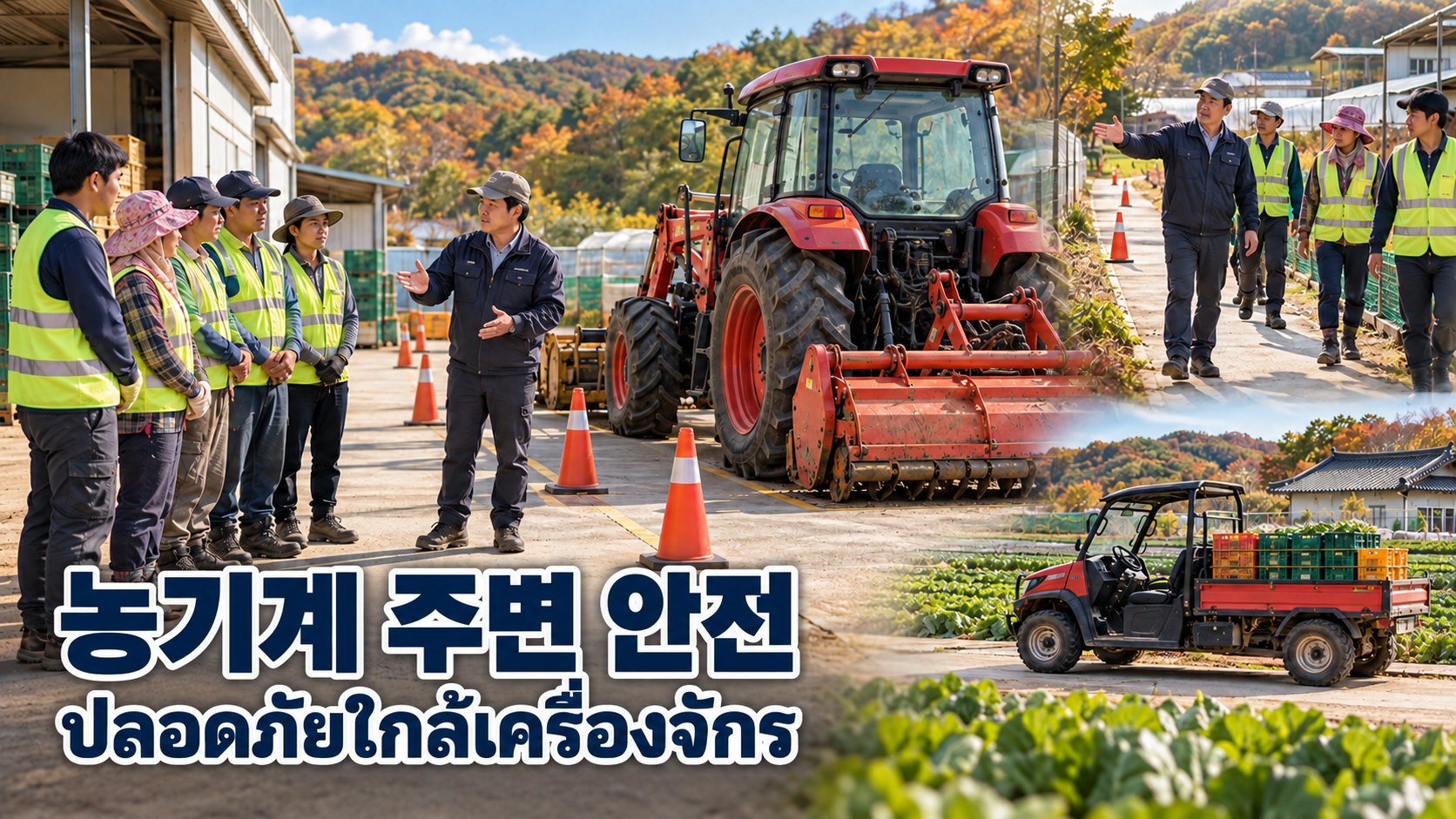
When transporting harvested agricultural products to and from work sites, even people who do not drive the machines themselves work in close proximity to agricultural machinery and transport vehicles. Seasonal workers who come to Korean farms from Laos must first learn different travel routes and signals for each farm. Step 8 organizes where workers will wait, when they will move, and who they will notify if they notice any abnormalities. The creation date is 2026-10-30.
1. Before starting work, check the path people follow
Before doing your first job or changing work areas, ask the person in charge to show you the walkways, traffic areas, and waiting areas on site. Be sure to check where the tractor turns, where the truck backs up, and where boxes are stacked and blocking visibility. Do not judge a safe passage only by looking at the traces of other people's passage.
Also know who drives the machine and who announces the work order. Drivers may understand the meaning differently when multiple people gesture at the same time, so follow the signals and personnel designated on site. If you do not understand what is being said, stay in a safe waiting area and ask for an interpreter or someone to explain it to you again. Rather than rushing to join, it is better to clearly check the movement order.
The Rural Development Administration advises drivers to check to see if anyone is around the vehicle before moving it. Drivers should also check the route for rocks, potholes, narrow roads and steep inclines. If workers who walk also see this hazard on the walking path, they should inform the responsible driver of the hazard's location before the vehicle starts. Since the risk range varies depending on the type of machine and working conditions, do not apply the same distance standard to all machines and check the site access limit line. Rules for safe use of transport vehicles from the Rural Development Administration
2. Avoid going behind moving vehicles or between objects.
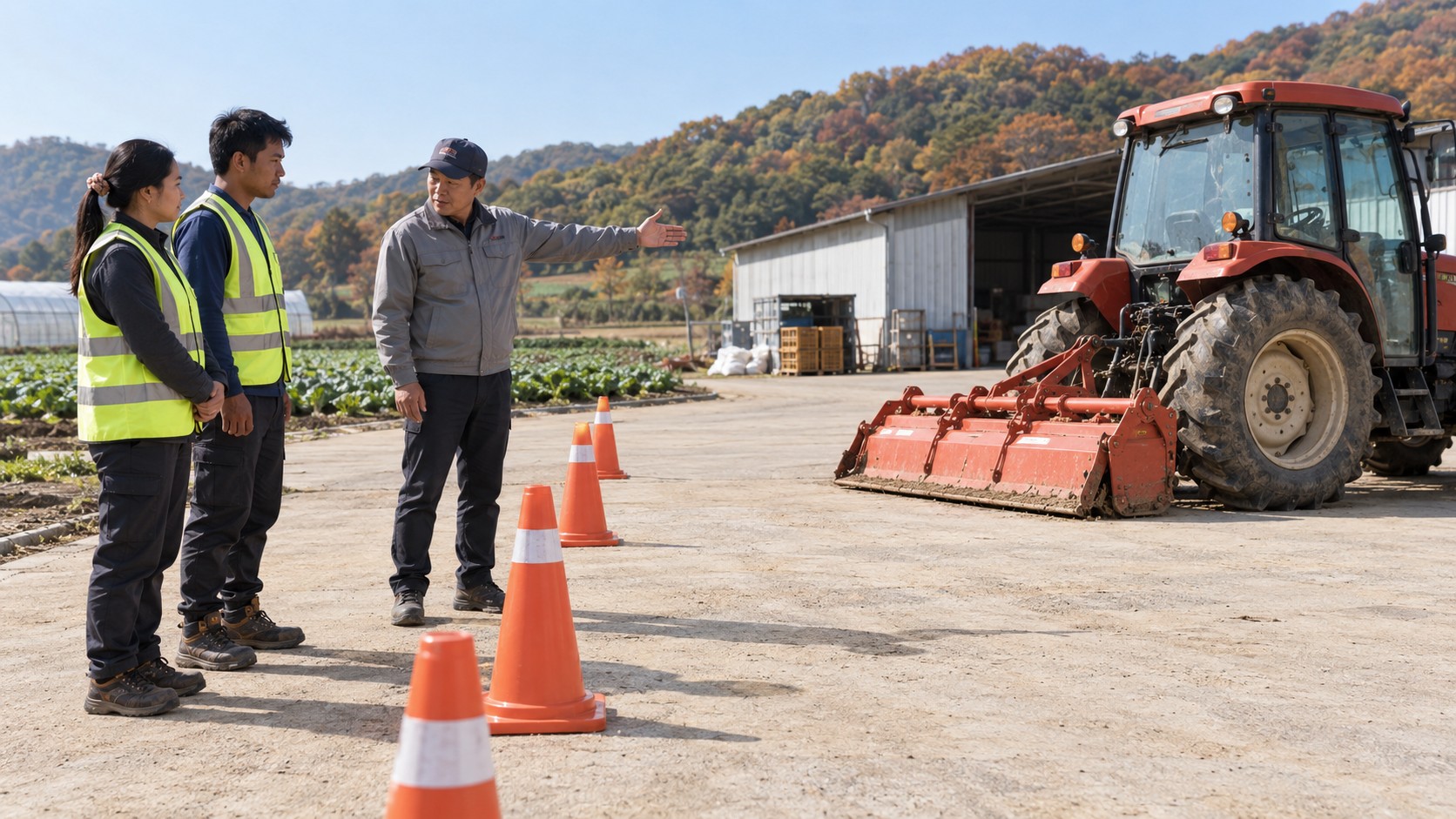
Workers must not walk across the back of a moving vehicle. This prohibition must be observed even when the vehicle is moving slowly. There may be areas that are not visible from the driver's seat, and the body or attachments may move wider than expected when turning. Workers should not stand in tight spaces between vehicles and walls, between vehicles and loads, or between vehicles and other machinery. If the vehicle is moving, it will be difficult for workers there to get out. Don't go into these gaps to take the shortcut.
Just because you make eye contact with the driver doesn't mean you can approach right away. Wait at a designated safe location and wait for the vehicle to come to a complete stop before checking the operator's movement instructions. Some vehicles move without warning sounds. Workers should only walk after personally confirming that the vehicle has completely stopped and receiving permission to move from the person in charge. Check your cell phone or take photos in a safe place outside of the vehicle movement zone.
If the work flow and the vehicle flow route overlap, do not try to find a gap and pass through alone, but ask the person in charge to determine the traffic order. Materials from the Korea Occupational Safety and Health Agency provide guidance on how to control access to places where there is a risk of contact with vehicles or cargo and clear obstacles in the passageway. Korea Occupational Safety and Health Agency vehicle and unloading work safety data
3. When loading and unloading, check the vehicle stop and permission to work.
Workers carrying boxes should not approach the loading area of the transport vehicle first. Wait until the responsible driver brings the vehicle to a complete stop and gives you permission to begin work. Measures to ensure a vehicle stop must be performed by the driver in charge as appropriate for the equipment and site. Data from the Rural Development Administration explains how to use the parking brake and chocks of the transport vehicle to prevent movement. Workers must work at the designated location after receiving confirmation that necessary actions have been completed.
If the load tilts or the box slips, do not jump in to support it with your body or hold it with your hands. Workers should retreat to a safe location and notify the person in charge. Restart work only after the person in charge has safely handled the tipped load and notified you that work can be resumed. When unloading boxes from above, set an order so that people below do not stay, and do not carry them all at once so that they block the view.
Workers must not ride in the bed of a vehicle or on forks that support cargo on a forklift when moving. When walking to other work areas, use designated walking paths. If you must travel by car, use seats designed for human seating and follow local riding rules. Workers should not manually align loads within the work area of the forklift. Do not approach the forklift assuming the driver is looking at you. Wait in the designated waiting area. Safety data for work around forklifts from Korea Occupational Safety and Health Agency
4. Do not touch even a stopped machine until the person in charge confirms it.
Just because the machine sounds quieter or has stopped for a moment doesn't mean it's safe to put your hand into it. Do not remove grass or dirt stuck in the rotating part or touch the belt, blades, or joints. Do not open or remove the protective cover and report any abnormalities to the person in charge. Inspections and repairs must be performed by trained personnel who follow the equipment's shutdown and energy shutoff procedures. Rural Development Administration agricultural machinery safety use technology
If you see oil leaks, loose wires, broken parts, or unusual vibrations around the wheels, report what you see rather than trying to find the cause nearby. The Rural Development Administration's pre-use inspection data presents items to check such as wiring condition, oil leaks, fastening parts, and tires. This list should be used as a guide to explaining problems to personnel, but should not be used as a way to manually adjust unfamiliar machines. Rural Development Administration inspection and management tips before using agricultural machinery
5. Check the obstacles on the floor and the condition of your body as well.
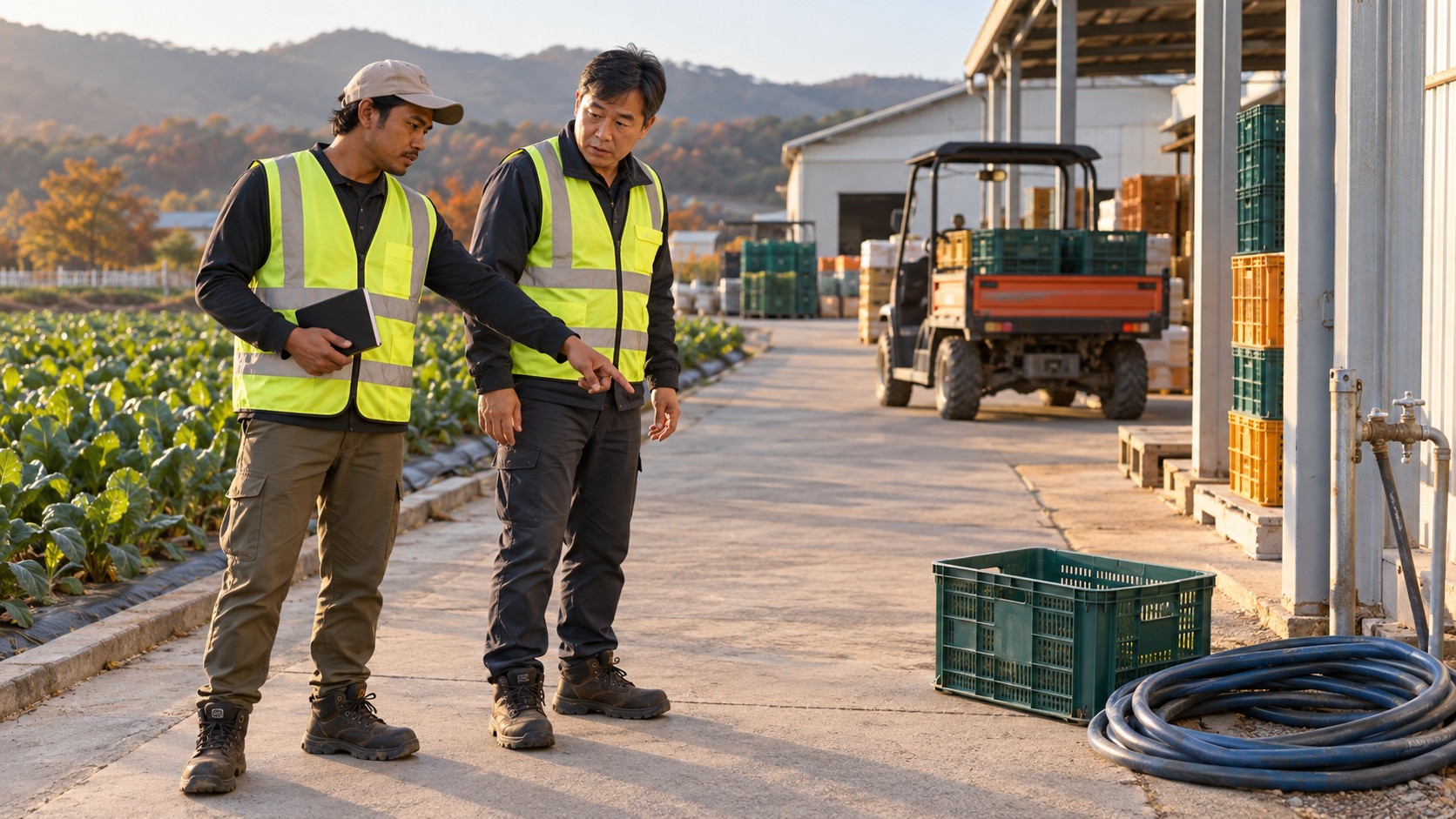
Wet dirt, hoses, empty boxes and stones can lead to falls as well as the risk of collisions with vehicles. If you spot an obstacle, do not suddenly enter the vehicle aisle to clear it, but report its location first. The person in charge will stop traffic, decide on a safe cleanup order, and then proceed. After it rains, check the previously used roads again as they may become slippery or weak.
Remove loose straps and accessories from your work clothes and wear work shoes and protective gear designated by the site. Wearing a reflective vest does not eliminate blind spots. If you are tired or dizzy and have difficulty concentrating on surrounding movements, report your condition to the person in charge in a safe place and request work adjustments. If you are responsible for driving or operating machinery, confirm the necessary training and on-site instructions, and do not move equipment that you are not responsible for.
6. Report and record accidents and near misses in a safe location.
If a person is injured or requires immediate rescue, report to 119 from a safe location and notify nearby personnel. Describe the farm address and entry point, the circumstances of the accident, the number of people injured, and any identifiable conditions such as consciousness and breathing. Reporters who do not know the address of the farm should inform the 119 counselor of the name of a nearby large building or information about nearby signs. This information will help rescue teams locate the reporter. The caller should remain on the call until the 119 operator tells him it is okay to hang up and follow the operator's instructions. For rescue purposes, do not force yourself close to movable machinery. National Fire Agency 119 Emergency reporting tips (provided by the Ministry of the Interior and Safety)
Even if you are not injured, if a vehicle passes close by or the load almost falls, you should notify the person in charge so they can change the next method of operation. After safety is ensured, simply leave a record of the date, location, what you were doing, any hazards you noticed, who you notified, and what you did. of the previous stage How to record work time and actual work detailsListing hazards together helps explain the flow of work. There is no need to re-enter the hazardous location or take photos for your records.
Four things to check before work today
- Have you identified walking paths and safe waiting areas for workers in the workplace?
- Do you know the person in charge of the machine and the signals to stop/move work?
- Did you understand the order of confirmation before approaching even after the vehicle has stopped?
- Have you identified who to notify of the danger, where the farm is located and how to report an emergency?
This article summarizes the safety information workers working around agricultural machinery need to know, based on official safety data. Please check the access range, work sequence, and stop procedures specified in the actual equipment's user manual and on-site safety training.