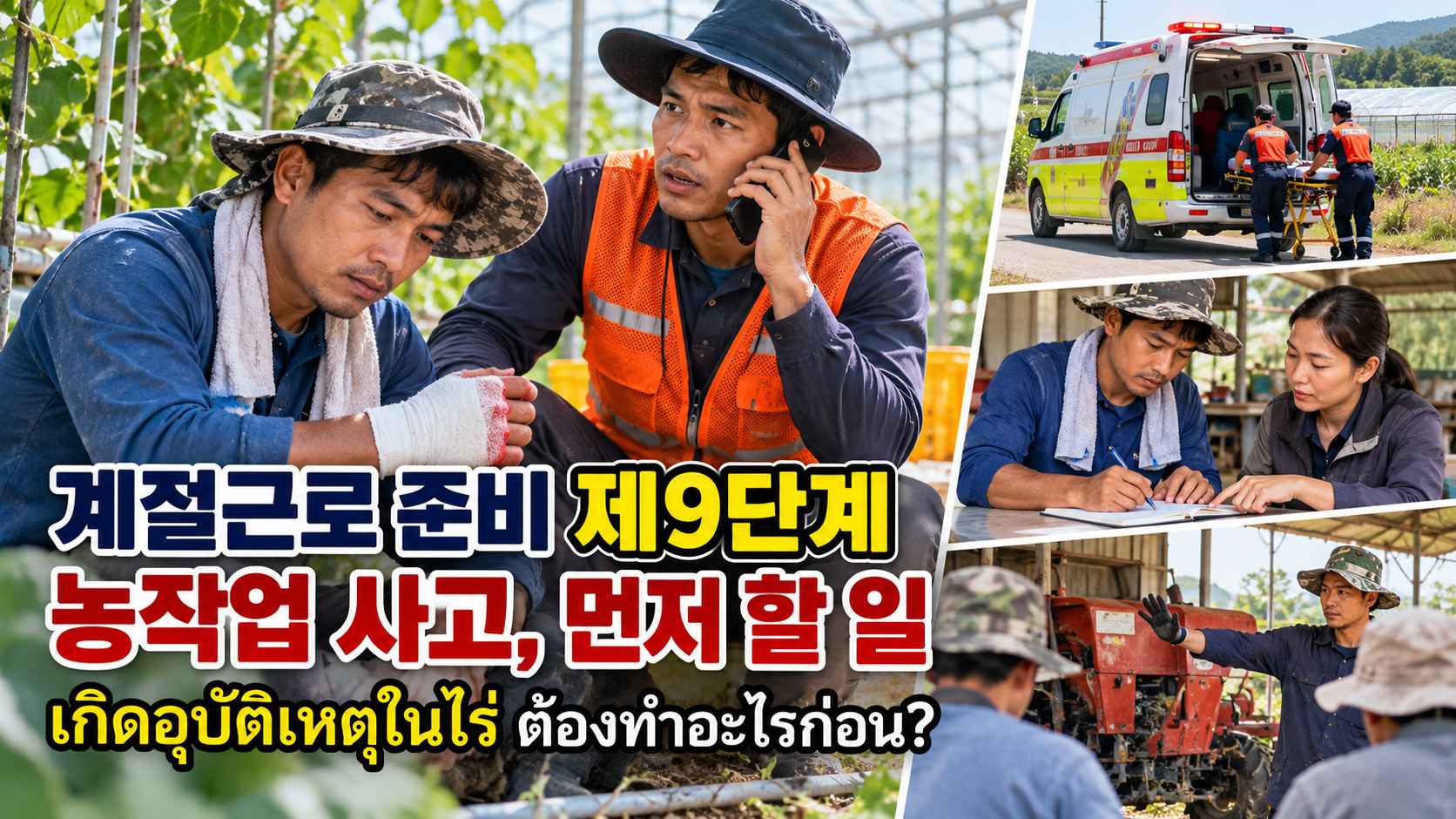
Anyone who has an accident such as cutting their hand, falling, or colliding with a transport vehicle while working in an agricultural greenhouse or field can panic. In particular, seasonal workers who are not familiar with Korean may waste time not knowing who to notify first and what to record. This article explains in order what to do first when an accident occurs during agricultural work. First, check the surrounding dangers, call 119 in case of emergency, then contact the person in charge, receive medical treatment, and record the accident. This article is not intended to diagnose individual injuries or determine whether industrial accident insurance will be paid.
1. If an accident occurs, first stop work and check for surrounding hazards.
The injured worker and nearby co-workers should stop working to the extent possible and notify the person in charge. Do not blindly approach moving agricultural machinery, transport vehicles, rotating axles, heavy loads, electrical equipment, or areas where pesticides or chemicals remain. Other workers must be notified to stay away from the danger zone to prevent a second accident. Do not arbitrarily restart the machine or dismantle any protective devices to help a person trapped in the machine. Safely isolating hazardous energy must be performed by trained personnel.
If a worker has lost consciousness, is breathing abnormally, is bleeding heavily, has suffered a serious head, neck, or back injury, or has suffered a major shock such as being hit by a vehicle, it is considered an emergency situation. In this case, immediately call 119 and request rescue/emergency assistance. Emergency reporting should not be delayed by waiting for a response from the employer or interpreter. Follow the 119 operator’s instructions and do not move the seriously injured person unnecessarily. However, if there are immediate additional hazards such as fire or vehicles, prioritize on-site safety and follow the instructions of 119.
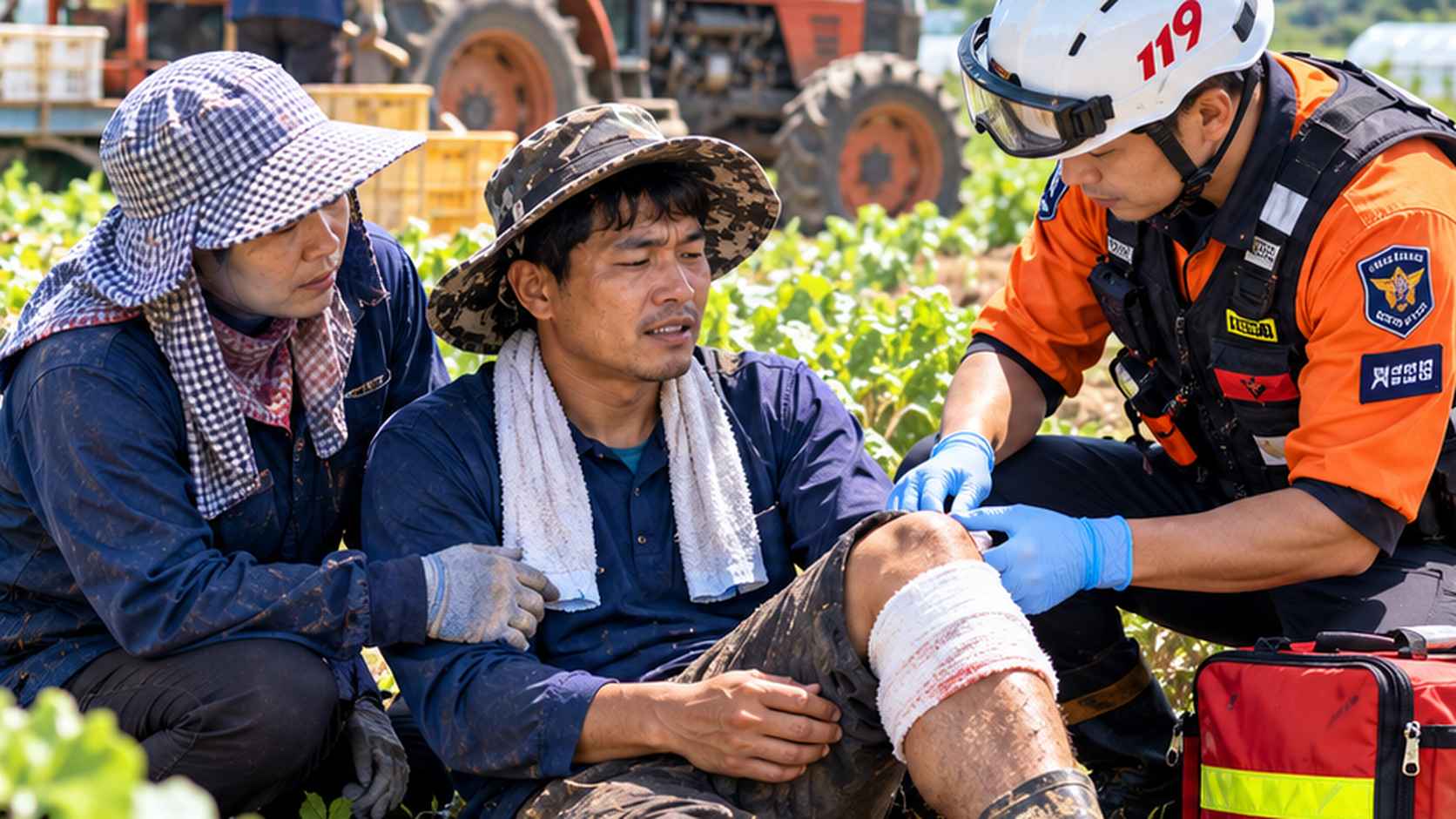
2. Have the information you need ready when you call 119
Since no one may know the address, it is a good idea to save the farm road address, village name, accessible access roads, and nearby large buildings or signs in your cell phone. When calling 119, report as accurately as possible the location of the accident, the circumstances of the accident, the number of people injured, their state of consciousness and breathing, and the dangers remaining at the scene. If you can check your current location on a smartphone map, use it in the location description. Follow the instructions and stay on the phone until the report is over.
On farms with multiple entrances to the site, a co-worker may be tasked with directing rescue vehicles from a safe location. However, you should avoid passing between moving agricultural machinery or standing in the middle of the roadway to guide rescue vehicles. Also secure your phone battery and a contact number.
3. Accurately inform the employer and field personnel of the circumstances of the accident
Apart from reporting an emergency and ensuring safety, notify your employer or site manager of the accident. The key things the person in charge needs to know are the time the accident occurred, type of work, location, people injured, site conditions, and whether 119 was reported. Who ordered the work and what tools or vehicles were also helpful in understanding the incident. Do not rush to determine who is at fault on the spot. Distinguish between personally confirmed facts and speculations and convey them to the person in charge.
If you have difficulty communicating in Korean, you can ask for help from an interpreter at your company or local government, but interpretation support hours and contact information vary by region. Even if an interpreter cannot be reached, it is important not to delay seeking urgent medical attention or reporting 119. Do not take photos of other people's passports, alien registration cards, or health records without permission or share them in group chat rooms.
4. Organize records and materials while receiving treatment
When going to the hospital, have your identification and contact information ready. However, do not delay urgent medical treatment just because you do not have the documents at hand. Keep medical treatment-related documents, receipts, and reservation information issued by the hospital as they may be important information to you. If there is something explained during treatment that you do not understand, let the medical staff know that you need an interpreter.
The facts of the accident are recorded in a notepad after physical condition allows and safety is ensured. For example, you can record the date and time of the incident, work area, task being performed at the time, equipment used, people nearby, and time of reporting and treatment. On-site photos are taken only in safe places without exposing personal information or other people's faces. People who need medical attention immediately after an accident should not be forced to take pictures or sign anything. If the facts written in the document are different from what you remember, ask for confirmation right away, and do not sign a confirmation if you do not understand the meaning before receiving a sufficient explanation.
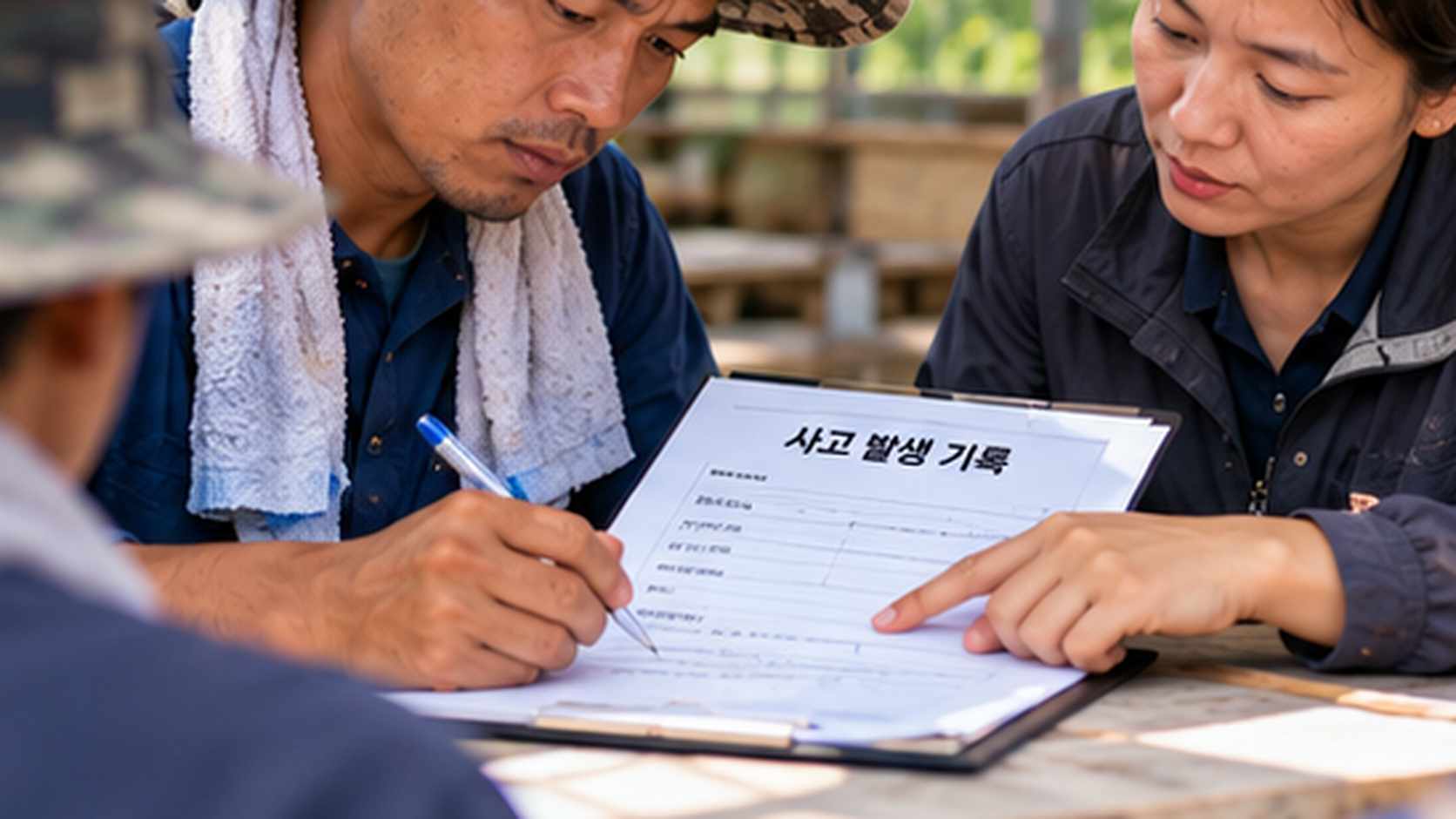
5. Inquiries regarding industrial accidents are handled separately from accident response.
Whether it is a work-related injury or whether it is covered by industrial accident insurance and medical care benefits depends on the specific facts and system. Just because you have been injured does not guarantee that all expenses will be paid or that compensation will be approved. After receiving medical treatment, you can organize your employment contract, work performed at the time of the accident, contact with your employer, and medical records, and check the procedures applicable to you through official guidance from the Korea Workers' Compensation and Welfare Service. What you need to check may vary depending on the type of operation and labor relationship of the agricultural business.
Even if your employer says they will apply for you, it is a good idea to check for yourself what documents you are submitting and how you will be contacted. When inquiring about insurance or compensation issues, explain whether it was a work accident, the time and hospital you received treatment, your current treatment plan, and who has already paid what expenses. Do not arbitrarily determine salary, medical expenses, or ability to go to work; check the explanations from the medical staff and the relevant official agency.
6. Checking after an accident to prevent repeat accidents
Machines and work areas where an accident occurred are not immediately reused without a safety inspection. The person in charge must recheck the equipment condition, vehicle movement, protective equipment, and training content, and workers must report their current physical condition and whether the work is dangerous before returning. If you do not have the necessary safety training to use specific equipment, request training and supervision first. Asking about break times or normal work instructions and responding to an emergency incident are two separate steps.
last inspection
- Have you checked your work and surrounding hazards to avoid further accidents?
- If the symptoms were urgent, did you immediately call 119?
- Do you know the farm address, rescue vehicle access road, and contact information for the person in charge?
- Did you inform the employer and field manager of the confirmed facts?
- Were medical data, accident time, location, and work details stored safely?
- Have details regarding treatment and industrial accidents been separately confirmed by an official agency?
Read along with the previous steps: Step 8 of preparing for seasonal work — Safety rules around agricultural machinery and transportation vehicles. Additional information: Information on industrial accident insurance for foreign workers.
Official source and confirmation date: 2026-10-31. 119 Safety Report Center (Fire Administration) · Korea Occupational Safety and Health Agency: Guide to measures taken in case of industrial accident · Information on types of industrial accident insurance benefits provided by Korea Workers’ Compensation and Welfare Service. This article is a guide to general safety behavior and does not replace emergency medical judgment or recognition of an individual's industrial accident. All photos are for AI explanation purposes only, not records of specific farms or workers.