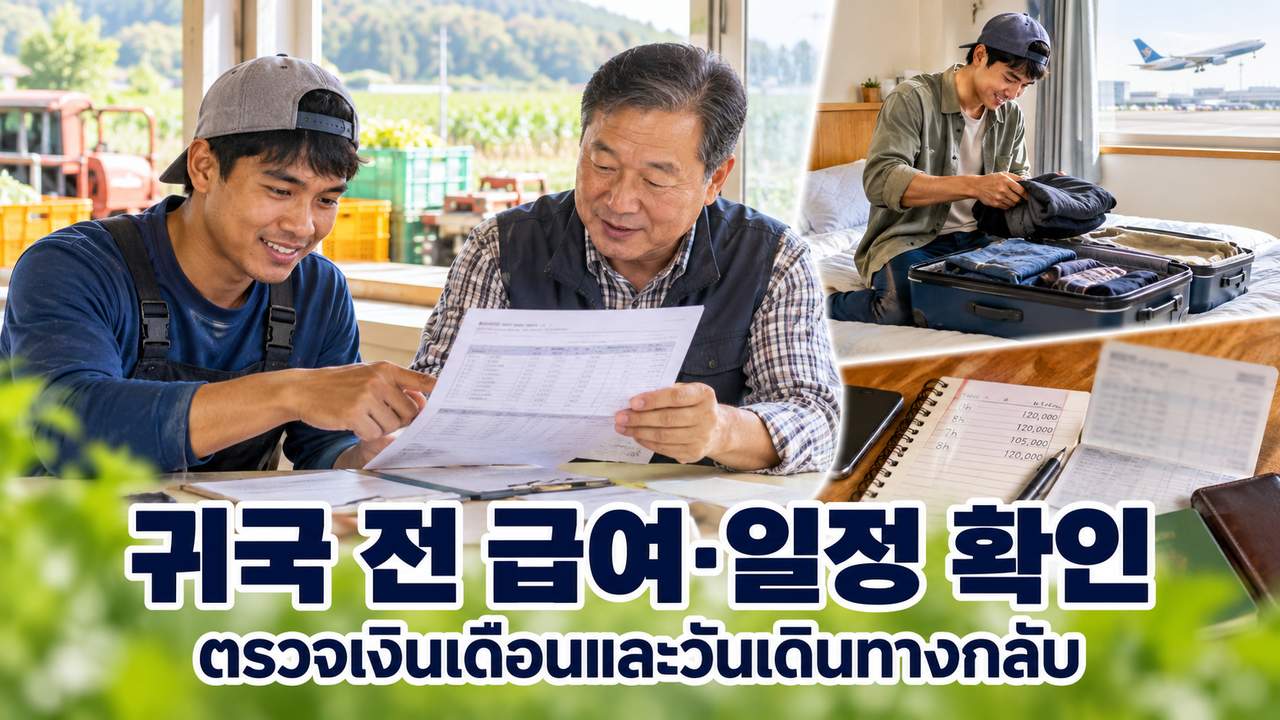
As the harvest is over and the time to return to Laos approaches, just checking your flight tickets is not enough. The last date of work on the farm, the remaining wages owed by the employer, the date of departure from the accommodation, and the actual departure flight must match. In particular, it cannot be assumed that the end date of the employment contract and the last day of stay for immigration purposes are the same date. This article is a practical checklist that seasonal workers from Laos working in Korea can use when preparing to return to their home country. Each person's visa and permit conditions, local government operation plan, and employment contract take precedence, and the same date or amount does not apply to everyone.
1. First, write down the four dates separately.
The first date is the seasonal worker's last actual day of work on the farm. The second date is the contract end date written in the employment contract. The third date is the end date of the period of stay for which you are permitted to remain in Korea. The fourth date is the date and time the flight departs. These may be different, so don't combine them on one line. It's a good idea to save each name in your phone calendar and record it on paper.
- Confirm your last day of work and pay due date with your employer.
- Check the end date on the original employment contract or a copy provided to you.
- Compare the information on your passport, visa, alien registration card, etc. with the information regarding your permitted period of stay.
- The English name, itinerary, departure airport, and departure time on the ticket are compared with the passport.
- Confirm with the local government seasonal worker or interpreter the vehicle/bus schedule to travel from your accommodation to the departure airport and the contact information of the person in charge of transportation.
The Ministry of Justice guides the foreign seasonal work system as a system that responds to short-term manpower demand in agriculture and fisheries. However, you should not think that your period of stay has been automatically extended based on the maximum period allowed by the system. If the period of stay or departure procedures are unclear, please first check with the relevant immigration office or the Foreigner Information Center at 1345.
2. Open your employment contract and actual work records side by side.
Before the employer calculates and pays the last wage to the worker, the worker prepares his or her employment contract, actual work start and end times and break times recorded each day, previous wage statements, and details of wages deposited in the employee's bank account. If you don't have any records of working hours, start by gathering facts that can be verified, such as cell phone calendars, field work schedules, and text messages that show what you exchanged with your employer and the date they were sent. You should not create a new record that does not exist and write it down to a past date.

Mark days when the working conditions in the contract were different from the actual work, days worked on rest days, days when the worker did not come to work, or days when the worker left work earlier than the scheduled work end time. Check what the payment and deduction items on the wage stub mean, not just the amount. If there are deductibles such as accommodation or food expenses, check the agreement and basis separately, and ask for an interpreter to explain any items you do not understand.
3. When it comes to your last paycheck, distinguish between ‘amount to be received’ and ‘amount already received’.
When calculating wages, separately record the total amount due, actual amount previously received, confirmed deductions, and amount yet to be received. For example, for illustration purposes, if the contractual payment amount for the last settlement period is KRW 900,000, and KRW 600,000 has already been received during that period, the simple difference is KRW 300,000. This is an assumption that only shows the calculation principle and is not an example of actual wages, overtime pay, or legal deductions. Actual calculations require verification of contracts, work records, and application of law.
- Ask your employer for the period in which your last wages are calculated and a pay stub.
- Check the deposited date and amount in your bank transaction history.
- If you received money in cash, compare the payment date and amount with receipts or records showing the payment.
- If there is a difference, write down which days you worked or what items are different and ask your employer and person in charge.
- For amounts that have not yet been deposited, make sure you understand and confirm them before signing as ‘received’.
Legal standards and actual payment deadlines for liquidation of money and valuables upon retirement must be confirmed according to the circumstances of contract termination, agreement between the parties, and the specific nature of the money and valuables. If you are having difficulties due to unpaid wages, you can use the unpaid wage complaint channel of the Ministry of Employment and Labor's labor portal and the Customer Counseling Center at 1350. It is practical to prepare contracts, wage statements, deposit details, and your own work records as consultation materials. Since your visa stay period will not be automatically extended just because there is a problem with non-payment, please consult separately regarding your return schedule and rights relief.
4. Organize your accommodation and personal belongings before your departure date.
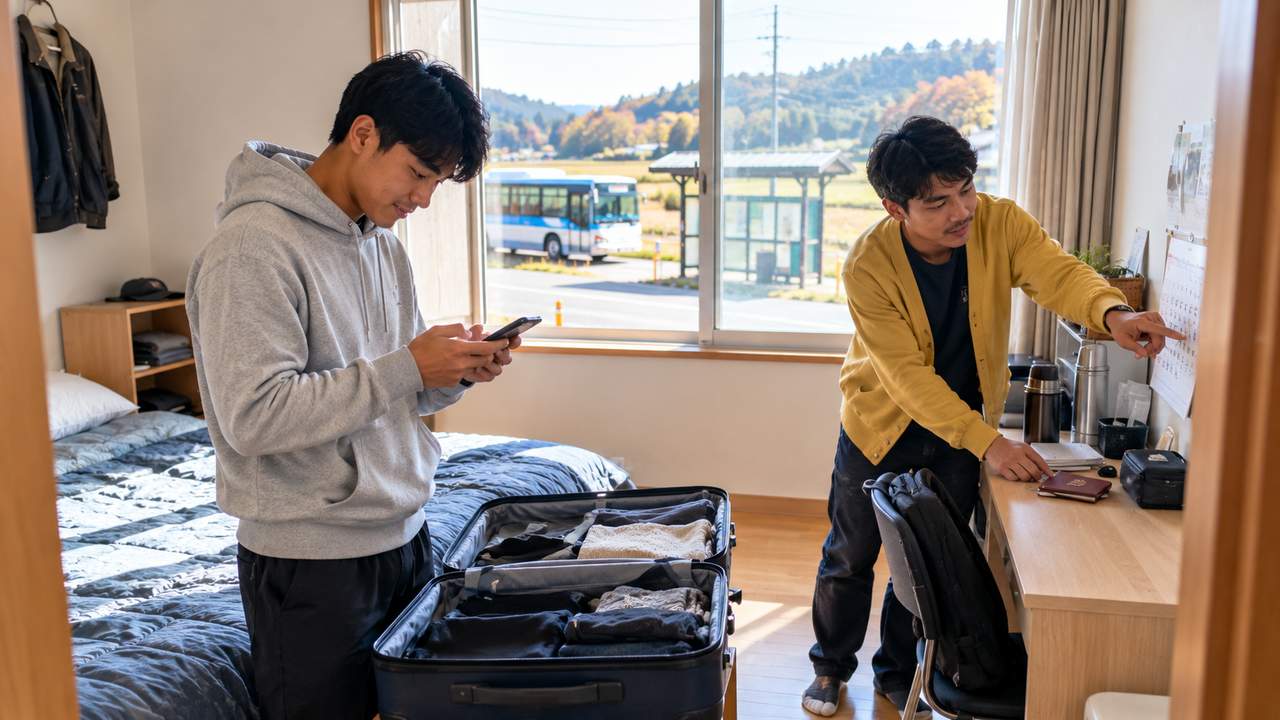
Make sure you have an exact check-out date by which you must physically move out of the accommodation and check with your employer or representative what actual arrangements are in place regarding key return, personal luggage, shared items, bedding and cleaning. Separate your belongings from those of co-workers who live in shared accommodation, and also check small items such as cell phone chargers, medicine, seasonal clothes, and glasses. If there is an accommodation deposit left with the employer, confirm in writing or via message the date and conditions by which the worker can receive the deposit back, as well as the actual refund amount. Not all properties have the same cost rules.
Do not throw away documents or bank cards containing personal information. Your passport, residence proof documents, airline tickets, contracts, wage statements, and reporting/counseling-related records are kept safely so that they can be checked even after leaving the country. We recommend that you do not entrust your passport, password, or bank authentication number to anyone else in your shared accommodation.
5. Recheck your flight/airport transfer and period of stay in Korea
Check the airline information for outbound flight reservation number, airline, transfer status, and baggage allowance. Your name must be spelled the same as your English name on your passport. If your departure and arrival dates are different, do not confuse the dates. When traveling from a local farm to the airport, check in advance the bus, train, and vehicle travel times and how to load your luggage. Bus and vehicle schedules and flights to the airport may change, so please check your reservation details the day before departure.
Your work contract or residence permit will not automatically change just because you need to change your flight ticket or work more. First, inform your local government/employer representative and contact the immigration agency if your residence status/permit is affected. If you have difficulty leaving the country or have lost contact with your passport because someone else is keeping it, you should immediately request assistance from local government officials and relevant agencies rather than simply waiting for the day of departure.
6. In exceptional situations, classify counseling agencies by problem type.
- When wages are paid less or calculations are different: Compare the items with the employer and request assistance from local government officials and interpreters. If the issue is not resolved, contact the Ministry of Employment and Labor's labor portal or 1350.
- When the period of stay, visa or departure procedures are unclear: Please check with Ministry of Justice Foreigner Information Center 1345. The decision will be made based on the permit history that applies to you.
- When flights/transportation changes: Check airline reservation details and communicate the changed date to local government officials and transportation personnel.
- When records of hospital treatment or accidents remain: You should keep the relevant medical records, receipts, and contact information of the person in charge, and ask the relevant institution if there is anything you need to apply for or consult about further after returning to Laos.
If you find it difficult to consult in person, you may request interpretation assistance from your local seasonal worker representative. Complaints for non-payment of wages, consultation on residency status, and flight changes are different tasks, so do not expect one agency to automatically resolve all issues.
7. Last checklist before departure
- Have you confirmed the last actual work day, contract end date, last possible stay date, and flight date?
- Have you secured your employment contract, work records, and last pay stub?
- Have you checked your deposit details and recorded any questions regarding non-payments or deductions?
- Have you checked out of the accommodation, checked your keys, luggage, and personal items?
- Have you checked your passport, English name, airport, flight, baggage, and transportation contact information?
- Do you know your employer, local government representative, interpreter, and official counseling agency to contact if a problem arises?
Checking the dates and amounts before leaving the country makes it easier to compare different records after you return. What workers needed was not just to sign, but to understand what items of money they had received and under what conditions the work was completed.
Good guide to see together
To learn how to compare the amount on your pay stub with the amount actually deposited in the bank, see the instructions below: Step 6 of preparing for seasonal work|Comparison of salary calculation and actual deposit amount.
Instructions for arranging airport transfers and contact information can be found in the following instructions: Step 4 of preparing for seasonal work|Confirm flight/arrival terminal/pickup contact information.
Official confirmation path and confirmation date
- Ministry of Justice Immigration and Foreigner Policy Headquarters – Information on the Foreign Seasonal Worker Program
- Ministry of Justice — Foreigner Information Center 1345
- Ministry of Employment and Labor Labor Portal — Unpaid wages complaints and labor counseling 1350
Official data confirmation date: 2026-11-01. The calculations and situations here are examples to aid understanding. Please check the contract and the latest guidance from the relevant organizations for your actual working conditions, the period of time you can stay in Korea, and the procedures for leaving the country for Laos.