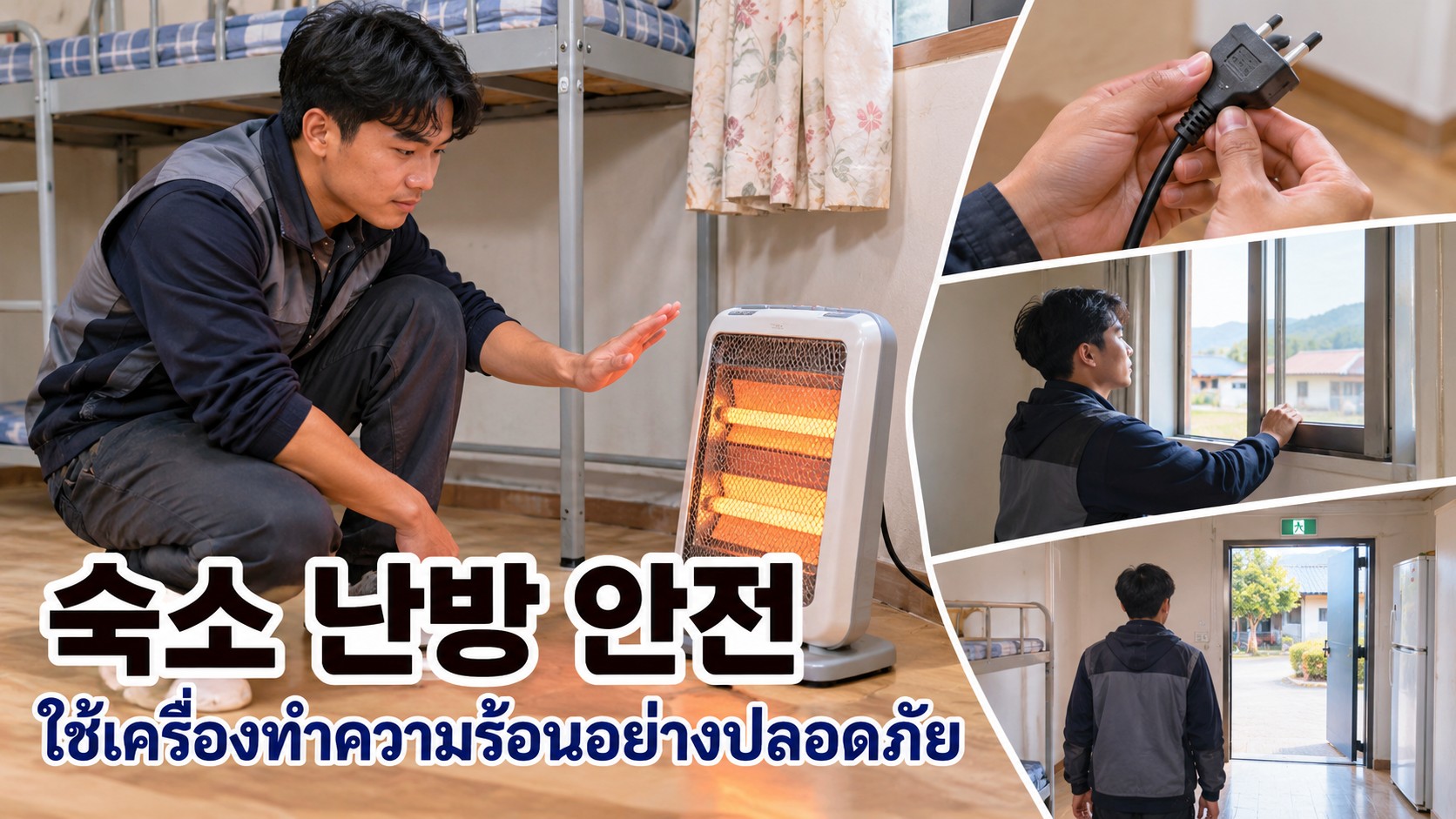
Lao seasonal workers living in rural accommodation in Korea may use electric heaters or heated mats when the weather turns cold. However, in shared accommodation where bedding and clothes are close to heaters, even a small mistake can create a fire risk. This article covers checks to make before and while using electric heating appliances in your accommodation. Inspection requirements for gas boilers and gas heaters depend on the equipment and how it is installed, so do not make decisions about those appliances based on this article alone.
Who should check, and when?
These checks are for everyone who uses an electric heater, electric space heater, heated mat, or electric heating pad in their accommodation. Check when you first arrive, when you receive a new heating appliance, when the condition of an appliance changes, and before going out. The National Fire Agency advises people not to leave heating appliances on when going out, to keep flammable items such as bedding and curtains away, to avoid connecting too many devices to power strips, and to ventilate the room.
Information and contact details to prepare first
Find the appliance's product name and instruction manual, the address of your accommodation, and the contact details of the accommodation manager or your employer. Write down the street name, building number, and location of your room. Establish who provided the appliance and whom to contact if it breaks down. If the manual is missing or the appliance is damaged, ask the person responsible to check it instead of guessing how to use it.
Checks before switching on the power
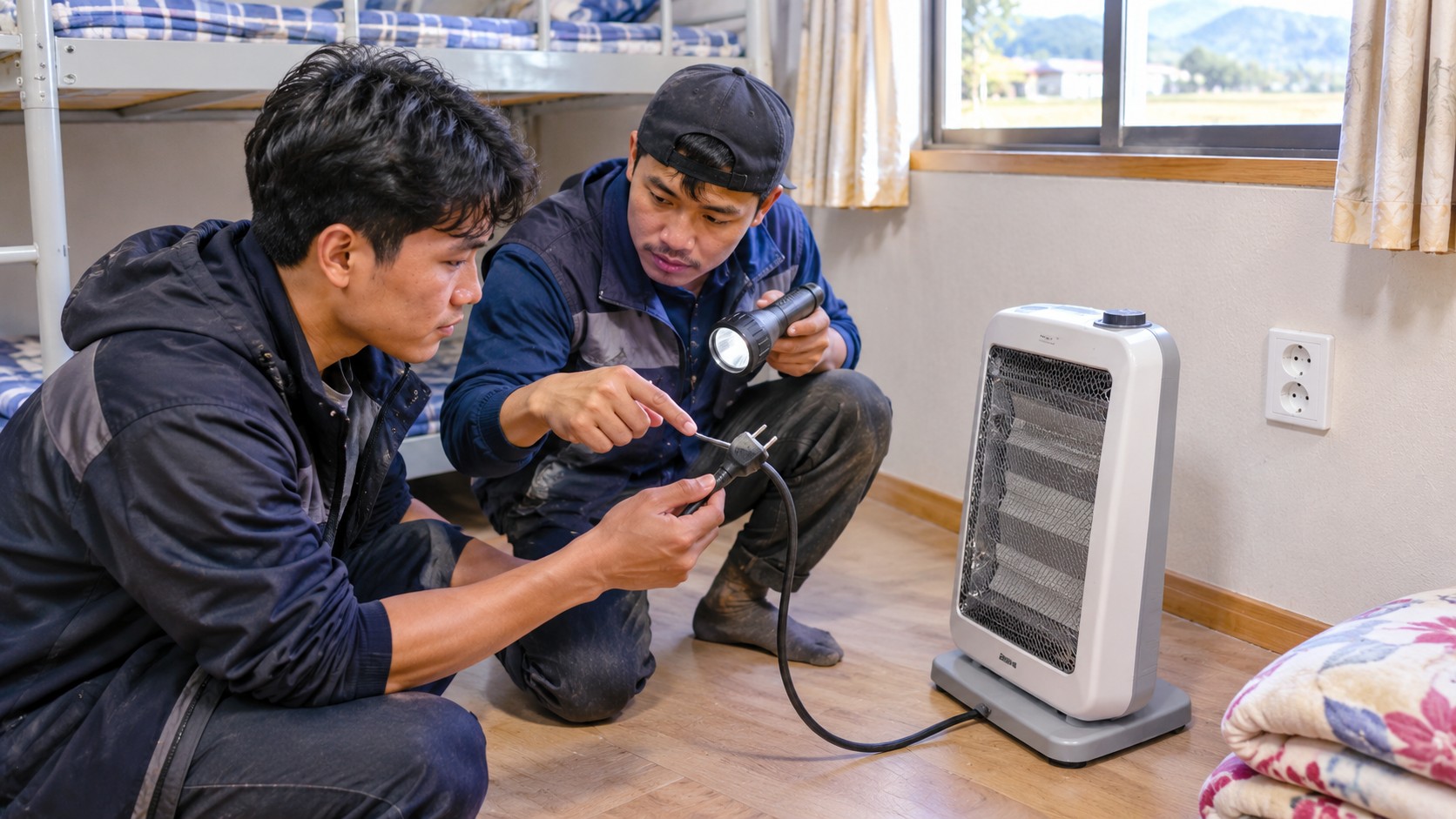
With the power switched off and the plug removed, look over the appliance and its cable. Do not use it if the cable insulation is damaged, the plug is cracked, or there are burn marks. Do not attempt to repair it yourself with tape, and do not switch it on while touching a damaged part.
Check whether several other electrical appliances are connected to the same socket as the heater. Do not connect a heating appliance to an overloaded power strip. If the instructions for connecting the power are unclear, ask the person responsible for your accommodation.
Move bedding, clothes, paper, and curtains well away from the heating appliance. The required clearance can differ between products, so follow the safe distance specified in the manual. Do not put clothes or towels on the appliance to dry them.
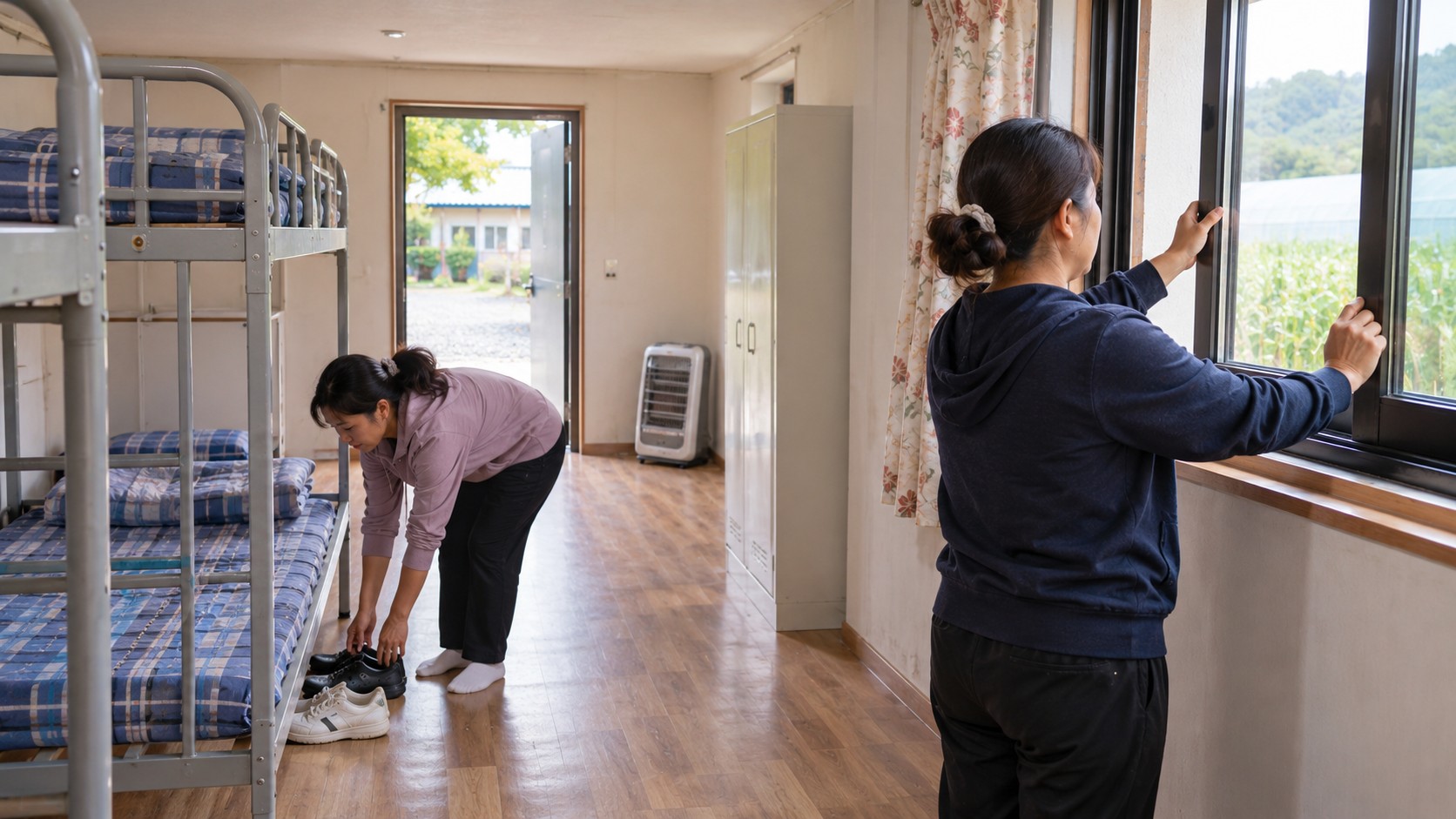
Do not place an electric heater where it could easily tip over or directly in front of a doorway. Keep entrances and corridors free of stored items, and check your route out of the accommodation in advance. If the floor is wet or there is water nearby, stop using the appliance and ask the person responsible to have it checked.
What should you do while using the appliance and before going out?
Do not cover a heating appliance with bedding or clothes while it is on, and do not block its vents. Keep nearby space clear and follow the manual. If you use it for a long period, occasionally open a window to ventilate the room. This ventilation advice for electric heaters concerns general indoor air quality; it does not replace the exhaust and carbon monoxide safety measures required for gas appliances.
Before going to bed or leaving the accommodation, check the heating appliances in use and switch them off according to the product instructions. In particular, never go out with an electric space heater left on. In shared accommodation, agree that the last person leaving will check any appliances still on. Instructions for using heated mats during sleep vary by product, so avoid making a habit of leaving one on all night without checking its manual.
If you notice a burning smell, overheating, or smoke
Stop using the appliance immediately if the heater or plug gives off an unusual burning smell or makes an unusual noise. Switch off the power and unplug it only if there are no flames or smoke and you can approach it safely. Do not touch a hot or damaged plug or socket with your bare hands. Tell the person responsible what has happened and do not use the appliance again until it has been inspected or replaced.
If you see smoke or flames, or suspect a fire, do not stay to repair the appliance. First warn people nearby and evacuate through a safe exit, then call 119. Do not go back into a room where there is a fire to collect belongings. From a safe place, give the exact accommodation address, the building location, and the room where the fire is occurring. In Korea, 119 handles fire, rescue, and emergency medical services.
An example of applying these steps in shared accommodation
The following is a hypothetical example for explanation. At 9 p.m., two workers switch on an electric heater and notice a burning smell near the socket. One stops using the appliance while the other informs the accommodation manager. If the plug is too hot to touch safely, they do not touch it. If smoke starts to appear, both workers evacuate immediately and call 119. If there is a fire risk, they do not delay calling 119 while waiting for the manager's reply.
After an appliance fails, you may record information such as a product photo, the time you stopped using it, and what you reported to the person responsible. However, do not enter the affected area to take photos or turn the power back on to reproduce the fault. In an emergency, getting out safely comes before keeping records.
What should you ask the person responsible?
If a heating appliance provided with your accommodation is damaged or its operation is unclear, ask the accommodation manager or your employer to check its condition. If you find the manual difficult to read, show the product name and a photo of the problem, but do not restart a dangerous appliance just to take a photo. Clarifying in advance whether you must pay for a replacement yourself, who handles repairs, and whether a safe alternative source of heating is available can help prevent misunderstandings. Responsibility for costs and the terms of accommodation provision may vary with the individual contract and circumstances.
Final check
When you return to your accommodation today, check for damaged cables, overloaded power strips, sufficient distance between bedding and heaters, window ventilation, blocked entrances, and whether the power is switched off before going out. If something is wrong, stop using the appliance and tell the person responsible. If you suspect a fire, do not wait for a reply: evacuate safely and call 119.
Related guidance and official sources
The earlier LAO KOREA COMMUNITY article Farm Work Accidents: Getting to Safety, Calling 119, and Recording the Incident also explains the principle of securing your safety first in an emergency. However, a farm work accident and a fire in accommodation are different situations, so refer first to the evacuation guidance in this article.
- National Fire Agency, “Using More Heating Appliances During a Severe Cold Spell? Remember Fire Prevention Too!” (published 2026-1-23): Guidance on electric heater overheating, cable damage, distance from flammable materials, overloaded power strips, ventilation, and switching off the power before going out.
- 119 Safety Report Center, “What 119 Does”: Information on firefighting, rescue, and emergency medical services.
Official sources checked: 2026-11-3. This article provides general safety information and does not replace a professional inspection of the electrical installation in your accommodation or an on-site emergency response. The 3 images were created using artificial intelligence for explanation; they do not document an actual incident or a particular accommodation.