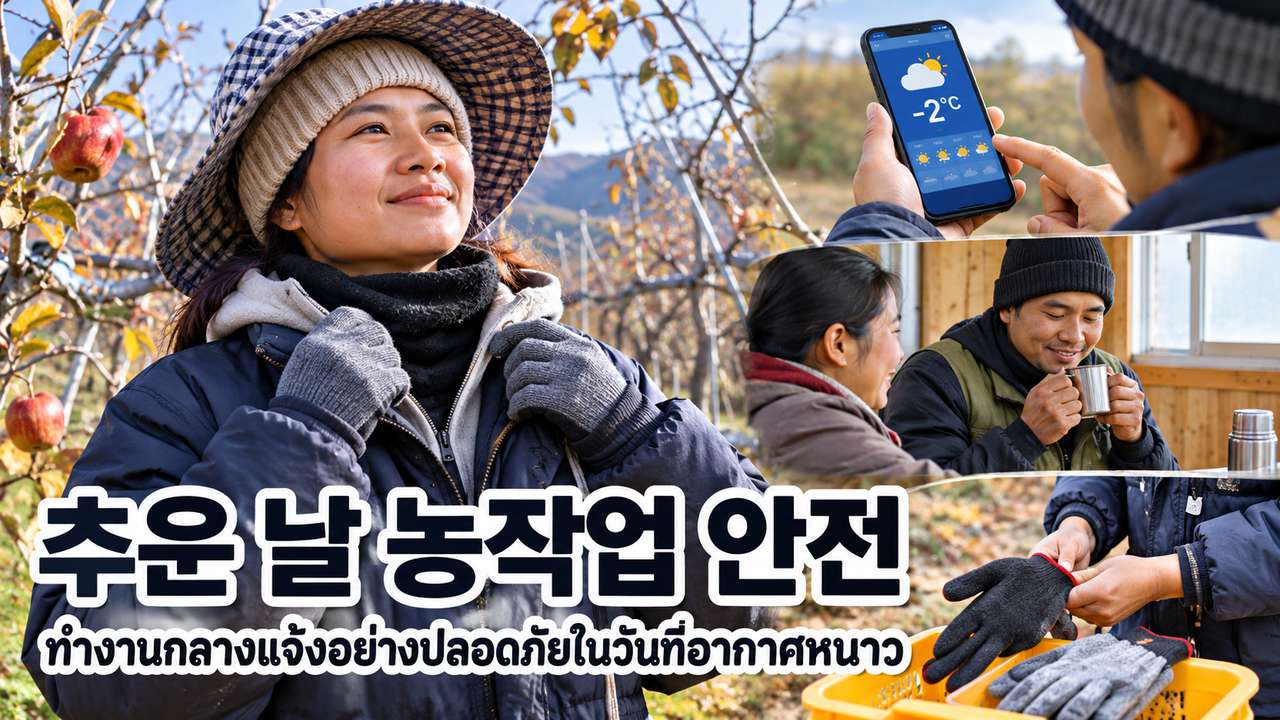
Laotian seasonal workers working in Korean rural areas can harvest, clear fields, transport materials, and work around greenhouses in late fall and winter. Even on the same day, if the temperatures are different in the morning and day and the wind is strong, the cold you feel can become worse. This article explains how people who work outside on cold days should prepare before going to work and what to do if they notice an abnormality in their body while working. This does not mean that a cold wave has currently occurred in all regions of Korea. Check the weather and site conditions in your actual work area first.
Who should check and what should I prepare?
It is good for workers who move produce boxes or materials outdoors or stand for long periods of time, farm managers, and fellow workers to check it together. Before going to work, check the weather and perceived temperature at your work location, and know where and when you will be working today, where you can rest warmly, and how to contact the person in charge. Just because it's indoors doesn't mean it's always warm. Entrances to warehouses or greenhouses that are not adequately heated can also be cold.
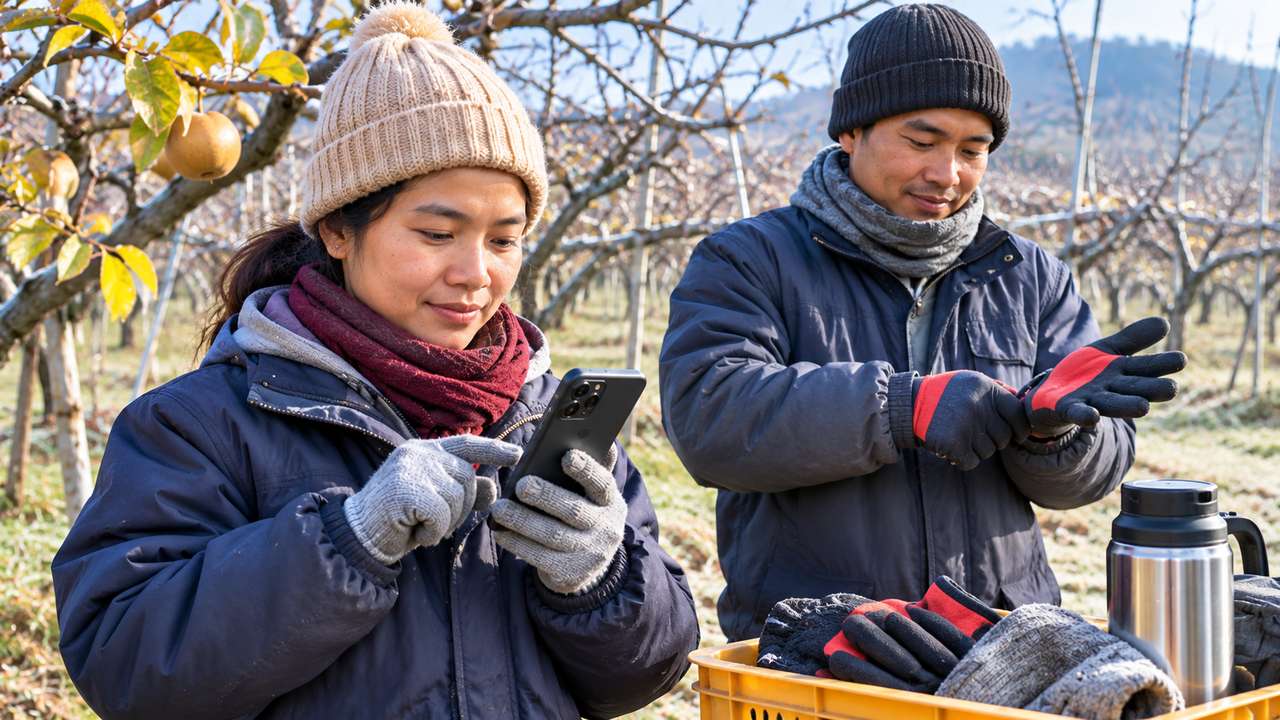
What you need to prepare is underwear to protect against cold that fits your body, an outer layer to wear, gloves, a hat, clothes to cover your neck, shoes to keep from getting wet, and extra socks and gloves if necessary. If your clothing is too thick, making it difficult to move or putting you at risk of getting caught in machinery, you should check with the person in charge about the appropriate safety clothing for the job. Winter gloves may not replace necessary protective gloves for work. Protective equipment for working with pesticides, machinery, and cutting tools must be used separately.
Order to check before going to work
Check the weather, perceived temperature, strong winds, rain or snow forecast for your work area. If the forecast is uncertain or it gets cold quickly, ask the person in charge again how they will work and what to prepare. Don't assume it's safe based on specific temperature numbers alone.
Wear several layers of light clothing and protect your hands, head, and neck. Do not go to work wearing wet or sweaty clothes. Make sure your shoes and socks are dry too.
Make sure you have places to rest, restrooms, drink water, and your travel route. If there is no warm place to rest in the workplace or heating is difficult, inform the person in charge and work out a safe way to rest together.
Decide a way for you and your colleagues to check in on each other's health. If you are working alone and far away, make sure you have a contact phone number and the exact location of the farm. In an emergency, if you are unable to describe the location, it may take time to get help.
Things to keep in mind while working
On cold days, your fingers may become stiff and difficult to grasp small objects. If your hands are dull and you are unable to properly hold a tool or box, do not continue to work and report your condition to the person in charge. When moving heavy objects or passing around vehicles or agricultural machinery, move more carefully than usual. Do not run on slippery or icy floors.
It is important to rest in a warm room or a place sheltered from the wind before your body gets cold. The number and duration of breaks may vary depending on weather, work intensity, health conditions, and site safety measures, so they are not set uniformly here. If it is difficult to work due to the cold, ask the person in charge to arrange a rest area and work arrangements. Even if you are not thirsty, it is helpful to drink adequate water and have access to warm drinks. You should not try to warm yourself by drinking alcohol.
If your clothes or shoes become wet due to rain, snow, or sweat, change into dry clothes and shoes as soon as possible. If you wear wet clothes for a long time in a windy place, your body temperature is likely to drop. If you do not have enough space to change out of your work clothes or a change of clothes, speak to a person in charge immediately and move to a warm location.
Symptoms that suggest hypothermia
Hypothermia is a condition in which cold makes it difficult for the body to maintain normal body temperature. You may tremble violently, move slower, speak more slurred than usual, have difficulty understanding situations, or may appear to have impaired judgment. In severe cases, consciousness may worsen. Do not assume that you have recovered just because your body has stopped shaking. If you are disoriented or cannot answer questions properly, consider it an emergency and report it to 119.
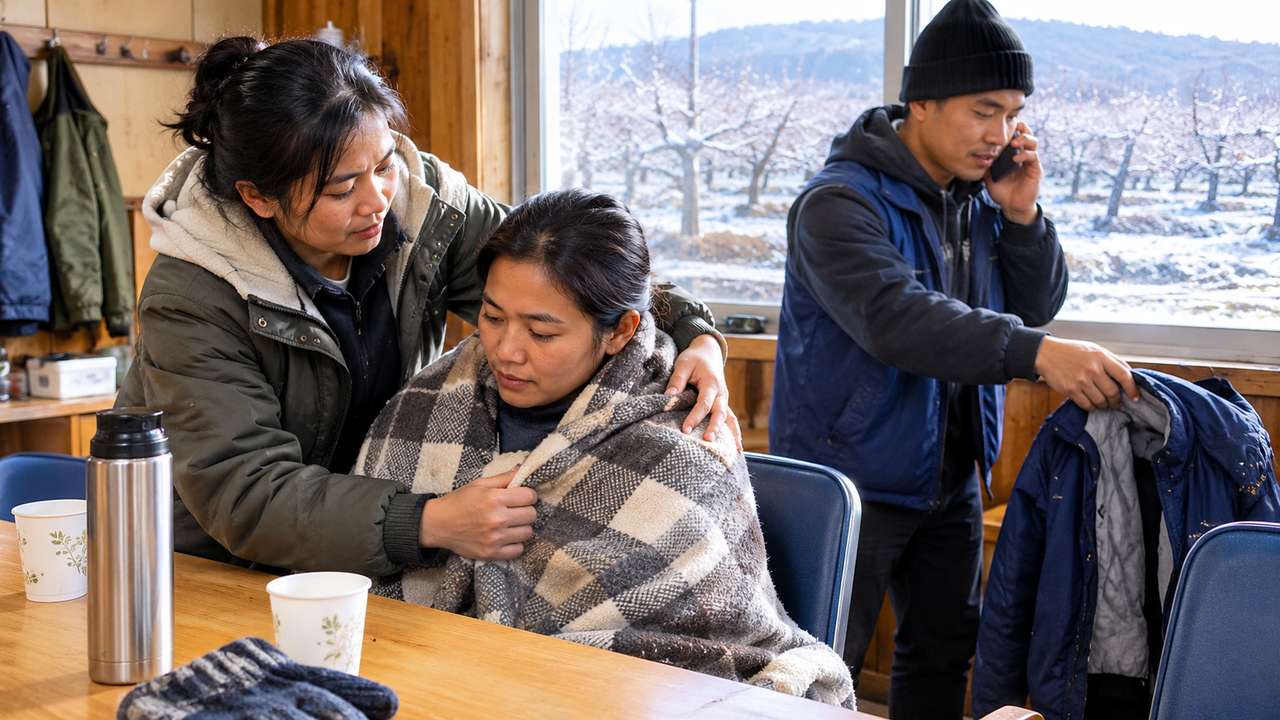
If a co-worker seems unwell due to the cold, help him or her stop working immediately and move the worker to a safe, warm area. Help the worker remove wet clothing if he or she is wearing it, and cover the worker's body with a blanket or dry clothing. If the worker is fully awake and able to swallow, you can give them a warm drink. However, if the worker is dazed or has difficulty swallowing, do not force him/her to drink or eat. Do not place the worker's body directly on a hot stove or heater surface. Do not force the worker to walk or move. Evaluation by a medical professional is required.
If you suspect frostbite on your fingers or toes
If your fingers, toes, ears, or nose become numb or show pain, redness, or blisters after being exposed to cold for a long time, you may have frostbite. It may be difficult to determine for yourself whether you simply have cold hands, so if symptoms persist, seek treatment at a medical institution. Do not rub cold areas or place them directly on a hot stove. Rather than trying to thaw quickly in an environment where there is a risk of refreezing, move to a safe room and seek professional help.
Actual action sequences confirmed by hypothetical situations
Below is a hypothetical example to help you understand. As the wind strengthens during the morning's work, one worker begins to shiver violently and stutter. The co-worker stops working, reports symptoms to the appropriate person, and directs the worker to a safe, warm location. If you have a wet coat, bring dry clothes and a blanket. If an emergency situation occurs where a worker is disoriented and unable to answer questions normally, a co-worker will immediately report it to 119 without waiting for a response from the person in charge. Provide the address of the scene and the nearest access road, and act as instructed by the rescue team.
In another example, a worker carrying boxes would not continue working if he lost feeling in his fingers and dropped the boxes he was holding several times. Notify the person in charge, check your condition in a warm place, and receive medical treatment if necessary. This is not about diagnosing a disease, but rather an example of action to spot danger signs early.
Information to inform the person in charge and exceptions
Let the person in charge know where you work, when you felt cold, your symptoms, whether you have wet clothes, whether you have a warm space to move to, and whether your coworkers can contact you. Only take notes or photos when it is safe to do so. Do not leave a sick person alone to create records or continue working while delaying medical care. In an emergency situation, requests for rescue take priority over photos and documents.
When your physical condition worsens, it can be difficult to tell whether it is due to the cold or another illness. If you have emergency symptoms such as a sudden change in consciousness, severe breathing difficulties, or collapse, do not determine the cause and immediately seek help from 119. The Korea Disease Control and Prevention Agency's general guidance on illnesses caused by cold does not replace individual medical diagnosis.
Last inspection of the day
Before you go to work, check the local weather, dry clothes and gloves, a warm place to rest, how to contact your representative and colleagues, and the farm address. While working, watch for tremors, changes in sensation, and wet clothing. If you feel unwell, stop working and seek help. In emergency situations where severe changes in consciousness or hypothermia are suspected, report to 119. Don't let your colleagues go it alone when they're going through a hard time.
Related articles and official sources
When you need indoor heating safety Public post by LAO KOREA COMMUNITY Safety of seasonal work accommodation | Check before using electric heaters and electric mats and respond to firePlease refer to . This article deals with outdoor work and dealing with cold illnesses, and is different from how to use electrical appliances in your accommodation.
- According to the Korea Disease Control and Prevention Agency, “Be careful of sudden colds and cold-related illnesses after the first spring!” Information — Posted on 2026-02-05. Guidance on checking the temperature you feel, wearing layers, changing wet clothes, and drinking water.
- Information from the Korea Disease Control and Prevention Agency: "Beware of cold-related illnesses during the year-end and New Year holidays when temperatures are below freezing even during the day." — Posted on 2025-12-31. If any abnormal symptoms occur, advise to move to a warm place and seek medical attention.
- Data from the Korea Disease Control and Prevention Agency’s “Cold Disease Prevention Rules to Stay Healthy This Winter” — Posted on 2025-11-27. Hazards and general precautions for working outdoors for long periods of time.
Official data confirmation date: 2026-11-4. The text and images are general explanations for educational purposes and are not photos of actual accidents or records of specific farms or workers. In an emergency situation, follow 119 instructions and the judgment of medical staff.