
Why should you check before moving crates of harvested produce?
This guide is for seasonal workers who pack harvested vegetables or fruit into crates and move them at farms in Korea. Repeated lifting can put strain on your lower back and wrists. Wet floors and narrow passages can also cause slips or collisions. Check how to do the work safely before trying to finish it quickly.
This article covers ordinary situations involving lifting crates by hand or loading them onto a handcart. Crate materials and weights, ground conditions and workers' health vary from site to site, so check the supervisor's safety instructions and the rules for using equipment. If you cannot be sure a task is safe, ask for help before continuing on your own.
What to prepare before starting work
Check that your work gloves fit your hands and that your work shoes provide a secure grip. Look for wet or torn crate bottoms and handles with sharp edges that could injure your hands. If you feel unwell or have previously had lower back pain, tell the supervisor before taking on heavy crates.
Walk along the route you will use and look for puddles, plastic sheeting, hoses, thresholds, slopes and areas with vehicle traffic. Check whether the crates would block your view when you carry them. Ask for obstacles to be removed first. Where other people pass, make sure you have seen each other before moving.
Assess the weight and handles before lifting
Even a small crate can be heavier than you expect when it is full of produce. Do not lift it straight above your head or twist your body while moving it. If the handles are unreliable or lifting it alone feels too demanding, divide the contents into smaller loads or use handling equipment, and ask the supervisor to assign someone to help you.
The weight a person can lift depends on the individual and the work situation. This article does not state a single safe weight that applies to every worker. Follow the site's weight and equipment rules. If you feel pain or numbness, put the crate down and review the work method.
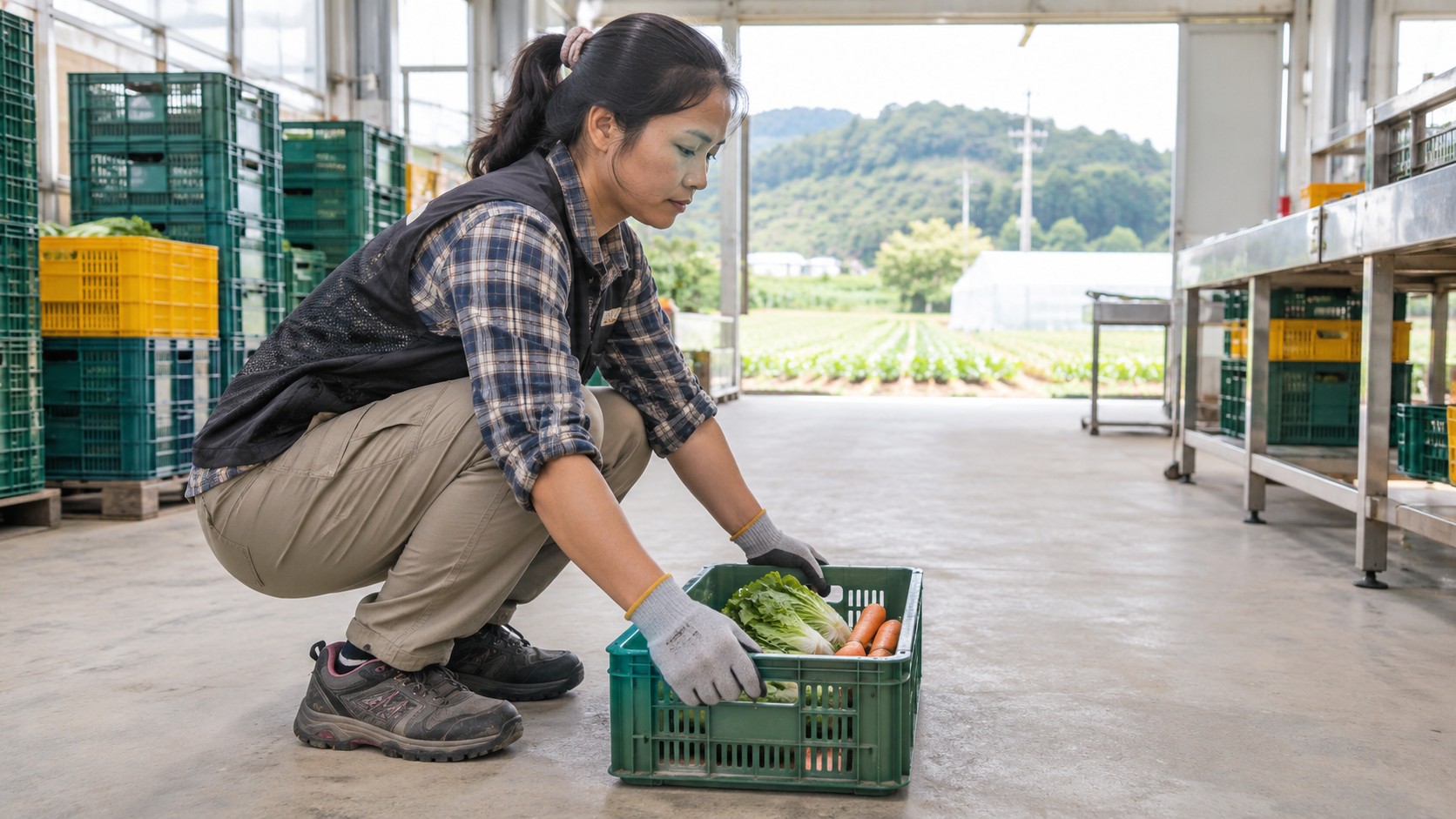
Steps for lifting and lowering a crate
Stand close to the crate with your feet firmly positioned, then bend your knees and hips and grip the handles securely. Keep the crate as close to your body as possible and rise slowly without jerking it. When changing direction while holding the crate, move your feet so your whole body turns together instead of twisting only your lower back.
Before lowering the crate, check that the surface is level and that no one else's hands or feet are in the way. Lower it slowly, keeping your fingers out of the space between the crate and the floor. Carrying several crates stacked high or walking with your view blocked is dangerous. Divide the load so you can see where you are going, even if this takes a few more trips.
What to check when using a cart
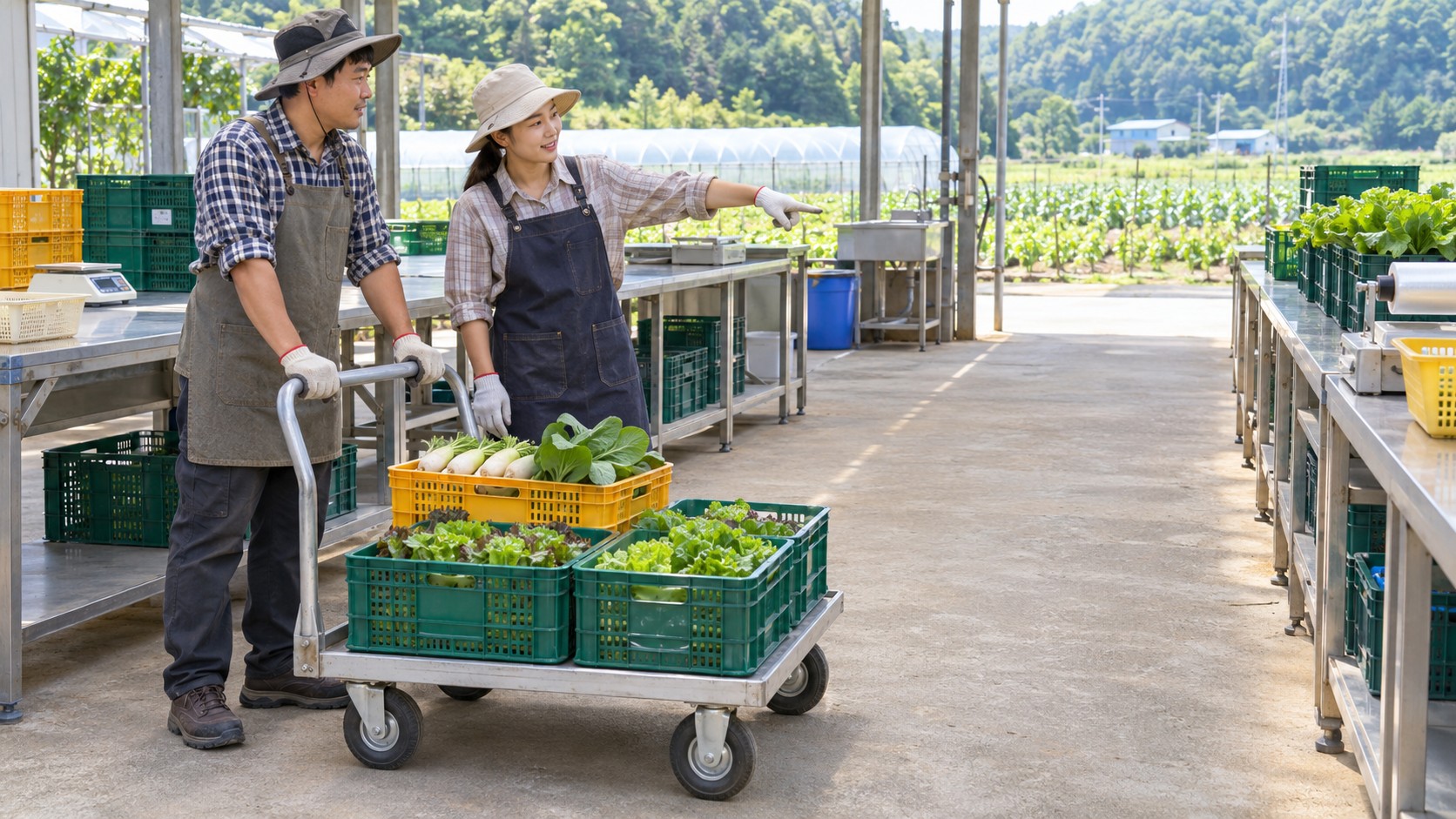
If a handcart or platform trolley is available, first check the wheels, handles, loading surface and passage width. Position the crates securely without putting all the weight on one side, and do not exceed the cart's load limit. If it could roll quickly on a slope or the load blocks your view, stop and agree on a safe way to move it with the supervisor.
Where possible, areas used by vehicles or forklifts should be separated from routes where people carry crates. Do not pass close to a vehicle if you hear it reversing or cannot be sure the driver can see you. Do not ride on carts or handling equipment that are not designed to carry workers.
If you feel pain or notice danger during work
Do not push yourself to keep carrying if you develop sudden severe lower back pain, injure a finger, feel dizzy or think you may faint. Put the crate down in a safe place and immediately tell nearby coworkers and the supervisor what has happened. Continuing repetitive work through pain can make the condition worse, so ask for medical care and changes to the work as needed.
Call 119 in an emergency involving unconsciousness, a serious injury or the need for immediate rescue. Call people nearby for help, explain the location and what happened, and follow the rescue team's instructions. Knowing the farm's location, your accommodation address and the name of your contact person in advance makes it easier to explain an emergency.
Examples and exceptions you may encounter at work
For example, if you are told to move several crates at once but they are stacked too high for you to see ahead, do not carry them as they are. Suggest reducing the load or using a cart. If the cart is broken, do not attempt an unauthorized repair or force it to move. Tell the supervisor and check what other equipment or work method can be used.
If a slope is slippery after rain or a hose is lying across the passage, pause the move and address the hazard safely before starting again. Before calling another worker over to help lift a heavy crate, agree on the direction you will move and where you will put it down. Moving in different directions can injure your hands or lower back.
Official sources and the final check
The Korea Occupational Safety and Health Agency provides guidance on using handling equipment, keeping loads close to the body, checking carrying routes and using appropriate working postures. See the official material below for details. Checked on 2026-11-06.
Emergency reporting guidance: 119 Safety Reporting Center
Before moving, check again that you have assessed the crates' condition and weight, your gloves and shoes, the route and the cart. If a crate is too difficult to lift alone or blocks your view, ask for help instead of forcing the task. If you are injured, stop work and report what happened; call 119 in an emergency. These are the key points of the final check.