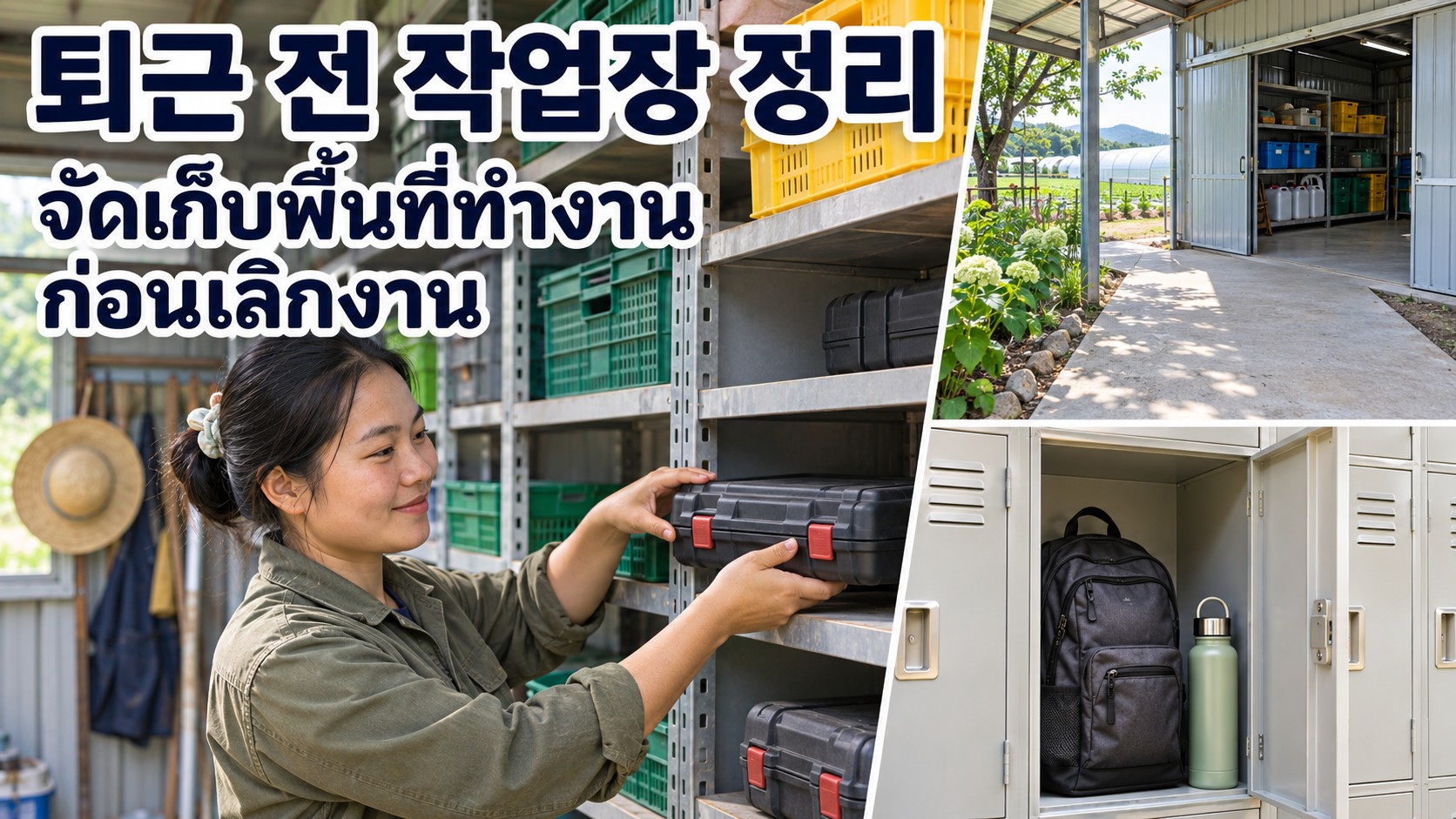
Practice example Adapt the sample message to your situation. It is an illustrative example.
A handover message to send before leaving work
There is [unresolved issue] at [location]. I noticed [what you observed] and did not try to deal with it myself. Please check it before the next person uses the area.
For example, report a damaged cable in front of the door beside the storage shed. Say you did not approach or touch it, ask the supervisor to check before anyone enters, and confirm that they received the message.
At the end of a farm shift, empty bags, binding ties, tools and personal bags may be gathered in the same area, making it hard to know where to start. Agreeing on a tidying sequence in advance helps you avoid leaving objects in walkways or rushing away, even when the bus is waiting or colleagues are leaving first.
This guide is for seasonal workers checking routine housekeeping with their supervisor after farm work. It does not explain how to repair machinery, handle pesticides or work on electrical installations. Follow the safety training and storage procedures provided at your workplace, and ask for an explanation before starting any task you do not understand.
Before starting: agree who will tidy each area
First, ask the employer or site supervisor which areas need tidying, where used tools belong and where waste should be collected. If several people worked together, divide the tasks so that the same objects are not moved to different places. Do not throw away or rearrange someone else's items in a shared storeroom as though they were yours.
Checking the cleaning tools and waste containers first reduces unnecessary trips through the walkway while tidying. If poor lighting makes the floor hard to see, or vehicles are still moving through an area, do not simply enter and start cleaning. Ask the supervisor to confirm where and when the work can be done safely.
Walkways: check the route to the exit first
Look along the route from your work area to the exit. Check for tripping hazards such as ties or plastic sheeting on the floor and empty containers protruding into the walkway. Start with ordinary items that you can move to the storage area designated by the supervisor. Even a temporary place to put something down should be clear of routes used by people or handling equipment.
Do not clear unidentified liquids, damaged electrical cables or sharp fragments by hand together with ordinary rubbish. Keep clear and report their location so that the supervisor can arrange the appropriate response. If a walkway is blocked, do not climb over objects or detour into a vehicle route. First confirm a safe route you can use.
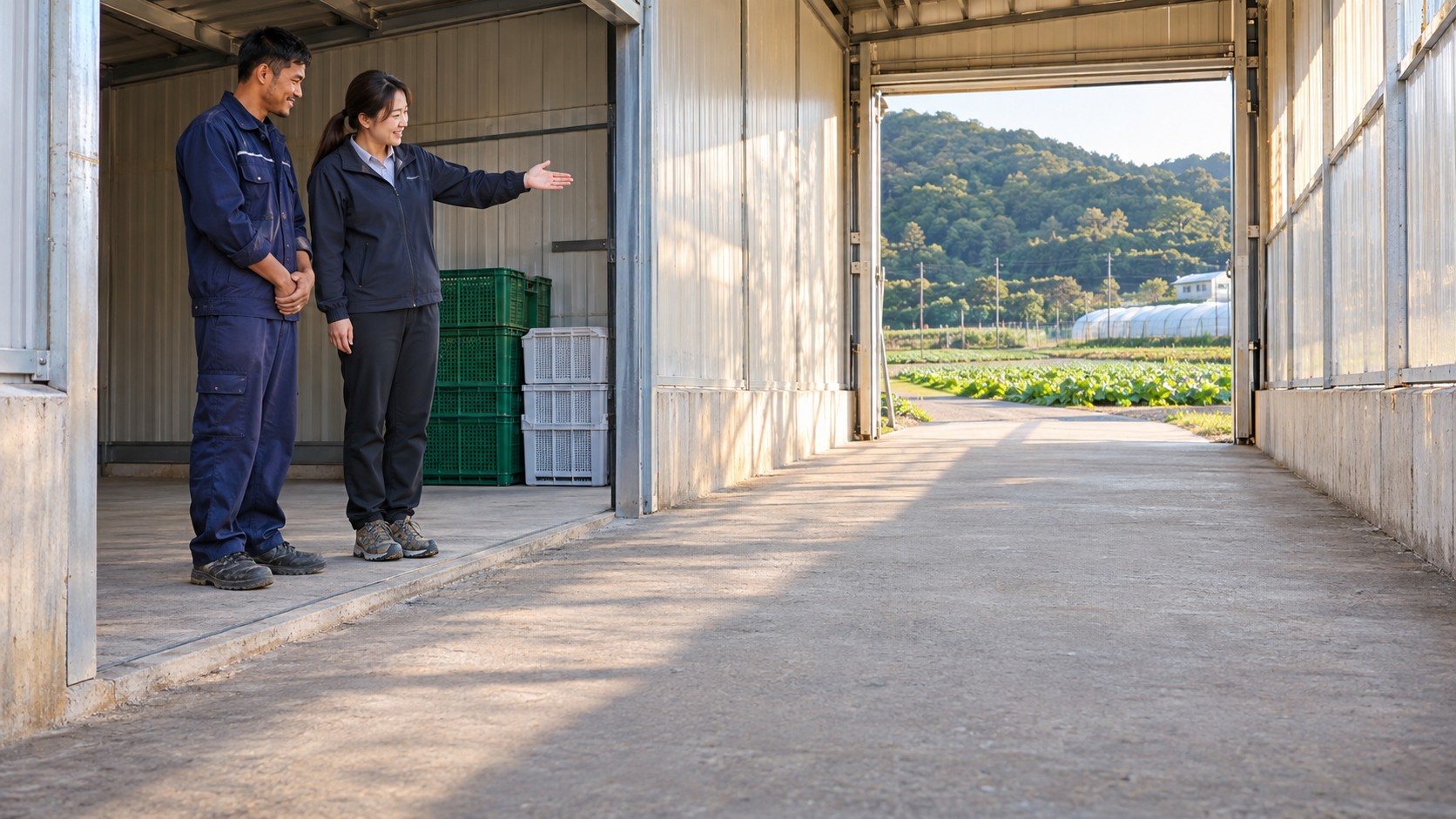
Tools: separate items used from items that are damaged
Put away hand tools using the workplace's established method and return them to the designated cabinet or rack. Follow the specified covering and storage method for tools with blades. Avoid makeshift storage such as struggling to place them on a high shelf or leaning them beside a door. If the designated space is occupied, ask the supervisor where else to put them.
Tell the supervisor about a loose handle or missing part so the damaged tool is not left among serviceable tools. Explain the fault and where the tool was last used to help prevent the next worker from using it without knowing. Do not repair it yourself or assume that adding a label makes it safe to use.
Around machinery: do not rely on it appearing to have stopped
Only tidy the areas around machinery that the supervisor has assigned. Do not reach into moving parts or inside a machine to remove an object that is stuck. Even if the switch appears to be off, do not open guards or dismantle equipment on your own. Have the supervisor confirm the equipment's condition and the area you may tidy.
The Ministry of Employment and Labor's safety rules emphasize locking measures, such as those needed when isolating power, and safety signs during maintenance and repair. The housekeeping sequence in this article must not replace those equipment procedures. Confirm separately which tasks belong to the machinery supervisor and which ordinary areas workers may tidy.
Personal belongings: keep them separate from shared tools
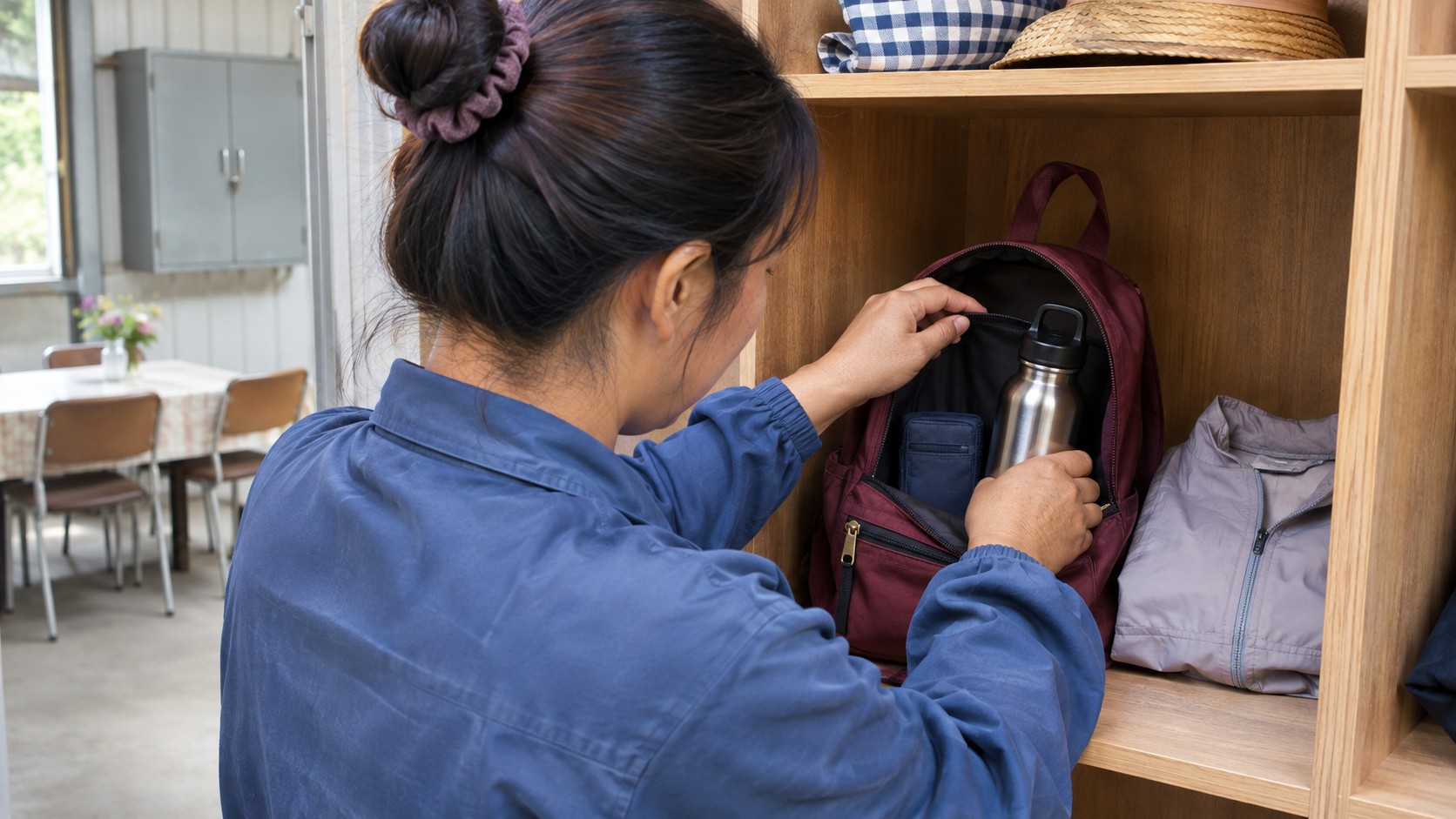
Wear the protective equipment required by your workplace until the tidying work is finished. Afterwards, collect your water bottle, clothes, phone and bag from the designated place. Leaving a personal bag in a shared toolbox or among materials may mean having to re-enter the work area to find it, so establish where personal belongings should be kept from the start.
Check who owns an item before taking it if names or appearances are similar. If you find something whose owner is unknown, do not take or discard it; ask how to hand it to the supervisor. After collecting your belongings, watch your route as you walk out instead of looking at your phone.
If a problem remains, hand over its location and condition
If you cannot finish tidying everything, explain what remains and where, rather than just saying it is unfinished. For example, reporting that empty containers remain in the walkway beside the entrance because storage space is full allows the supervisor to arrange another storage location or worker. Remember whom you informed.
If explaining verbally is difficult, show the supervisor the location from a safe position or ask the interpreter for help. Check workplace rules before taking photos, and only take them from a safe place. Do not approach a hazard to photograph it or casually share photos showing colleagues' faces and personal contact details in a group chat.
Before leaving: make a final check to avoid returning to the work area
Before heading to the exit, check your assigned area and walking route again. Make sure tidying has not created a new obstruction and that no colleague needs to return to the work area to find tools or a bag. Before doors are closed or lights switched off, confirm who is responsible for the final check and follow the workplace procedure.
- I have checked that no new objects have been left in the walkway or around the exit.
- I have returned used tools to their designated places and reported damage or missing items to the supervisor.
- I have collected my personal belongings and told the supervisor about unfinished tidying and the location of any hazards.
For example, if empty containers need moving but the storage area is full and a handling vehicle is using the walkway, do not solve the problem by briefly piling them in the nearest passage. Report the situation and agree on a storage location and a safe time to move them. The aim of tidying is to leave a safe route for the next person.
Related reading
Safety checks when moving harvest crates
Sources and date checked
Checked on 2026-11-08. This guide applies the walkway and housekeeping principles in the official sources below to routine tidying on farms. Equipment and working methods vary, so confirm the detailed procedure through your workplace training and supervisor.
Ministry of Employment and Labor: key safety rules for serious workplace hazards
Korea Occupational Safety and Health Agency: workplace walkway safety in its practical safety guide
A follow-up when nobody has acknowledged a handover
[Hazard] is still present at [location]. I haven’t received a reply yet. Who can check it before the next worker enters the area?